TD First Class Visa Infinite Points Value Decrease

TD Devalues Visa Infinite Points

First Published Date: June 22, 2015

If you are a TD First Class Visa Infinite credit card holder, you will see lower rates and lose some value in your points redemption starting August 16, 2015. You may want to consider redeeming your points before August 16 (if your circumstances allow), so you don’t get dinged by TD.

As of now, before August 16, the redemption rate is 200 points for $1, but it will be devalued at 250 points for $1 starting August 16. What it means that if you have 100,000 points, you will get $500 in travel spending, but after August 16 the same 100,000 points will fetch you $400.

TD First Class Visa Infinite provided 1.5 percent return on your purchase spending, excluding TD Expedia spending, until now. This rate will go down to 1.2 percent once the devaluation kicks in. Although TD said you would still get 1.5 percent rate on your regular purchases if you redeem over 300,000 points, but the truth is you will never go back to the old 1.5 percent return level as the first 300,000 points will be counted as 1.2 percent return – making the total return on regular spending above 300,000 points ($1,200) a low 1.33 percent.

This is obvious that TD will lose lots of clients after the devaluation as TD First Class Visa Infinite will lose its ranking among other travel reward cards. And there are so many better cards out there, unless you don’t mind losing your spending’s worth and sticking to TD due to allegiance. As I will be writing on more credit cards to maximize your reward returns, don’t forget to keep an eye on A Dawn Journal. Visit here if you would like to find out more about TD’s recent devaluation announcement.


New Credit Card Rules

What New Credit Card Rules Mean

First Published Date: May 23, 2009

Finance Minister Jim Flaherty is unveiling new regulations which will force credit card companies to behave in a more transparent manner – including a strict disclosure policy on penalty fees and interest rates. The move, announced Thursday (May 21), is intended to bring an end to or at least limit the incidence of Canadian consumers becoming saddled with excessive interest payments on their cards. In the midst of a global recession, more consumers than ever are struggling with debt repayments, and in Canada as elsewhere, the banks are being blamed for this situation.

Short-term special offers regarding rates and fees have long been used as a way to persuade shoppers to take out credit cards – leading to even reluctant customers finally agreeing to go plastic, then finding out some way down the line that the special offers are not worth the paper they are printed on in many situations. The new transparency regulations are intended to give customers a better chance of spotting the worthless offers and only accepting a credit card that they will be able to benefit from in a substantive manner. The way of things up to now has been that customer obligations regarding the special offers are couched in the cardholder agreements using the old obfuscatory methods of small print and impenetrable jargon.

Among a comprehensive raft of legislation, Flaherty is also set to introduce an industry-wide 21-day grace period for interest on new purchases, so that if customers pay their balance in full by the due date they will not incur interest. Up to now this period has been practised by some banks but not by all, but the new legislation will make it a blanket rule. The limiting of certain business practices that are not beneficial to customers will form a major plank of the new legislation. This will also hit the banks who have recently shortened their purchase-to-payment interest-free period, a move already condemned by the Consumers’ Association of Canada.

The ideas are intended to give Canadian customers a bit more breathing room on monthly bills – meaning that customers who do not pay off their bill in full will no longer find themselves penalized by interest. A large majority of Canadian households do pay their bills off in full every month – estimates put this in the region of 70% of homes – but with belt-tightening becoming a competitive sport in most of the Western world there are a number who simply cannot.

Opinions on the moves seem to differ widely, with opposition critics having derided the minister’s measures as nothing more than an “information campaign” which will do little or nothing to protect customers who are already struggling. Others have dubbed the moves “weak” and suggested that the minister is actively seeking to favour  his “bank buddies on Bay Street”. Opposition proposals which have not been adopted included a cap on credit card interest at 5% above the prime rates enjoyed by commercial banks. The NDP, who suggested this move, say that the government’s latest move will “send working families into more debt”.

To streamline and minimize blog maintenance, I will be discontinuing maintaining the Canadapersonalfinancewebsite.com website (however, I will still hold the domain). I will gradually move all articles from this site to A Dawn Journal. This article originally published on the above website on May 23, 2009.

Book Hotel & Flight For Free With These Credit Cards

Credit Cards That Let You Travel Free

First Published Date: July 6, 2015

If you are looking for a free vacation this year, look no further than WestJet RBC World Elite Credit Cards and Marriott Rewards Premier Visa Card. These two cards let you fly and stay in a hotel totally free for the first year and partially free (at a very low cost) continuously for subsequent years as long as you hold the cards.

The WestJet RBC World Elite Credit Card comes with a $250 WestJet dollars welcome bonus and you will also get an annual round-trip companion flight for $99 (plus tax and fees) every year, letting you fly anywhere in Canada and the continental US (excluding Hawaii and Puerto Rico). What it means? You can virtually fly for very little on your first year of card membership, considering you also got the $250 for free.

Want to include an upscale hotel for free as well on your trip? The Marriott Rewards Premier Visa Card comes with 30,000 bonus points and 1 free night just for trying the card. That means you already got up to 5 free nights at a category 1 or 4 free nights at category 4 hotels. And you also get one free night continuously for subsequent years as long as you hold the cards.

Don’t like to fly WestJet or stay in Marriott hotels for free? Try these other 2 cards instead that offer almost identical bonuses like the above 2 cards: The Starwood Preferred Guest Card from American Express or the MBNA Alaska World Elite MasterCard Credit Card.

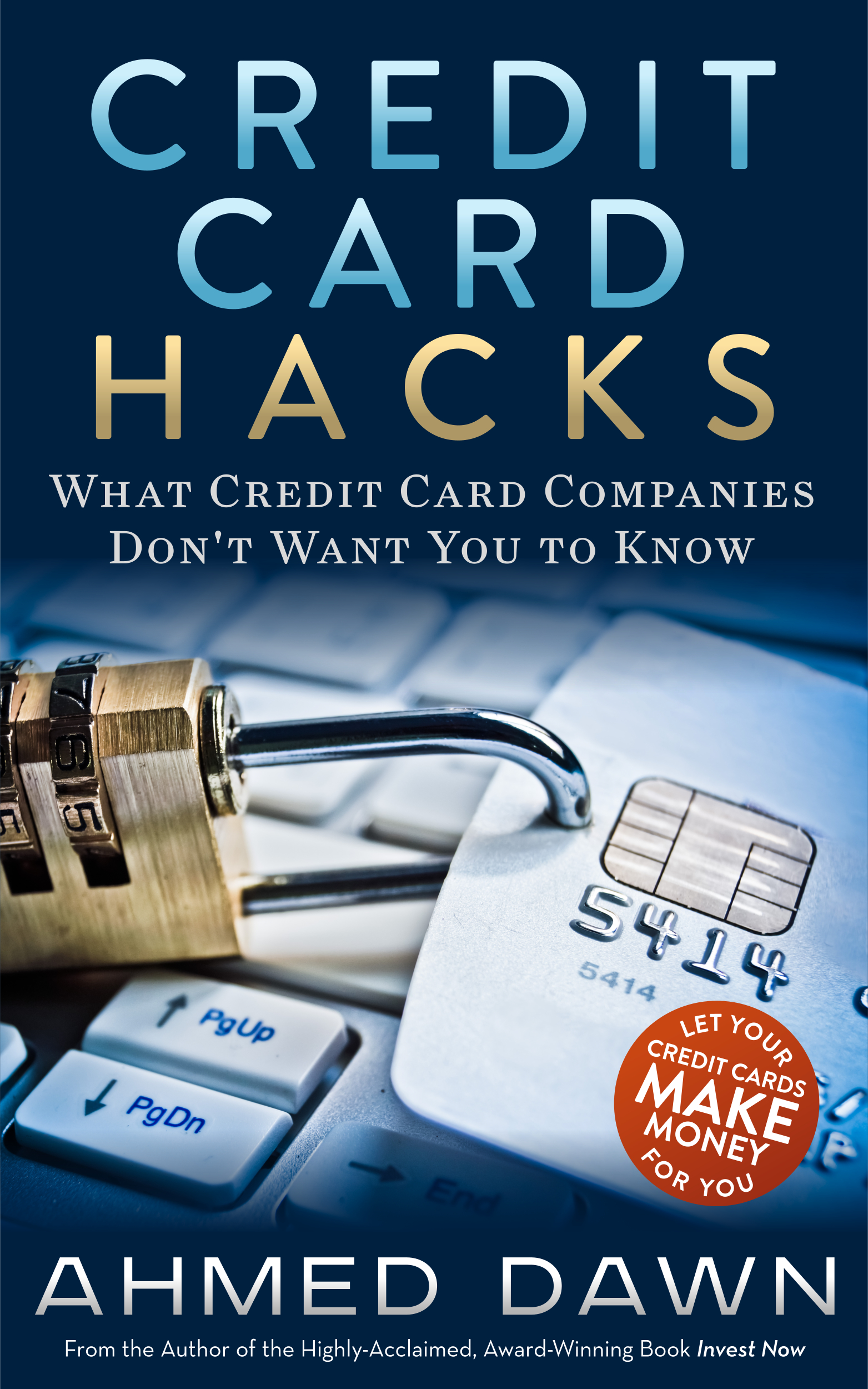
What you read so far is one of the many secrets I will be sharing with you in my next book Credit Card Hacks: What Credit Card Companies Don’t Want You to Know. Stay tuned as I am working on the last few chapters of this book and should be able to get it to you in 3-4 months.

Tools to Find the Most Rewards on Credit Cards in Canada

Compare Travel Rewards Credit Cards

First Published Date: July 12, 2015

There are many tools and calculators out there to make the most out of reward credit cards. Today, I will mention two extraordinary tools you can use to visualize what you are getting from all reward cards side-by-side. It’s easier to comprehend and make an educated decision when you compare side-by-side, instead of reading reviews of each card separately.

1. Canadian Travel Credit Card Comparison by Rewards Canada

This tool can generate several comparison charts from different categories, such as most popular travel rewards credit cards, all travel rewards credit cards, hybrid credit cards, airline credit cards, etc. In each chart, you will be able to see all the credit cards within that category and their info such as annual fee, bonus, earning ratio, redemption value, exchange options, insurance, and much more.

What I like most in the chart is that you can easily view which credit cards are offering certain insurances and which are not. For example, many travel reward cards do not offer trip cancellation insurance. Also, you will find that very few credit cards offer price protection insurance.

2. Compare Travel Rewards Credit Cards by Rate Hub

This is a very different, yet powerful credit card tool you can use to visualize your rewards in dollar amounts. You can plug in your own monthly spending numbers for different categories, such as groceries, travel, and restaurants and it generates dollar amount figures showing how much money you will be making the first year and subsequent years.

This tool gives you a detailed breakdown of how the points are being calculated to get the dollar value and also provide tips of how to redeem your points to get the most dollar value, how not to redeem, insurance benefits, and much more. The insight and knowledge you will have to make the most out of your rewards credit cards using this tool is simply incredible and knowledge means more money when it comes to redeeming your points.

No calculator or tool is 100 percent complete and provide you all the information you need. For example, the Rate Hub calculator provides much information, yet it still fails to consider the recurring annual anniversary bonuses you might get from some credit cards. For example, when you generate numbers for the BMO World Elite MasterCard and the WestJet RBC World Elite MasterCard, it fails to show anniversary bonuses. For example, the BMO World Elite MasterCard provides lounge membership and 4 passes each year that would translate into $200 annually and the WestJet RBC World Elite MasterCard provides an annual round-trip companion fare for $99, and the Rate Hub tool fails to add the dollar value for subsequent years.

Always do through research before deciding on any credit cards and don’t forget to visit the A Dawn Journal Credit Card Section often for more articles like this and keep an eye for my upcoming book Credit Card Hacks: What Credit Card Companies Don’t Want You to Know to obtain invaluable insight on credit cards rewards.

How Credit Can Be Your Friend

Credit Card Tips

First Published Date: April 18, 2009

There is no doubt that an over-reliance on credit is a bad thing. One has only to look at the mess that the world is currently in to see that the banks’ readiness to lend to people who really should not have been borrowing was unwise. Equally, some of those people doing the borrowing must have been aware that what they were doing carried a huge risk. And yet, if handled correctly, credit can be a way of doing things to your advantage in the long term.

To make credit work for you, you need to keep in mind that risk management is a vital part of the process. As far as possible you need to keep risk out of the equation altogether. You need to keep your interests, your long-term security and needs in the forefront of your mind. Although things like high-value purchases of consumer items may seem hugely tempting, they are to be ignored if there is any chance that they will infringe on your financial security.

So in reading this, you may well be questioning how credit can be your friend at all. The truth of the matter is that credit allows you to spread life’s costs. This is possible without a great deal of risk, because banks will be happy to give good lending deals to people who show the ability to manage credit. And you can do this by living on credit. Don’t worry – this is not as risky as it sounds. It simply involves using the rules to your advantage, and requires discipline (so if you are prone to getting distracted by bargains, do not proceed unless you are sure you can restrain yourself).

The first step is to open a savings account. The best one to go for is one that has either got no limit as to how much you can put in monthly or over a year, or a limit that matches or exceeds your salary. Of the options this leaves you, pick the one with the highest rate of interest. This account is where you want to put your wages each month.

Now, take out a credit card. The experiment ends here if a bank will not give you a credit card due to past borrowing nightmares – but that is probably a good thing. This credit card will be what you use to do your essential shopping. Groceries? On the card. Fuel? On the card. Bills? On the card, if possible. Is this reckless spending? No, it is not because you are going to pay the balance off, in full, before it gets the chance to accrue interest. Most cards accrue interest monthly, but it is not going to be an issue if you monitor your card balance and withdraw from the savings account to pay it off every time a balance appears.

If you do this with a modicum of discipline you will find that there is still money in the savings account at the end of the month, and it is accruing interest. Meanwhile, your credit score is increasing with every full balance payment you make to the card. Not only are you financially solvent, but you are making savings, and have the borrowing power to get the best mortgage possible should you have your eye on a house, or a loan to buy a car. And the savings? They come in very handy if you want to bring down the monthly payments on a loan.

To streamline and minimize blog maintenance, I will be discontinuing maintaining the Canadapersonalfinancewebsite.com website (however, I will still hold the domain). I will gradually move all articles from this site to A Dawn Journal. This article originally published on the above website on Apr 18, 2009.