Maldives Travel Guide: What’s Missing in the Maldives
/Maldives: Paradise: What This Island Nation Doesn’t Have
After finishing my trip in the Maldives, I was convinced that if paradise exists on earth, it has to be the Maldives. This made me think; even paradise isn’t 100% perfect, so what are some things the Maldives is missing? Unlike many tropical destinations, the Maldives is defined by absence as much as presence. I came up with some of the things the paradise that is the Maldives is missing. There are certainly other things worth mentioning, but in this article, I will stay focused on the few mentioned below.
1. No Mountains - Step onto any island and you’ll notice immediately: there are no mountains rising in the distance. The Maldives is the world’s flattest country, with its highest natural point barely two meters above sea level. That means no hiking trails, no dramatic peaks, and no waterfalls tumbling down cliffs. The landscape is ocean‑dominated, not land‑dominated.
2. No Rivers or Lakes - You’ll also find no rivers or lakes. These coral atolls have no freshwater systems, so there are no winding rivers to kayak, no lakeside villages, and no inland wetlands. Fresh water comes from ocean desalination, underscoring how fragile life here can be in paradise.
3. No Caves or Cliffs - Look closer and you’ll see no caves or cliffs. The Maldives isn’t volcanic or mountainous, so there are no cavern systems to explore, no dramatic escarpments overlooking valleys. The islands simply melt into the ocean; their drama found in coral reefs rather than rugged terrain.
4. No Woldlife - On land, there is no large wildlife. You won’t encounter elephants, monkeys, or deer. The biodiversity is overwhelmingly marine—whale sharks, manta rays, and kaleidoscopic reef fish. The islands themselves host only small birds, crabs, and lizards.
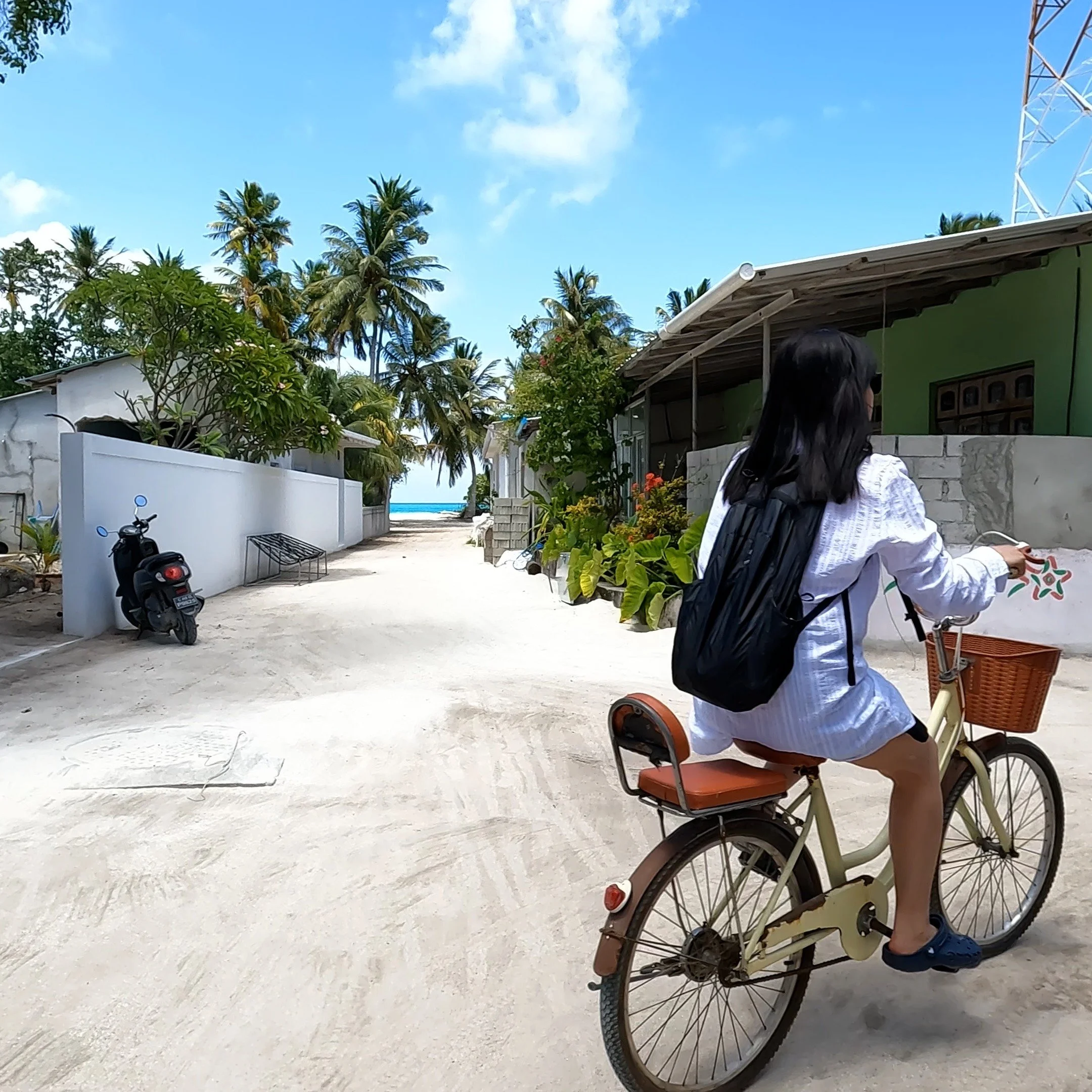
5. No Malls or Big Cities - And for those seeking urban diversions, there are no malls or sprawling cities. Outside the capital of Malé, life is quiet and village‑like. Resorts dominate, and shopping is limited to small local markets. The Maldives is not a place for retail therapy or buzzing nightlife; it’s a place for stillness, ocean breezes, and sunsets.
This pattern of absence is what makes the Maldives unique. It is paradise stripped of mountains, rivers, caves, cliffs, and wildlife roaming the land. Instead, its drama lies entirely in the ocean—an endless horizon, a reef teeming with life, and a lifestyle shaped by water. The Maldives reminds us that sometimes paradise is not about having everything, but about having just enough.