Banks Are Charging Ridiculous NSF Fees

Bank Has No Limits for Fees

Just received a Notice of Changes flyer in my mailbox from TD Bank. The flyer is full of as usual information. That is, fees are going up on some services. One fee increase made my eyes pop out in wonder.

New NSF (Non Sufficient Funds) fee will be $42.50 starting May 1, 2008. Paying $42.50 NSF fee is way too much and absolutely ridiculous. We all know that banks are only interested in making money, and they don’t care about their customers. Average bank clients are not valued or respected by these banks. We tend to be loyal to our banks, and they are taking advantage of this. Most of us do not research and shop for a better bank. What you can do to get a better deal and treated as a valued customer by your bank? Follow these simple tips below:

  • Banks basically measure your value by looking at your bank balance. If you have accounts with many banks, you may want to think about consolidate them into one account in one bank. This will give you more money in one bank and hence more value.
     
  • Have an overdraft protection attached to your bank account. An overdraft protection will protect you from NSF situation because this feature will pay extra money if your account falls short. There is a charge involved with this option but it’s not as ridiculous as NSF fee.
     
  • A decent overdraft protection fee should be somewhere around $5. You should pay this only when you use it. If your bank charges monthly recurring fees to have this option, change your bank. A good example is President Choice Financial. Their overdraft protection fee is $4.95, and you pay only when you use it. You will also be paying an interest charge on overdraft balances but still it’s a lot better than paying $42.50.
  • And last but not least - never write a cheque if you don't have money in your account (I know you all know this).
    First Published: ADawnJournal.com Mar 16, 2008

What Is An RRSP?

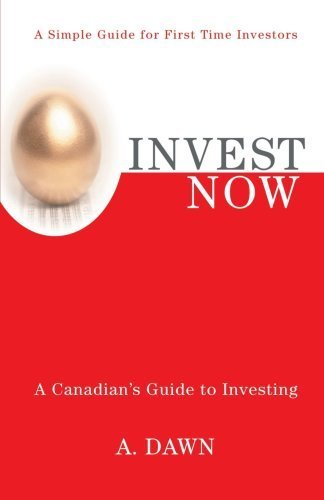
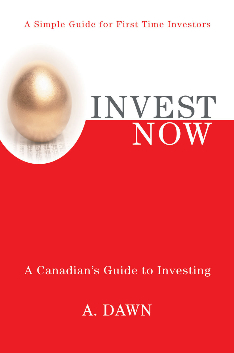
The following is an Excerpt from my first book Invest Now. Invest Now is jam-packed with timely information and timeless advice for the beginning Canadian investor. Invest Now covers a broad range of topics including RRSP. Invest Now will be published in a few weeks.

What Is An RRSP?

An RRSP (registered retirement savings plan), or registered account, is not something you actually buy. This is just an account type, and you buy qualified investments to hold inside that registered plan. Think of the RRSP as an umbrella sheltering you from the sun. Think of the sun as the Canada Revenue Agency. As long as you are under the umbrella, you are protected from the heat. As long as you are inside your registered plan, you are protected from taxes.

Advantages of an RRSP

  • Deposits generate tax receipts to provide tax breaks.
  • If the account generates income, no taxes have to be paid, because income is sheltered.
  • If you sell your holdings and achieve profits, you pay no taxes on capital gains, but you pay withholding taxes on withdrawals.
  • You pay no taxes on growth and switches made inside your account, as long as you are not going outside the registered plan

Disadvantages of a Registered Account

  • The account is registered with Canada revenue Agency (CRA). That’s where the term registered comes from.
  • You are only allowed to deposit so much money.
  • Withdrawals are restricted.
  • You are taxed on the amount you withdraw. The more money you withdraw, the more taxes you pay. See withholding tax rates listed at the end of this chapter.
  • You can’t keep this account forever. The account has to be terminated once you are 71, and you have to convert this account to a Registered Income Fund (RIF), from which you have to receive annual income by law. Also, you can take out all your money once you are 71, but this is not a good idea, as you have to pay hefty taxes.

First Published: ADawnJournal.com Feb 26, 2008

Get Smarter by Seymour Schulich - A Must Read book

Affiliated Link: I collect Small Commission If You Purchase Using this Link

Affiliated Link: I collect Small Commission If You Purchase Using this Link

Life and Business Lessons

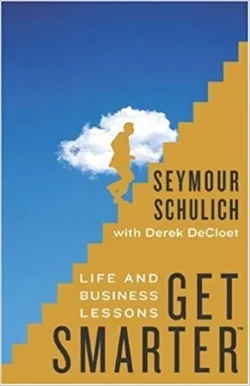
Get Smarter by Seymour Schulich is a business book full of life and business lessons from business and non-business perspectives. Seymour Schulich is a self-made Canadian billionaire and a great philanthropist. So far, he has donated over $200 million dollar to various educational and non-educational organizations. This is a book you must read and its money well spent – if you are buying this book.

Schulich has taken a very laid-back approach to describe his thoughts and you will never be bored reading this book. I will list some of my favourite chapters here:


  • Money’s Value Falls 90 Per Cent Every Thirty Years
  • There’s No Such Thing As Overnight Success

  • Never Envy the Rich Man or Any Person

  • China

  • Spending Money

Get Smarter has 49 chapters in total. In appendix, Schulich describes his top ten movies, his trip to the Arab World and a reading list. Let me end this post by describing a quote by author’s which basically spells out the essence of personal finance teaching – “I have a 12-year-old car, a 35-year-old house and the same wife,”

First Published: ADawnJournal.com Dec 13, 2007

Do You Know Your Debt To Income Ratio?

Debt/Equity

Your debt to income ratio shows your financial health and lenders use this ratio to evaluate your creditworthiness. This ratio tells lenders what percentage of your monthly income can be used for your loan payments (or mortgage payments).

As it sounds, your debt to income ratio compares your debt to income. This is a monthly figure. To calculate debt to income ratio, take your monthly debt payments (minimum payments) and divide it by your gross monthly income.

Example: Monthly debt payments include:

  •  Credit card payments, loan payments, car payments etc.
  • Don’t forget to add investment income
  • Commission
  • Rental income etc

Let me give you an example. Let’s say your gross (before taxes) monthly income is $1000

And your monthly payment is $100. Your debt to income ratio is $100 divided by $1000 = 10%.

Tips: When you add monthly mortgage payment to above to above calculation, it becomes the back end debt ratio. If you remove monthly mortgage payment, it becomes the front end debt ratio. Front end debt ratio tells lenders how much monthly mortgage payment you can afford. To qualify for a mortgage, you would require something like 25% to 28% front end debt ratio. With a mortgage, back end ratio should not go beyond 45%. So you can see that in general the lower your debt to income ratio, the better you are healthy financially.

First Published: Oct 17, 2007 ADawnJournal.com

Still paying banking fees?

Stop Paying Bank Fees

Are you still paying banking fees? If you are, you should look at free banking options. A monthly fee of $12 or $15 can trun into a considerable amount over the years. Follow these steps to eliminate banking fess.

A. Consider banking online with a finanicial institution who gives you lots of value added services. An example is President Choice Financial. I get free checks (which TD, CIBC would never give) and earn at least $100 in free groceries just for using their services. It's like a double-dip bonus. I am banking free and getting free money for free banking.

B. If you are not comfortable with online banking, find out what is the threshold to avoid bank fees at you local branch. Usually this threshold level is $1000 but it can vary bank to bank. Shop for the best deal and never pay any transaction,ABM or checking fees.

C. Financial Consumer Agency of Canada (FCAC) provides interactive tools, cost of banking guide and information about different types of accounts and banking service packages available in Canada on their website. Click on the above link and then click on For Consumers and it will take you to a page where you can do your research on banking and other financial products and services.
First Published: June 22, 2007 ADawnJournal.com