How Credit Card Calculates Interest

How Credit Card Calculates Interest

First Published Date: December 21, 2008

In Canada, credit card company uses mainly two methods to calculate the interest you pay. The methods are, average daily balance method and daily balance method. Although the methods are different, they generate same interest charge. If you are interested finding out which method your card uses, you can call their 800 number or you can find it in your credit card agreement brochure. Now let’s look at these two methods.

Average Daily Balance Method

Your credit card has billing period of 29 to 31 days. Average daily balance is just the average of you daily balance during your billing period. Average daily balance is calculated at the end of every month. Take the balance at the end of every day and add them up (A). Divide this total (A) by the number of days in your billing cycle to get average daily balance (B). B is multiplied by daily interest rate to get average daily interest amount(C). Now, to calculate interest charge for the month, multiply C by the number of days in the billing period.

To get daily interest rate, take annual interest rate and divide by 365. Also, interest rate can be found on your monthly statement.

Daily Balance Method

This method is simpler than average daily balance method. Instead of making one calculation at the month end, daily balance method calculates your interest at the end of every day of the billing period. Calculation method is simple. Take your daily balance and multiply that by the daily interest rate and add up daily interest to obtain interest for the month.

Purchases, Cash Advances and Balance Transfers

If you pay your balance in full, you never pay any interest. If you don’t pay your balance in full, you’re charged interest from the date you made these purchases until they’re paid for in full. Some credit card issuers charge interest from the date the purchases are posted to your account. You’re charged interest from the date you made the cash advance or balance transfer.

Let Your Credit Card Company Pay Your Interest

By paying you balance every month in full, you are actually using your card company’s money for free for your full billing period. Your card company always wants you to carry a balance so they can charge you interest and that’s how card companies make money. If you are paying your balance in full, you a re actually using your card company’s money at their high interest rate for free. Let me give you an example. In Sep 2006, I bought five British Airways return tickets for my trip at approximately $2000 each. My total cost was $2000 * 5 = $10,000. Most of the card companies charge 20% annual interest rate. If I do an approximate calculation for $10,000 at 20%, my one month interest charge would be $165. Yes, that’s right. My one month interest charge would have been $165. But I avoided this charge by paying my balance in full and definitely my card company did not like it because they lost $165. If you look at this little differently, you can say that I borrowed money for one month at 20% interest rate but I have not paid any interest because my credit card company paid it for me.

What do all these translate into? Know how you are being charged and what your interest rate is. Pay your balance in full. It’s like using your card company’s money at their expense.

To streamline and minimize blog maintenance, I will be discontinuing maintaining the Canadapersonalfinancewebsite.com website (however, I will still hold the domain). I will gradually move all articles from this site to A Dawn Journal. This article originally published on the above website on Dec 21, 2008.


Time To Invest In The Global Real Estate Market?

Where To Buy Global Property?

First Published Date: May 04, 2009

It cannot have escaped anyone’s attention that much of the world is at the moment in the grip of a financial crisis that has hit all sectors hard, but none more so than the real estate market. The fact that the crisis is global has meant that even the good old standby of moving into the next country to invest has lost some of its appeal as an idea, as it is just as likely if not more so, to see your investment fail to some up to the standards you had hoped to reach. In light of this, it becomes a matter of looking further afield. While this is the most internationally damaging property crisis most of us have ever seen, there are some countries that have weathered the storm a good deal better than others – and are presenting opportunities for the real estate investor to spread their wings.

Take any of the world’s heavyweight economies, and right now they are doing a pretty good impersonation of a defeated heavyweight boxer – slumped on the canvas with a bloody nose and black eyes. Some, like Canada, have fairly superficial damage compared to others, which have been pummelled to the extent where they are barely recognizable. Meanwhile, some of the less heralded countries are doing just fine, because they did not fall into the trap of building an economy on unsustainable lending, nor have they been closely linked with the countries who did. And these countries are the ones where it may well be worth having a throw of the real estate dice. Their economies are stable, prices are lower than in the more bloated economies, and the countries themselves are beginning to carry some real weight in the financial world.

The truth of the matter is that, a few decades ago, people would have laughed long and hard at the idea that Poland or the Czech Republic would be worthwhile sites for real estate investment. Right now, judging by the Polish Prime Minister’s recent jibe at UK Premier Gordon Brown, the laughing is going in the opposite direction. Poland as a nation declined to move towards a credit-based economy and as a result is doing just fine. Real estate opportunities are popping up all the time and this seems likely to continue with unemployment on the way down.

Alternatively, you may want to invest somewhere warmer. The opportunities on offer in the North of Africa now might be just the thing for you. Like Poland and the Czech Republic, Morocco has thrived while more illustrious near neighbours have taken a beating. Property prices are on the rise there, but are still well below what you would pay in a bigger economy, and Western investors are getting in there with its proximity to Europe making it a beacon for the region’s tourist industry. The coastlines of this African paradise are breathtaking, and just the kind of thing that would look perfect on a property portfolio. Dare you take the plunge? It could be the best decision you ever make.

To streamline and minimize blog maintenance, I will be discontinuing maintaining the realestateexpedition.com website (however, I will still hold the domain). I will gradually move all articles from this site to A Dawn Journal. This article originally published on the above website on May 4, 2009.

How to Buy an RRSP?

What Is An RRSP?

First Published Date: December 28, 2008

An RRSP (registered retirement savings plan) is not something you actually buy. You buy qualified investments to hold inside an RRSP. This is a type of account and you can hold a variety of products inside your RRSP.

What Products You Can Buy?

You can buy mutual funds, GICs, stocks, savings account and so on. These are just some basic products to mention. There are many other investment products you can buy and hold inside your RRSP account.

Is It Complicated?

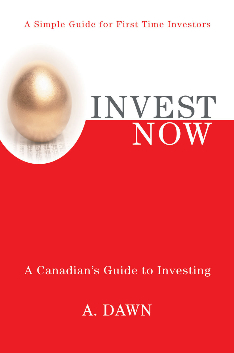
Depending on what you are buying, it can be complicated to buy certain products such as stocks, bonds, etc. In my book Invest Now, I have described in detail how to buy these products. Today, in simple words, I will explain how you can open your first RRSP in a snap.

Two Easy Solutions for Novice Investors

Option One – Walk Into Your Local Bank

This is the easiest way to buy. Just walk into your local bank branch and your personal banker will be able to explain ins and outs of RRSP and what products you can buy based on your personal needs. Most of the banks have a variety of products to choose from, and you can pick the one that best suits your needs.

I like the idea of opening an RRSP in your local branch because it is very easy and simple. This option gives you the opportunity to talk to a live person, and you can hold your RRSP with the same institution you are already dealing with – that translates into less hassle and paperwork. Also, you have the option to transfer your money into your RRSP from your chequing or savings account.

Option Two – Do It Online

Financial institutions like ING Direct or President Choice Financial let you purchase RRSP online. This is good in one sense that you are doing everything from the comfort of your own home; however, there is no one sitting in front of you to answer your questions. Although they do have customer support to call, it’s not the same as talking to a person in front of you.

Final Word

One major advantage of going to a bank is that bankers are able to recommend and advise products based on your individual needs. However, this is not the case if you choose online option. Customer service reps will answer your questions and guide you through the procedures to choose a product, but they are not licensed to advise.

These are the basic and simple procedures to buy your RRSP. If you are looking to buy a wider variety of products, I would recommend award-winning book Invest Now – available at Chapters.Indigo bookstores and at all online retailers.

To streamline and minimize blog maintenance, I will be discontinuing maintaining the Canadapersonalfinancewebsite.com website (however, I will still hold the domain). I will gradually move all articles from this site to A Dawn Journal. This article originally published on the above website on Dec 28, 2008.

The Dark Side of Retiring Abroad

Retiring in Low-Cost Countries May Not Be As Glorious As It Seems

First Published Date: December 29, 2014

It’s hard not to come across those alluring and glorious ads, websites, and stories about retiring in a low-cost country. The promise of living in a heavenly beach resort bungalow or ocean-view condo for $1000 per month is hard to pass on. However, things may not as glamorous as promised. Before you board a plane to a tropical paradise to catch your dream, consider all the ins and outs of living in a foreign country. Today, I will mention a few of them.

Security – This is my number one concern. These low-cost countries where heaven is promised for $1000 or even less a month are still 3rd world countries. Security and law enforcement are nowhere near comparable to countries like Canada, USA, Australia, and so on. If you keep an eye on news, you will often come across those where foreign retirees in these countries were killed in their ocean-view bungalows by intruders during a robbery. Are you willing to take your chances and live somewhere where corruption is widespread and security is non-existent?

Friends and Family – Living in a foreign country means you are losing your network of relatives and friends and also the support you receive from them. Yes, you can communicate via Internet or phone, or even possibly visit them once every few years – but it’s not the same when you have your friends and family available for you 24/7.

Health Care – Access to universal health care is a must-have during retirement years. Even if you are able to buy healthcare in these low-cost countries, it will not be nowhere near in quality and technological advancement as your home country. Also, if your are from a country like Canada where health care is free, you will have to spend a lot of money for health care in your new host country, and as you get older health care spending will grow larger.

These are only a few I mentioned above. There are much more, as retiring abroad adds layers of complexity to every aspect of life. Before deciding on moving abroad, do your homework and make educated decisions to live a happy life, whether at home or in a foreign country.

Condos in Panama

Panama Real Estate Investment

Published Date: May30, 2009

The first thing anyone will say if you ask them to mention something about Panama will undoubtedly be the canal. Some will even work in the famous palindromic pronouncement by Leigh Mercer: “A man, a plan, a canal. Panama!”. And when a nation of such limited size is dominated by a large – and very famous – canal, then it is no surprise that that will be the case. The Panama canal plays a major part for the country’s importing and exporting, for its transport and tourism. Although there is clearly much more to Panama than the canal, it would equally be pig-headed to deny its importance.

One element of Panama’s wider importance, however, is its real estate market. Investors from all around are looking at picking up property in Panama – and with good reasons, too. It is an investment opportunity that is worth investigation at the very least. Panama, being as it is the southernmost country in North/Central America, is therefore something of a frontier before one crosses from one part of America into another, quite radically different part. This makes it a crucially important spot in the Americas, frequently passed through by people traveling from the North to the South or vice versa. It has thus become the fastest-growing economy in Central America and the largest per capita consumer.

A country of such economic importance in the region will therefore need to be attractive to visitors. With the location a dual benefit – both in terms of people planning to travel through and, thanks to the scenery and the climate, also ready to stop here for a holiday – Panama will bring people in, almost without effort. It is keeping them around for long enough that needs to be addressed – something which is happening currently and is manifesting itself in, among other things, an improved real estate sector. This is where much of the external investment in Panama is coming from.

Oceanside apartments in Panama are cheap. This is one major reason why investors are interested, and it does not come at the expense of quality. There are many new builds as the Panamanian government aims to take greater advantage of the tiny nation’s geographic good fortune. Developments like those in Bocas del Toro are liable to catch the attention of any potential real estate investor, whatever the price. When one discovers that luxury apartments can be had for less than a quarter of a million dollars – and that prices will rise as demand does the same – it makes total sense that investment is a consideration for many.

For anyone looking to purchase real estate in Panama, there is good news in the fact that laws allow outside real estate investment to run very smoothly, with almost no restrictions on the process. If you are looking for an investment in an area with geographical importance, which attracts tourism and business, and will not cost you the Earth, then Panama is a very worthwhile place to look. There is every chance to turn a profit or just find a retirement or holiday property here. It’s really up to you.

To streamline and minimize blog maintenance, I will be discontinuing maintaining the realestateexpedition.com website (however, I will still hold the domain). I will gradually move all articles from this site to A Dawn Journal. This article originally published on the above website on May 30, 2009.

More Ahmed Dawn Articles