How Financial Crisis Affected Credit Card Borrowers

Record Debts Being Written Off

Published Date : Sep 29, 2009

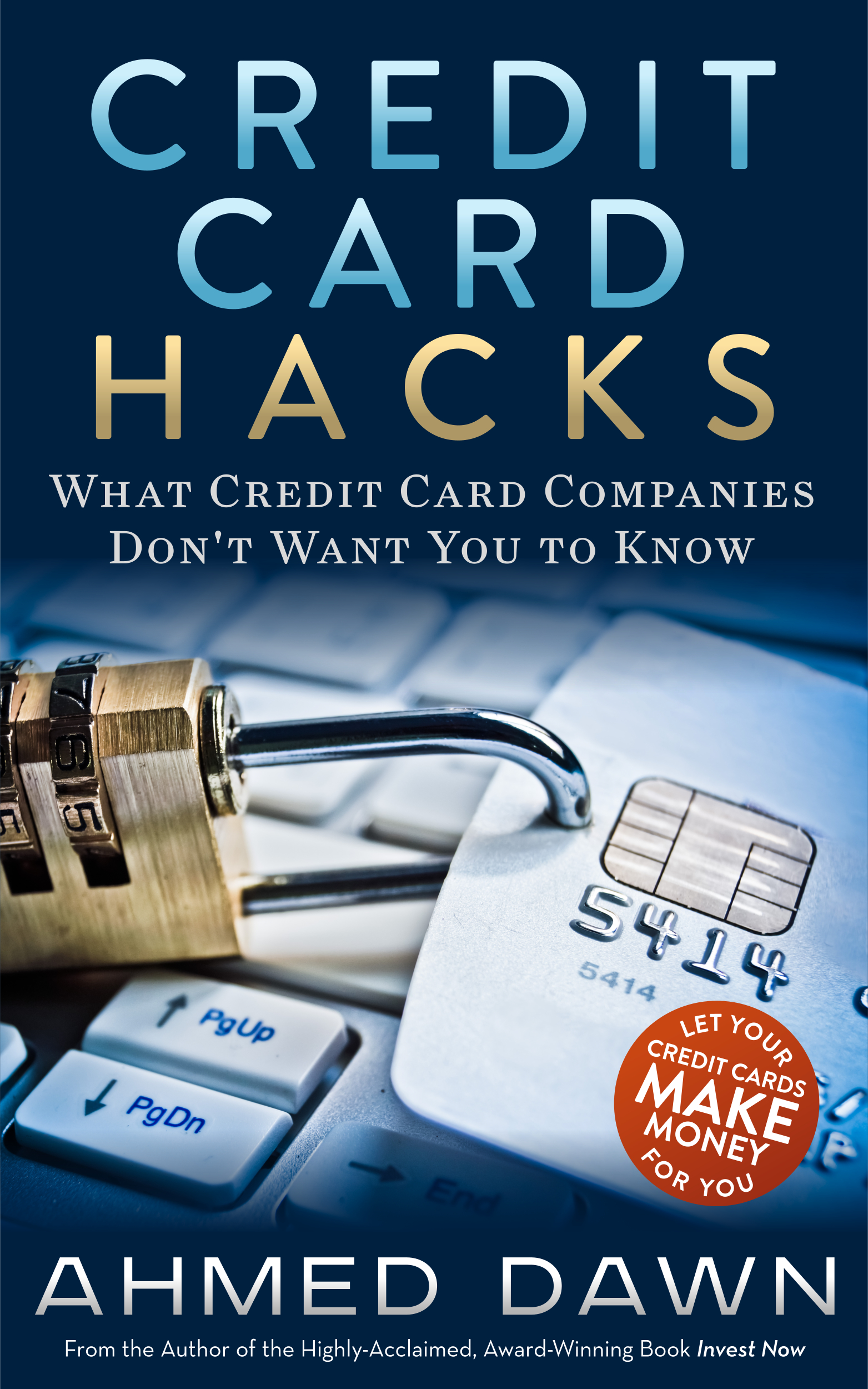
The financial crisis in which we have been living for some time now has changed the realities which we had accepted for some time, and many of those realities have changed for the worse. But for borrowers on credit cards who had been panicking about the pursuit from the issuers, there is one statistic which has improved. The issuers of credit cards are charging off a record amount of debt – meaning that they have accepted that people are not able to make their payments, and chasing them for those payments will not change the reality that they simply cannot afford to pay. It should be noted that this is not the case for every customer – if you can afford to pay but don’t want to, then the status quo will remain.

The simple truth of the matter is that with the unemployment rates having increased due to the global financial crisis, there are more and more people who simply cannot meet their credit card payments. Traditionally, this has led to  a troublesome situation where the banks pursue people to make any kind of payment at all, promising in many cases that if you can make “just a small payment” your account will be held for a while and that pursuit will be ended. For many customers, this pleasant notion has been miles away from the reality, which has been that a small payment alerts the company to the fact that you are responding to pressure, and the pressure just gets ramped up that little bit more.

When a company finally accepts that there is nothing they can take from you, they charge the debt off. What this means in practice is that they lay off collections activity and write the amount off, taking a hit on their profits which needs to be covered by the amount of money each bank sets aside for such reasons. It does mean that annual bonuses for the bank workers will be a little bit lower, but you will find fewer and fewer people complaining about that eventuality. As much as the everyday workers at a bank are relatively blameless for the profligacy of the bank’s lending policy, we are all having to cut out coats according to our cloth these days.

The fact remains that people who knowingly borrow and spend recklessly will have to be pursued to make their payments. Now is not a good time to take out a credit card and run up a mountain of debt which you have no intention of meeting. Quite apart from anything else, banks are still hugely reluctant to lend large amounts of money unless they are sure, on the basis of their own research, that they will see a good return on that investment. If you have a good credit rating, they may well still lend to you – but would you want to risk a good rating now of all times? If, however, you are looking for a fresh start, now could be the best time to get that start.
Top Three Countries in Caribbean to Buy Real Estate

Caribbean Real Estate

First Published Date: June 6, 2010

Thinking of buying real estate for investments or because you want a second home to go to when the day-to-day grind simply becomes too much? Well, here are the best places in Caribbean to buy real estate so that you can make the best choice possible.

1.    Trinidad and Tobago: This nation has an economy that is reliant on two major things; oil and tourism. Thanks to both of these, the entire island nation has a low unemployment rate and a decent per capita GDP of $19,800. In addition, the country has a growing economy and its middle class is growing, lifting many out of poverty. On top of that, the country is out of the hurricane belt so you do not have to worry about your home being blown away by a hurricane. Sadly, the black mark on this country is its rising crime rate, which can be a liability depending on where you choose to live. That being said, it is by far one of the most beautiful countries on the entire planet.

2.    Aruba: Called “One Happy Island” the country has a very prosperous economy that ensures many are out of poverty and the tourism industry is one of the strongest in the world. Over 1.5 million come here every year for vacation and services make up two-thirds of the country’s GDP. The country also has the second-highest per capita GDP after the Cayman Islands. In contrast to Trinidad and Tobago, the country has a very low crime rate and is not at risk of hurricanes. This means it could be the perfect place for you to go if you want to buy real estate someplace other than your country.

3.    Bonaire and Curacao: Known as the Netherlands Antilles, these two islands are located off the coast of Venezuela, which puts them well below the hurricane belt. The islands have a good infrastructure and a rising per capita GDP, as well as many new developments including an airport and hotels. If you love diving, then these islands may be perfect for you. As of 2008, the countries have changed their status. Curacao is a country within the Kingdom of the Netherlands, while Bonaire will be a municipality under the Netherlands. Even with these changes, the islands remain very popular with tourists and you can bet that there are going to be many people like you looking to buy a home here. The islands have amazing beaches, stunning landscapes and easy to purchase homes thanks to the Dutch law that operates on the islands.

If you are thinking of moving to the Caribbean, then you should look to these three countries. A growing economy, good resources, strong infrastructures and easy to purchase properties make them the perfect choice for anyone who wants to relax under the sun in their own home. All it takes is you deciding which paradise you want to move to, and how much you want to pay.

Follow These Simple Credit Card Tips

Don’t be a slave to your credit card

First Published Date: Nov 25, 2009

All Canadians agree that the credit card is one of the best things to happen on us of this generation. It comes in handy at those times you just need that item and you have no cash in your wallet, or sometimes you just do not like carrying cash all over the place. All you do is simply swipe your card and the transaction is done. Even with all the convenience that the credit card has brought, many people are discovering that little care needs to be taken in their management, lest one becomes a total slave to the plastic card.

When the credit card is not used intelligently, one will actually end up losing a lot of their money and begin a vicious circle of earning to repay a never ending debt. But with good insight and following some simple tips, anyone is bound to save themselves a big load of their cash. These are tips that have been followed universally and you can benefit from them as well.

To start with, the worst thing you will ever do with your card is to carry over a balance. Avoid carrying a balance on your credit card like you would avoid the plague. Canadian credit card providers are the beneficiaries when you do not pay up you whole balance. However, when it looks like you are stuck in a corner and may have to carry over a balance, it would be better if you considered alternative borrowing methods which are slightly cheaper.

Coming on the heels of that tip is the second one which simply says you desist from taking cash advances. When you use your credit card for buying purposes only, most Canadian banks give you an interest free grace period during which you can actually pay back the debt. However, trouble is when you dare take a cash advance using your credit card. Here there is nothing like a grace period. From the moment the cash rolls from the machine to your hands and until you pay up, there is a great interest consideration. And on top of that interest you must remember that the dispenser of the cash will also post charges that you pay for. Once again in the unlikely case that you have to borrow cash this way, it is in your best interest that it is paid as soon as possible.

Today every other Canadian banking institution is advertising their credit cards but the wise person will take time to read the fine print before they commit themselves to any particular card. It is usually the things they do not say loudly in the adverts that really count. Choosing one without care may tie you down to a card whose condition you may not meet adequately in the future.

The one important tip we cannot forget to mention is the importance of you always paying up on time. You actually opt for pre-authorized monthly payments which will ensure you are always on time with your payments. The secret with credit cards is to make sure you do not get to pay interest at all, and this becomes possible only when you pay your bills within the grace period. Of all the loans that people procure, credit card debt is the most expensive of them

Canadian Economy Improving Slowly For the Season

Canadian Economy Recovering

First Published Date: December 19, 2009

To streamline and minimize blog maintenance, I will be discontinuing maintaining the Canadapersonalfinancewebsite.com website (however, I will still hold the domain). I will gradually move all articles from this site to A Dawn Journal. This article originally published on the above website on Dec 19, 2009

Canada is among the countries that are seeing an upswing in the economy, with spending up and unemployment down since last year. Canadians are expecting the economy to continue improving since the recession that lasted for three quarters.

Home sales are up for the first time since last year, with an increase of up to 73%. Experts are hesitant to say that the rising prices of homes are a permanent change, however. There are some who worry that the exponential price increases are going to last for only a short period, and that the current real estate market is simply a bubble. New cars sales are among the factors that show the economy is improving.

New car sales have risen over three percent since September, and while sales are still slightly below average they are consistently improving on a monthly basis. There is some controversy over the rising levels of debt among citizens, who are now taking advantage of the lowered interest rates that have been put into place through government initiatives to help fight the recession. Citizen debts are now at an all time high, and even though the numbers of bankruptcies are down by over 27%, there are fears that debt may be increasing too much for citizens.

Despite debt concerns, most business owners remain optimistic about the future. In fact, nearly 70% of business owners are expecting to see an increase in business over the next year. With unemployment down by 8.4%, the business owners have good reason to be optimistic. Canada has experienced an influx of over 30,000 jobs in September alone, providing relief just in time for the upcoming holiday season.

Among the factors influencing the economic recovery in Canada is international trade. US automakers have begun to supply Canada with a fresh stock of automobiles, which have become less readily available since the recession began. Some experts feel that the relief is temporary, and see the unemployment rates rising again in the near future. Others have predicted a trend that will lead to further economic improvement in the country, with expectation of 2.6 percent growth in 2010, and 3.9 percent growth in 2011.

The Canadian and US economy are very closely tied, since the US is Canada’s number one trade partner. The improvement in the US automobile industry has helped to improve the Canadian economy, but there are also trends in the US that will predispose the improvement of the Canadian economy over the next two years. The US economy has been improving, and the impact will be positive for Canada, as well.

Among other factors that are improving the Canadian economy are stimulus spending, an increased budget for infrastructure, and lowered interest rates which are at an all time low. Canadians can expect to see stimulus spending remain steady throughout 2010, which will improve the economy further. The lowest unemployment rates won’t be expected until 2011, although they have continuously been falling and are expected to remain under nine percent throughout the next two years.

Real Estate in Australia

Real Estate and Property in Australia

First Published Date: June 11, 2010

Australia is one of the most beautiful countries in the world, and it is a common tourist destination. Some travellers go to the country so often, that they begin to think about actually moving to Australia, or buying property that they can go to for a few months each year.

It is not hard to see why Australia is so popular among travellers and potential foreign homeowners. The country, completely surrounded by water, is the sixth largest country on Earth but only has a population of 22,000,000. Australia is also one of the best places to live on the planet according to several studies:

·    The United Nations Human Development Index ranked Australia second in the world, behind only Norway, in terms of Life Expectancy, Education and per-capita GDP.

·    Transparency International ranked Australia eight overall in terms of the level of corruption in the country. This means that Australia is one of the least corrupt countries on the entire planet.

·    The United Nations Education Index ranked Australia first in the entire world in terms of the level of and quality of education within the country.

All of these things come together to make Australia an excellent place to live, or vacation to for months at a time.

Most people buy homes in Eastern Australia, which is where most of the larger cities are located. The interior of Australia is known for its extensive desert, often termed the Outback by those in Australia and outside of Australia. If you are planning on moving to Australia from a foreign country, you will most likely be looking along the coast, or in the major cities. Currently, the three major hot spots for foreigners purchasing properties in Australia are Sydney, Melbourne, Perth, as well as Brisbane and the Gold Cost. These are popular tourist destinations and with the current economic downturn around the world, real estate prices within Australia have fallen, making some larger homes much more affordable.

That being said, homes are still expensive because Australia has seen its housing market rebound impressively. The average prices for homes in Australia are:

·    Sydney:  $577,000

·    Melbourne: $492,000

·    Perth:  $475,000

·    Brisbane: $452,000

If that is more than you can afford, you may look at sharing the property with someone who lives in Australia, who you can use to help pay the mortgage when you are not using the property.

If you live overseas and are not a citizen of Australia, you can only purchase property within Australia that is Off the Plan, New or is vacant land that is going to be developed within the past year.

Property values in Australia will often move up and down in cycles. When property prices go up, it is typically during times of high economic prosperity. As we saw in 2009, when the market was suffering significantly, the housing market fell dramatically in its prices. However, once again, it moved up as time went on and the world moved out of the recession that was gripping it.

If you are thinking of buying real estate in Australia, there are two main methods. These methods are buying at auction and buying through the conventional manner.

·    Buying property in Australia through auction requires a 10 percent deposit available the day of the auction. It is important to remember that if you buy a home in Australia through auction, the deposit is non-refundable, even if you change your mind. This is why it is highly important that you have someone visit the property for you to determine whether or not it is the right place for you to move to. You do not want to buy a home that is in bad shape, as you will end up paying more to fix up the home than you would have if you just bought the home through conventional means. Inspections are always important because they will find things that you may not.

·    Buying property by conventional means in Australia, you pretty much go the same route as you would in any other developed country. You will find a property that you like, put in an offer and if the offer is accepted, you will have the home inspected and then you can move there. If your offer is accepted, you need to pay a holding deposit while the Contract of Sale is being produced. Your holding deposit is completely refundable during the period when the Contract of Sale is being drafted. The Contract of Sale in Australia will outline all the conditions and restrictions of the sale and usually you will pay a 10 percent deposit that is not refundable. In terms of fees, you will typically pay about five percent on the purchase price as well as mortgage arrangement fees and legal fees.

Australia is a stunning country that gets lots of sunshine, is very safe to live in and has a high standard of living. Thousands of people every year decide that they want to leave their cold countries and live in a place where the sun always shines, the people are friendly and the ocean is everywhere. People who love relaxing on the beach, surfing, or just checking out amazing natural sights choose to go to Australia. They may not live there all the time, but they do live there some of the time and they cannot be happier.

As a foreigner, you do have to go through a few hoops to purchase the property but generally it is much easier to buy a property in Australia than it is anywhere in places in Southeast Asia. For many, buying a property in Australia is a better alternative when you want to live in the South Pacific, without moving to developing countries like Thailand or the Philippines.

So, why not think about moving to the Land Down Under, where the sun shines and the surf is nice and warm.