Ahmed Dawn Dot Com
  • Blog
  • Invest Now Money Hacks Credit Card Hacks
  • About
  • Disclaimer
  • Contact
  • Support Me

Ahmed Dawn Dot Com

  • Blog/
  • Books/
    • Invest Now
    • Money Hacks
    • Credit Card Hacks
  • About/
  • Disclaimer/
  • Contact/
  • Support Me/
Bright Web_banner_correction.png

Ahmed Dawn Dot Com

| Financial | Travel | And More |

Blog

Ahmed Dawn Dot Com

  • Blog/
  • Books/
    • Invest Now
    • Money Hacks
    • Credit Card Hacks
  • About/
  • Disclaimer/
  • Contact/
  • Support Me/

All Articles Written by Award-Winning Financial Author Ahmed Dawn

December 27, 2019

RRSP or Registered Retirement Savings Plan

December 27, 2019/ Ahmed Dawn

RRSP account tips

Understanding Your RRSP

First Published: ADawnJournal.com May 22, 2010

Retirement is approaching for the Baby Boomers and that has many thinking about their RRSPs. Many Baby Boomers have been contributing to their RRSP for many years now, but how many actually know what is going on with their RRSP? Do you know about contribution limits? Do you know when you need to start taking money out of it, or what RRSP even stands for? Well, now that you are approaching the age of retirement, its time to learn more about the world of the RRSP.

RRSP, or Registered Retirement Savings Plan, is an account that provides you with tax benefits for saving for your retirement. Only available in Canada, it was created as part of the Income Tax Act that was created to give you the ability to shelter your financial property from income taxes. The ways that you can reduce your taxes with an RRSP come down to three options:

1.   RRSP contributions are deducted from your income before your income tax calculation is due.

2.   Income that you earn with your RRSP is not taxed until you withdraw money from the plan, which gives your account the ability to grow faster than if you were making contributions outside the plan that are subject to taxation.

3.   You can withdraw from an RRSP in tax years when you are in a lower-income tax bracket due to unemployment or other circumstances.

You can hold a variety of financial properties within an RRSP, in many more options than other retirement plans of other countries. Some of the financial properties include a savings account, guaranteed investment certificates, bonds, mortgage loans, mutual funds, shares, labor-sponsored funds and income trusts.

The Types of RRSP

There are three main types of RRSPs that you can choose from depending on your life circumstances.

1.   Individual RRSP: This is an RRSP that is meant only for one person, who is the account holder of that RRSP. Only the account holder can contribute money towards the RRSP.

2.   Spousal RRSP: With this type of RRSP, the higher earner, who is the spousal contributor, can contribute in the name of their spouse. The spouse is the account holder and the spousal RRSP is the way that an RRSP is turned into split income for retirement. When investment properties are divided between the spouses, each spouse gets half of the income. This creates a lower tax rate than if one spouse earned all of the income. If there is $300,000 in the RRSP and one person has it, the tax rate is higher than if two spouses have $150,000 each from it.

3.   Group RRSP: With this RRSP, an employer has employees making contributions through deductions from their pay checks. The employee can then decide the size of the contribution each year and the employer will deduct a certain amount accordingly for them. This is then deposited into the individual account and invested as the employee wants.

While the Group RRSP is held in only one account structure, Individual RRSP and Spousal RRSP accounts can be held in one of three account structures.

1.   Client-Hold Accounts: This is when the account holder uses their RRSP to purchase an investment with a certain investment company. Each time an individual uses money from the RRSP to purchase an investment from a different company, a separate client-held account is then opened. For example, if you buy investments from Fund Company 1 as well as Fund Company 2, you will have two separate RRSP accounts held with those two companies. You do not generally have annual fees with this type of account but it is harder to keep track of your RRSP in this structure.

2.   Nominee Accounts: These accounts have the individual account holder nominating a nominee for their account and this is typically one of the major banks in Canada. This nominee will hold the different investments in a single account for the account holder. So, if you have investments with Fund Company 1 and Fund Company 2, it will be held within a single RRSP account with the nominee. The benefit here is that it is easier to keep track of your RRSP investments, but you do incur annual fees.

3.   Intermediary Accounts: These accounts serve the same function as nominee accounts and the reason someone would choose this over a nominee account depends mostly on the investment advisor the person deals with. If the investment advisor is not aligned with a major investment company or bank, they may not have the logistical ability to offer you nominee account options. The advisor will therefore approach a company to offer the investor identical benefits as those that come from a nominee account. The main benefit and disadvantage to this is the same as you would find with nominee account.

Contributing To RRSP

As with most investment retirement plans, there is a maximum amount of money that you can contribute in any given year. This amount is how much you can contribute without being taxed, as in the amount is completely tax deductable. Typically, it comes to 18 percent of your earned-income from the previous year minus a pension adjustment up to a certain maximum. That maximum does change over time.

Here is a brief rundown of just how much the maximum has changed over the past six years:

·   2004: $14,500

·   2005: $16,500

·   2006: $18,000

·   2007: $19,000

·   2008: $20,000

·   2009: $21,000

·   2010: $22,000

When you file a tax return, you will receive a Notice of Re-Assessment from the Canada Revenue Agency that indicates just what your new RRSP deduction limit is going to be.

This is where we come to the biggest advantage of the RRSP. With your RRSP, your contributions are completely deductable from your income. That deduction is based totally on your tax bracket and the amount of tax paid on the last dollar of earned income. So, if you are in a marginal tax bracket of 40 percent, then if you contribute $1,000, you will receive $400 back in your taxes.

You can contribute to your RRSP until the age of 71. At this point you must cash it out or mature it into a Registered Retirement Income Fund.

A last point on RRSP contributions is that if you contribute within the first 60 days of the tax year, you must report those contributions on the previous year’s tax return, but you may also deduct those contributions fro the previous year.

Withdrawing RRSPs

You can cash out any amount from your RRSP at any age, but when you withdraw money from your RRSP, that is counted as taxable income and you will pay taxes on it. As was already mentioned, once you hit the age of 71 you must cash out your RRSP or transfer it to a Registered Retirement Income Fund. Before 2007, the age was 69 but the rising number of Baby Boomers still working resulted in the RRSP age limit to change by two years.

RRSP Myths

Many RRSP investors say that if you want to retire in a nice style you need to start contributing to your RRSP when you are young. For example, if you begin to contribute to your RRSP when you are 22, and you put in $4,000 every year, with an eight percent annual rate of return, you will have $1.3 million when you retire. So, naturally the longer you have the better it seems for your retirement savings. However, there are some common problems with this concept, the first being that there are not too many 22-year-olds who are going to be able to afford to put $4,000 away, or want to, for something that is 43 years away. Most people do not start contributing into their RRSPs until they are in their 30s. The older you get, usually the more you can contribute. If you contribute $4,000 a year from the age of 22, you can reach $1.3 million, but you can also contribute an extra $4,000 fro the age of 42 to 65 to make up the same difference. Not to mention, the earlier you invest, the more you pay in commission and fees. If you do not start putting money into your RRSP until you are 42, you save on 20 years of annual fees that you would have paid into if you started at the age of 22.

Another common myth is that you should borrow if you do not have the funds to contribute to your RRSP. This is not a good thing to do. Borrowing to invest only makes sense if the annual rate of return is higher than the amount you will be paying in interest on the loan. If you are paying an interest rate of six percent and only getting an annual rate of return of four percent, then you are losing money, not making money.

Featured
registered retired savings account.jpg
RRSP or Registered Retirement Savings Plan
retirement tips.jpg
Saving For Your Retirement
RRSP creditor protection.jpg
Do RRSPs offer Creditor Protection In Case Of Bankruptcy?
Save For Retirement - Never Too Late
December 27, 2019/ Ahmed Dawn/
Personal Finance | Invest
RRSP Benefits, Retirement Savings Account

Ahmed Dawn

December 16, 2019

Saving For Your Retirement

December 16, 2019/ Ahmed Dawn
how to retire

Retirement Planning

First Published: June 11, 2010 ADawnJournal.com

We all want to save for our retirement and we all know that hoping to win the lottery is a fool’s quest that should not be relied upon. You want to save as much money for your retirement because the more you save, the easier you will be able to live without an income. For example, if you save $100,000 for your retirement, that may seem like a lot but if your yearly expenses after 65 are $20,000 per year, then you end up only having enough money for five years. Likewise, if you save $1,000,000 for your retirement and you only spend $20,000 per year in expenses, you then have enough money for 50 more years. That doesn’t mean that you won’t have to pay out money suddenly for a large expense, but it does give you more breathing room.

Until the age you are 71, you can make a contribution to your Registered Retirement Savings Plan to a total of 18 percent of your earned income or $13,500 a year less your pension adjustments. This can give you more money for your retirement because your RRSP can grow by as much as eight percent per year. The thing is not a lot of people actually contribute everything they can for their retirement into an RRSP. In 2000, Canadians between the age of 24 and 64 put in $27.8 billion into their RRSPs, but that was only 10 percent of the total contribution amount available.

If you want to make sure you put money into your RRSP, then you should do an automatic withdrawal so that the money automatically comes out of your bank each month, or you can set up for an employer plan.

Another important way to save for your retirement is to get insurance. Critical illness insurance, disability insurance and life insurance can all ensure that you and your family have money if disaster strikes. Insurance is like a safety net for you that protects you from the worst. Remember the adage “Hope for the best, prepare for the worst” because that is how insurance works. Long-term care insurance can protect your finances if you suffer a disability or illness that causes you to need home care. This lowers the financial burden that you would have had to deal with.

You can also look at home equity plans through the Canadian Home Income Plan. The CHIP program comes from the government and it registers a mortgage on your title and you receive a lump-sum payment of 10 to 40 percent of the appraised value of your home. You own your home and when you sell your home the mortgage is repaid. Most banks offer CHIPs and you typically pay the cost of administration and the cost of the appraisal.

Planning for your retirement is very important because you do not want to be like the grasshopper that goes through life without planning for the winter. You want to be like the ant that works hard and enjoys what they have accomplished in their golden years.

Always consult a qualified financial/legal professional before making financial/legal decisions.

Featured
registered retired savings account.jpg
RRSP or Registered Retirement Savings Plan
retirement tips.jpg
Saving For Your Retirement
RRSP creditor protection.jpg
Do RRSPs offer Creditor Protection In Case Of Bankruptcy?
Save For Retirement - Never Too Late
December 16, 2019/ Ahmed Dawn/
Retirement 101 | Tips
Retirement Savings Account, Retirement Tips

Ahmed Dawn

August 27, 2019

Do RRSPs offer Creditor Protection In Case Of Bankruptcy?

August 27, 2019/ Ahmed Dawn
Creditor protection and RRSP

RRSP Creditor Protection

First Published: ADawnJournal.com October 4, 2009

In the past, insurance investments such as Segregated funds (whether being held in a registered or non-registered account) and registered pension monies were provided creditor protection in case of bankruptcy.

Starting July 7, 2008, Bill C-12, an amendment to the federal Bankruptcy and Insolvency Act, extended the same creditor protection to all registered investments such as RRSPs, RRIFs, DPSPs. RRSPs and other registered investments as mentioned above are now exempt from seizure or claims of creditors in case of bankruptcy. Remember, this exemption may not apply to contributions made within a 12-month period prior to bankruptcy.

Featured
registered retired savings account.jpg
RRSP or Registered Retirement Savings Plan
retirement tips.jpg
Saving For Your Retirement
RRSP creditor protection.jpg
Do RRSPs offer Creditor Protection In Case Of Bankruptcy?
Save For Retirement - Never Too Late
August 27, 2019/ Ahmed Dawn/
Personal Finance | Invest
RRSP Benefits, Retirement Savings Account

Ahmed Dawn

May 01, 2017

Save For Retirement - Never Too Late

May 01, 2017/ Ahmed Dawn

Retirement Saving Tips

If you are in the workforce for a while or just started working but never thought of saving money for your retirement - follow these simple tips to kick start your future.

It's Never Late - It's never late to start saving. Start now if you already haven't started. The most important thing is to start. Don't wait any more. Don't listen to your self-made excuses.

Small Is Great - Don't be afraid to start with a small amount such as $25 per week or $25 per month. Start with something small and gradually increase your contributions. Small amounts will turn into big things in the long run.

Be Regular - Use automatic deductions from you paychecks or bank accounts to invest regularly. Make this a lifetime habit. The main advantage of automatic investing is that you will never feel you are investing. Keep investing and never withdraw money from your retirement account.

First Published: July 31, 2007 ADawnJournal.com


May 01, 2017/ Ahmed Dawn/
Retirement 101 | Tips
Retirement Savings Account, Retirement Tips

Ahmed Dawn

April 04, 2017

Minor RRSP - Advantages & Restrictions

April 04, 2017/ Ahmed Dawn
Advantages of Minor RRSP.jpg

Early Age RRSP

There is no minimum age requirement to open an RRSP account. Children with earned income can open an RRSP account. The following are required in order to do so:


  • A SIN (Social Insurance Number) is required for minors.
  • Income has to be legitimate
  • Income has to be recorded with proper receipts or documents
  • T1 tax return has to be filed

There are many advantages of opening an early age RRSP. The followings are a few to mention:

  • No actual contributions have to be made in the RRSP. Contributions can be made anytime later on. There is no time limit.
  • Accumulates RRSP room for several years, which can be carried forward indefinitely and increases lifetime contribution limits.
  • Allows a minor to contribute in RRSP right after entering work force. Someone who did not contribute at an early age wont be able to contribute right after entering work force because there will be no contribution room.
  • RRSP deduction can be used anytime later on, when there is enough taxable income to use the deduction. There is no time limit to claim deduction.
  • Gives income-splitting opportunity for parents who own business. Parents can hire their own children as employees and can pay then accordingly. Salary given to a child is a tax deductible business expense and it will create contribution room for the child.
  • Contributions made in the RRSP will start growing and compounding tax free inside the plan.
  • A great way to give children practical lessons about money management and personal finance at an early age.

Not all financial institutions allow minors to have RRSP. Most of the banks and big fund companies (like CI Funds) will allow minors to open an RRSP. Some institutions might put restrictions on minor accounts such as:

a co-signer is required (fund companies can do this)

can’t invest in mutual funds (banks can do this)

can only invest in GICs or savings accounts(banks can do this)

If you happen to face one of these or any other restrictions, do not get discouraged and shop for the best one. Minor RRSP is a great investment vehicle for kids and can provide lifelong benefits.
First Published: May 2007 ADawnJournal.com

April 04, 2017/ Ahmed Dawn/
Retirement 101 | Tips
Retirement Savings Account, RRSP Benefits

Ahmed Dawn

  • Blog/
  • Books/
    • Invest Now
    • Money Hacks
    • Credit Card Hacks
  • About/
  • Disclaimer/
  • Contact/
  • Support Me/

Ahmed Dawn Dot Com


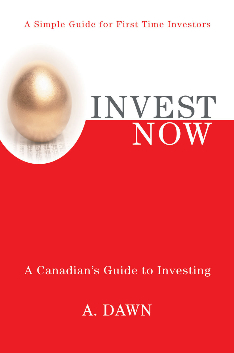
Money Hacks How Small Changes Can Save Big Money.jpg Invest Now Cover.jpg Credit Card Hacks - High Resolution.jpg


Blog RSS

View fullsize Elevated dining above the clouds! ✈️🇹🇷 Traveling from Istanbul to Toronto (IST to YYZ) with Turkish Airlines Business Class always delivers a fantastic food experience.

The journey started with an impressive Turkish Cold Platter—a fresh sele
View fullsize Signing off from Dubai, through the incredible Istanbul Airport hub, and on the way to Toronto (YYZ)! 🇨🇦🇦🇪🇹🇷

Another fantastic experience with Turkish Airlines Business Class. This flight is long-haul travel done right: that traditional Turkis
View fullsize Turkish Airlines Business Class Instagram Post
The ultimate perspective on the ultimate journey. Settling into Turkish Airlines Business Class from Istanbul to Toronto, taking in the breathtaking comfort and space. From the moment of takeoff, an expe
View fullsize Turkish Airlines Business Class Dessert 
Ending the dinner service on a high note! ✈️🍰

Even the desserts in Turkish Airlines Business Class are plated like a fine dining restaurant. A perfect way to wind down the flight from Istanbul to Toronto bef
View fullsize Turkish Airlines Business Class Meal 
The Flying Chef strikes again! 🧑‍🍳🍽️

This is what dinner looks like at 35,000 feet on Turkish Airlines Business Class from Istanbul (IST) to Toronto (YYZ). Gourmet Turkish and international cuisine served

Flying Business Class is a lifetime dream for some and it's a must (and not a big deal) for some others. When it comes to redeeming points, flying in Busines...


Recent Posts
Nov 18, 2025
Best Budget Island in Maldives - Local Island Dhigurah Travel Guide
Nov 18, 2025
Nov 18, 2025
Oct 14, 2025
Toronto to Niagara Falls by Train: A Scenic VIA Rail Journey
Oct 14, 2025
Oct 14, 2025
Oct 6, 2025
FlixBus Ride from Niagara Falls to Toronto: Budget Travel in Style
Oct 6, 2025
Oct 6, 2025
Sep 28, 2025
We Visited the Incredible Turkish Airlines Miles & Smiles Lounge at Istanbul Airport
Sep 28, 2025
Sep 28, 2025
Sep 21, 2025
Best Travel Shirt for Hot Climates: Columbia Omni-Shade Review
Sep 21, 2025
Sep 21, 2025

Archive
  • Accessories | Products 49
  • Business | Entrepreneurs 72
  • Camera Tips & Accessories 2
  • Canada & Global | Views 170
  • Chromebook Basics & Tips 1
  • Credit Cards | Rewards 120
  • Global Real Estate | Tips 130
  • Global Travel | Africa 72
  • Global Travel | Americas 26
  • Global Travel | Asia 61
  • Global Travel | Europe 3
  • Global Travel | Oceania 43
  • Internet | Technology 59
  • Life Hacks | Smart Tips 66
  • Lifestyle | Global Travel 53
  • Men's Grooming & Style 6
  • Notebooks & Pens 3
  • Personal Finance | Invest 169
  • Product Service | Reviews 27
  • Retirement 101 | Tips 25
  • Self Growth | Life Tips 91
  • Travel Hacks | Points 81


  • Canada & Global | Views
  • Global Travel | Asia
  • Business | Entrepreneurs
  • Men's Grooming & Style
  • Global Travel | Oceania
  • Internet | Technology
  • Global Real Estate | Tips
  • Lifestyle | Global Travel
  • Product Service | Reviews
  • Chromebook Basics & Tips
  • Travel Hacks | Points
  • Notebooks & Pens
  • Camera Tips & Accessories
  • Accessories | Products
  • Global Travel | Americas
  • Global Travel | Africa
  • Global Travel | Europe
  • Credit Cards | Rewards
  • Retirement 101 | Tips
  • Self Growth | Life Tips
  • Personal Finance | Invest
  • Life Hacks | Smart Tips

Ahmed Dawn Dot Com is proudly powered by Squarespace | 
Copyright © 2017 [A Dawn Dot Net Corp.] All rights reserved   |   Privacy & Cookies