What Is Inflation?

Inflation: Definition and Causes

First Published: ADawnJournal.com March 7, 2010

When there is economic trouble, you often hear about inflation. Inflation is something that many people know about, but few people actually understand. Yet, inflation plays a very important part in our lives. If not for inflation, everything would still cost a few cents, but because of inflation the price of a can of Coca-Cola has gone from five cents to over a dollar.

Essentially, inflation is the rise in the price of goods and services over a period of time. Some define inflation as the loss of purchasing power because when a price level rises, the unit of currency (the dollar for example) buys few goods and services. While in the past one dollar could buy a lot of things, these days it buys barely a can of Pepsi.

Governments around the world, as a result, pay a great amount of attention to the inflation rate, which is the percentage change in the price index over time.

Inflation is not all bad of course. There are both good and bad effects of inflation that should be understood. The good things about inflation include the fact that it prevents recessions and provides debt relief by lowering the real level of the debt. In addition, it helps to eliminate expensive debt since the value of the dollar changes over time. However, there are some bad points and they include lowering the economic productivity rate, cause shortages of goods and services and reduce the investment in capital that helps keep an economy going.

Canada has gone though many different levels of inflation during good and bad times. For example, between 1966 and 2004, the country reached an extreme low of level of inflation in 1994, when it was near zero, while in 1974 the inflation rate went past 14 percent. This just shows how much the inflation rate can shift for a country during good and bad times.

High inflation is caused by huge growth in the supply of money, while low inflation is caused by small fluctuations in the demand for goods and services. The growth of inflation at a steady rate over time is usually attributed to the growth of an economy. For example, the United States had its economy grow slowly between 1900 and 1950, and inflation moved slowly. However, the economy grew greatly from 1950 to 2000, which accounted for the huge increase in the price of items.

Most western countries, including most of Europe, Canada and the United States, have very low levels of inflation. This shows that these economies are relatively healthy and less volatile. The inflation rate of Canada and the United States is usually about 1.5 percent per year.  Many developing countries have a very high rate of inflation, including Afghanistan and Mongolia, which both have inflation rates in excess of 25 percent. This shows that these countries lack stability and have a very volatile economic situation. As well, the worse the inflation, the less likely investors will invest in a currency of a country.

As for what causes inflation, this is much harder to determine. When economies are in trouble, inflation rates can increase, but they also increase when economies are doing well. Most economists have a general idea of how inflation works, but more or less it is seen as a by-product of our modern capitalistic world and something that is not completely understood, least of all by regular people


Globe Investor’s New Terrible Site Redesign and Why Is It Time to Switch to Google Finance Canada

Globe Investor by The Globe and Mail

Globe Investor’s Recent Terrible Revamped Website

First Published: ADawnJournal.com March 7, 2010

I know what you will say once see the title of this article: Globe Investor comes nowhere near comparing with Google Finance Canada and they are meant to be used for different purposes. And up to now, I have totally agreed with you. However, I have changed my mind once I actually experienced their new redesigned site last week.

It is hilarious to see these mega sites trying to put on a huge show through online advertisements and campaigns to announce their new revamped site design – and then come up with a site that is much worse and more user unfriendly than previous versions.

What don’t I like about the new Globe Investor? Basically everything. They tried to make it look like a high-tech website by putting too many nice pictures and big stock market chart; however, they forgot one main element – simplicity.

When you open globeinvestor.com, the first thing that you notice is that almost all of your screen is covered with a gigantic market summary chart and a couple of pictures. And then, if you keep scrolling down, you will be bombarded with about 15-20 sections/columns with big pictures representing each one of them. Let’s say, if you want to find your favourite sections, or any specific columns, there is no way you can find it in a snap. The front page takes about 5-6 page down to see the whole thing.

A simple test you can do right now to see how inefficient and cluttered Globe Investor is. How much time you would need to browse all sections and important highlights on mega sites like Google.ca/finance, Economist.com or IHT.com? I can do in about 20-30 seconds. How long it would take to do the same birds-eye-view scan of heavily cluttered Globe Investor home page? Give yourself an A+ if you can do it in 1 minute.

On a regular weekday, I usually browse Globe Investor 10-12 times and Google.ca/finance 2-3 times. However, starting now, I will flip it to Globe Investor 2-3 times and Google.ca/finance 10-12 times. Finding time is complicated enough and there is no point making it more complicated with the new revamped Globe Investor. Google Finance is may be miles away from Globe Investor in terms of offering features and customization, but I know it won’t take long for Google Finance Canada to catch up. After all, Google always seems to redesign and add features keeping simplicity and what readers want in mind – not the other way around.

How to Build an Investment Portfolio

How to Create an Investment Portfolio

First Published: ADawnJournal.com March 14, 2010

What Is An Investment Portfolio?

An investment portfolio is nothing but your collection of investments. You can hold a wide range of investments such as stocks, bonds, money market instruments, and so on in your portfolio. The objective of building a portfolio is to minimize risks and maximize return by diversify it among variety of investments. Diversification can be made within same asset class or across different asset classes. Research has shown that a diversified portfolio spreading across different classes always is the key to build a successful portfolio.

What I Need To Consider Before Building A Portfolio?

There are various factors you should consider before start building a portfolio. These factors are:

– Your time horizon
– Your risk Tolerance
– Your investment objects etc
I discussed about these in another article. Please follow this link to read it – What Is Asset Allocation?

Are There Any General Rules of Thumb Building An Investment Portfolio?

There are too many, actually. I would have to say, the most common rule is the 100 – age rule. This is simply getting the percentage of stocks and bonds you should hold by subtracting your age from 100. For example, if you are 30, you should hold (100 – 30) 70 per cent stocks and 30 per cent bonds. As you grow older, you should be reducing your stock portion according to this rule. When you are 60, you should be holding 40 per cent stocks and 60 per cent bonds.

Another simple portfolio building approach is the Neutral Allocation – which is holding 60 per cent stocks and 40 per cent bonds. Two other portfolios worth mentioning are Lazy man or couch potato portfolios by Scott Burns and The Permanent Portfolio by Harry Browne.

To find many other portfolio ideas, do a search by entering these keyword phrases: β€œinvestment portfolio mix,” β€œportfolio asset allocations tools,” β€œmodel investment portfolio,”etc.

Do You Have Your Own Investment Model Portfolio?

Yes, to make investing simple and worry-free, I have been invented a model portfolio called β€œA Dawn Portfolio” or simply ADP. You can read more about ADP here – (I am still working on this project and will add a link once done)

To find many other online asset allocation calculators, do a search by entering these keyword phrases: β€œasset allocation calculators,” β€œportfolio asset allocations tools,” etc

Last Word

Of course, you need to decide if the recommended allocations match with your personal risk tolerance and market views. Investments must be considered in context

If you are at all interested in asset allocation strategies, I strongly recommend that you read about the science. Don’t just follow conventional thinking and rules of thumb.

Ten Timeless Personal Finance Tips By Financial Author Ahmed Dawn

Ten Timeless Tips For Financial Success

First Published: ADawnJournal.com December 1, 2009

The financial crisis is making a lot of people realize that they don’t know how to manage money.  Unfortunately, this is not taught in our schools, but Canada’s Personal Finance Blog – A Dawn Journal is here to help you. This article will teach you all the basics you need to become financially successful. Visit A Dawn Journal regularly for more articles like this.

1. Spend less than you earn. If this is something you can’t do, make arrangements to bump up your income by taking a part-time or an additional job. This number one tip is the most important, timeless financial tip ever. If you can’t do it, all or any other financial tips will be meaningless.

2. Track your spending. I don’t believe that a dollar-for-dollar budget works. However, you should have a rough idea of how much you spend on certain categories. Keep track all of your expenses and adjust necessarily among various categories, i.e., if you see you are spending too much on entertainment, take steps to reduce your expenses. At the end of the day, your expenditures have to be lower than (as mentioned in point 1) your earnings. Use free personal finance software to keep track of your expenses.

3. Pay yourself first. Set aside at least 5-15% (do 5% if you have loans, do more than 5% if you don’t have loans, credit card balances etc) of your gross income into your investment account, savings account, RRSP, TFSA or so on every month. Set up an automatic plan to do it regularly.

4. Have an emergency fund. Have six months’ worth of living expenses in a high interest savings account for emergencies.

5. Set goals. Know exactly when you want to pay off your loan, buy a car, buy a house, and when you want to retire.

6. Pay your credit card balances in full every month. If you already have credit card debt, pay it off first. Credit cards charge the most interest. It is a good idea to pay off credit card balances with a line of credit account, which charges half the interest.

7. Try to avoid buying a car. If you still need to buy, buy a used car. A new car depreciates about 35% the moment you drive it off the lot.

8. Pack your lunch. If you eat out every day, your approximate cost would be as below:

Weekly Cost = $10 * 5 = $50

Monthly Cost = $50 * 4 = $200

Yearly Cost = $200 * 12 = $2,400

$2,400 annually is a lot of money. If you are in a 42 % tax bracket, for example, you keep 58% of each additional dollar you earn. When you consider all the taxes and costs associated with earning that after-tax $2,400, saving $2,400 annually means actually saving $4,000 in pre-tax savings (all figures are approximate). Let’s put it another way – if you can brown bag your lunch, think of it as you are giving yourself a $4,000 raise annually.

If you can’t pack every day, pack at least two to three times a week.

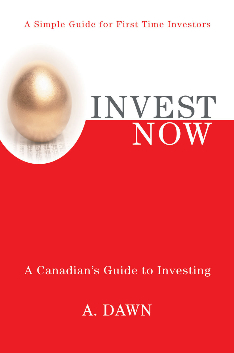
9. Start investing. Investment is nothing but a discipline; it has to be orchestrated with great passion and care. Investment is not like going to the shopping mall and buying a few things impulsively. Start investing for the long run, and keep adding money every month or every week. Stay invested for the long run-through good times and bad, through market ups and downs. If you don’t know how to start investing, I recommend reading Invest Now. Anyone can become a successful investor by following three simple and practical steps mentioned in this book. If you are not comfortable investing on your own, seek professional help. I recommend fee-only financial advisors.

10. Review your progress at least once a year. If you are not satisfied with achieving your financial goal, change or modify your financial roadmap. If you are not sure what actions to take, consult a fee-only financial planner.

What Is A Mortgage Payment Schedule?

Amortization Schedules – Always Keep Your Eyes Open

First Published: ADawnJournal.com December 10, 2009

On taking out a loan, it is not uncommon to get a momentary buzz of excitement on seeing the temporary balance of your bank account, showing as it does a few extra digits above and beyond the usual. It is perfectly common in such a situation to forget the small details, such as the fact that all that money needs to be paid back over time and that, generally, that money will pretty much all be accounted for in the very near future. These details come back to mind very quickly, though, in most cases, as we set about the arduous task of paying back the money we have borrowed. This is something we have to do in accordance with a schedule, and deviation from that schedule is likely to see us hit with a penalty.

A copy of your payment schedule will be one of the documents given to you on finalising your mortgage. It will tell you what you have to pay and when you have to pay it, any payments that are above normal and any that are below. Sticking to the schedule is your way of knowing that you are doing your bit under the mortgage agreement and should see you avoid any fees for non-payment being added to your account. Having a payment schedule should also put to the back of your mind any ideas about taking the money and spending it unwisely. The figures can make very sobering reading.

With a normal bank loan, taken out to pay for consumer goods, you will generally come to the end of your term while you are not much older than you are today. Looking at a mortgage payment schedule reminds you that you are locked into paying a certain amount of money for a certain length of time – and that this can add up to an awful lot of money and seem like an awful lot of time. It adds seriousness to a situation that is quite serious enough already. In short, if you borrow to pay for a house you are making a large commitment. Seeing that commitment outlined in black and white is the final proof that you’re making a step you cannot easily take back.

A payment schedule will often detail how much of your monthly mortgage payment is going towards paying down the balance of your loan, and how much is paying off interest. It is worth getting a breakdown of these figures, because there are numerous deals available which allow you to cut down how much interest you pay every month, and allow you to save money overall. It is worth shopping around for the best deals, and having your current mortgage payment schedule to hand may well enable you to research where you might get a better deal. Some deals have special terms and conditions written into them which allow you to renegotiate your deal after a certain period of time – if you feel as though your principal owing is not reduced every month, you can check around to see what other offers you might get.