Beware Of Mortgage Fraud Scams

Mortgage fraud Scams

First Published: January 10, 2010 ADawnJournal.com

With a mortgage being a simple transaction between an individual and an institution, with so much of the information locked in for both parties, it would seem difficult for mortgages to be open to fraud. And yet, it clearly is because there are an increasing number of potential mortgage scams that are putting householders out of pocket and in some cases out of their homes. The difficulty of targeting mortgage fraud is that fraud, to be successful, needs to be carried out by individuals with a large degree of cunning. If they are cunning enough to pull off a successful mortgage scam, they are certainly clever enough to operate undetected for a considerable period of time. There are other reasons that a fraudster may pass undetected, though.

For one thing, there appears to be a lack of due diligence taking place when it comes to mortgage applications, and this is allowing all sorts of initiatives by the fraudsters to take place. In one example half a decade ago, a couple living in a condo in Toronto found that they had been the victims of a scam which had seemingly resulted in their condo being mortgaged in their name and then sold out from beneath them. This had been achieved because the scam artists had managed to gather together enough real-looking fake documents to back up their story. A cursory check of the documents and a few questions later, and the fraudsters were walking away with a million dollars.

In many cases the fraud which is committed – and which the individuals have escaped from scot free – could be prevented with something as simple as a visit from the bank to the people whose name and address is on the documentation. Someone showing up at their door saying “I’m here to value your house for the remortgage you have applied for” would raise alarm bells instantly that the householders had been victims of identity theft. Mortgage scams, and any other mode of fraud, however, are probably crimes to which their will never be a complete antidote, as fraudsters are generally resourceful, resilient individuals. As soon as a loophole is closed, another opens.

Mortgage fraud never used to be such a problem, due in no small part to the fact that to take out a mortgage it was once necessary to attend the lending bank in person in order to sign the necessary documents and supply all the identification needed. These days, with the Internet and telephone playing such a large part in application processes, this is no longer the case, and it has ironically made mortgage fraud easier to commit in a supposedly security-conscious age.

Of course, there are other cases where the person taking out the mortgage really is who they say they are, and they do intend to use the money to buy a house. The problem is that they use incorrect information and occasionally direct lies in order to secure better terms on a loan – a loan which, due to their income, they generally cannot afford to pay off.

What Is Mortgage Valuation?

Mortgage Valuation

First Published: September 10, 2009 ADawnJournal.com

Oscar Wilde once said that a cynic is someone who “knows the price of everything but the value of nothing”. This is a quote that is still used today, although it is more commonly applied in our society to economists. Whether or not it is a fair task, it certainly has some currency in a world where, more and more often, prices can be applied to anything, and are described as “valuations”. The time has come when “price” and “value” mean more or less the same thing for a large branch of society. When it comes to buying or selling a house, the word “valuation” will be bandied about with unerring regularity. The house you wish to buy must be independently valued before the bank will even consider giving you a mortgage.

In valuing a house, the bank is able to value your mortgage. They are, after all, forwarding the money to you in order that you buy the house, and they do not want to back an investment that they consider to be excessively priced. If the time comes when you are unable to pay back the mortgage and they need to repossess the house the bank will have to sell it, often below its market value, in order to recoup some or all of what they lent to you. In this case, if the bank had backed your purchase of a house at what they considered to be an inflated price, they would be in a far worse situation when it came to selling on the house that they have inherited. They would have lent you too much, recouped too little, and spent time and resources doing so.

In some ways, then, it is the economist’s job to know the price of everything and the value of nothing (as Mr Wilde would have had it), but they would be more likely to say that the price of something is its value, because that is what the average buyer would be willing to pay for it. More accurately perhaps, things that you already have possess a value, and things that you want have a price. Ensuring that you have the property valued before advancing the process of applying for a mortgage will save you time in the long run, and could avoid the unnecessary raising of hopes and expectations.

The banks’ valuation of your desired property could even work in your favour. If they are seen to value it at a price beneath the asking price on the property, then it means that the person selling the house is more likely to accept a lower offer. You could save yourself some money by trusting in the bank’s valuation – after all, they have people who are paid to be what Oscar Wilde would have considered cynics. Persuading people to part with a property they loved for a price which is less than they valued it at may seem cold-hearted to some – but in the end, they would not be selling it if they didn’t need the money.

What Is A GIC (Guaranteed Investment Certificate)?

What Is A GIC (Guaranteed Investment Certificate)?

First Published: September 13, 2009 ADawnJournal.com

GICs are investment product (like mutual funds, bonds) that guarantees you to protect your principle (the amount you put in) with a guaranteed income for a particular period of time.

How Do GICs Work?

When you buy GICs, you are lending your money to the financial institution at a fixed or a variable interest rate, or based on a pre-determined formula (or arrangements) for a certain period of time. In return, at the end of the term, financial institution is giving you back the money you originally invested (called principle or capital) plus the interest you earned.

How Many Types Of GICs Are There?

Financial institutions will try to confuse you by giving many fancy names for their GICs. However, there are mainly two types of GICs. The first type pays fixed interest rate, and the second type pays variable interest rate. The second type can be linked to an index, a stock market, or a prime interest rate to pay you variable interest rate. Now let’s look at some other common terms institutions use:

Cashable GICs – You can cash it any times based on the terms provided by financial institutions. This may also be known as Redeemable GICs.

Non-Redeemable GICs – You won’t be able to redeem it until your GIC matures.

Index-Linked GICs – GICs that are linked to stock markets. This may also be known as Market-Linked GICs.

Where Can I Buy GIC?

Various financial institutions sell GICs such as banks, credit unions, discount brokerages, and other financial institutions. Also, your financial advisors are able to sell GICs through the institutions they are affiliated with.

Advantages of GICs

Here are the main advantages of GICs:

Principle Protection: Depending on what you buy, money invested in GICs can be safe and secure. At the end of the term, you will get back your capital you original invested. However, if you have security in your mind, it is recommended that you talk to a qualified financial professional.

Safe Parking: If you are not sure where to invest your money for the long term, you can park your money in short-term GICS while you can search for other options.

Higher Interest: GIC pays higher interest than traditional savings account.

CDIC Protection: Some GICs offered by CDIC insured institutions are protected for up to $100,000. Talk to your financial institutions to investigate this further.

Easy and Simple: GICs are easy to understand and simple to manage. You don’t need to have an MBA to invest your money in GICS.

Disadvantages of GICs

Here are the main disadvantages of GICs:

Liquidity: GICs aren’t very liquid (easy to withdraw) when you need your money
right away. A high interest savings account offers better liquidity than
GICs in most cases. With a GIC, your money is tied up for a specific period of time, i.e.,
one to three years.

Interest Income: If held in a non-registered account, interest earned on a GIC is
is taxed at a higher rate, for example, taxed at your full marginal tax rate.

Don’t Forget Inflation: Let’s say your GIC is giving you 2% interest. And consider that the annual inflation rate is 3%. If you keep $100 in your GIC for one year, you should have $102 in your hands after one year, right? Well, yes, technically, but that $102 is less than you started with. Due to inflation, you need $103 to buy same goods you would have bought with $100 a year ago. So actually, you lost money-$1, to be exact. Yes, real rates of return GICs can be negative or lower than what you actually see.

Final Word

I am not a fan of GICs. In Invest Now: A Canadian’s Guide to Investing I have discussed how to invest without being a financial guru in non-GIC products such as mutual funds. If the idea of losing money makes you lose sleep and you absolutely can’t take the slightest risks, may be GICS are an option for you. Talk to a qualified financial professional – before making any decisions.

The Day I Knew Invest Now Changed Someone’s Life

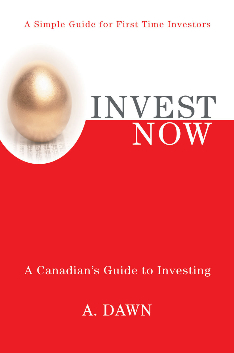
Invest Now: A Canadian’s Guide to Investing

When I was writing Invest Now, I was often occupied with the idea  that the objective of this book would be to change someone’s life. I was not too worried about selling lots of copies, or making lots of money, or even becoming a famous author. I was worried about only one thing. My target was something very simple and straight forward - to change a one person’s life. To help someone with what I have learned all these years, and to enlighten someone’s life with all of the knowledge and hard work I put into my first book. If I accomplish this, I would consider Invest Now a successful venture, and I would consider myself content with the feeling of joy and accomplishment.

And then came the day I had been waiting for. This is what I have wanted to happen since Invest Now was published. On the weekend of July 12, 2008, I was attending a community-based book fair and cultural festival. This event was taking place at the Church of St Columba & All Hallows, 2723 St. Clair Avenue East, Toronto. On Sunday, July 13, some visitors were browsing Invest Now. Some of them were just passing by after having a quick glance at my stall. All of a sudden, a guy rushed to my stall out of nowhere. His first question was, “Are you the author of Invest Now”? I replied, “Yes.” Then what he told me went beyond my imagination. I was totally astonished – but my heart was filled with indescribable joy and a sense of accomplishment. I am now going to share with you what that gentleman told me.

He works as a financial advisor. He came across Invest Now at a local bookstore. At first, he bought one copy for himself out of curiosity. And then, he fell in love with Invest Now instantly. He was having a hard time explaining the world of investments to his clients. Once he found Invest Now, he started giving a copy to his clients. So far, he has distributed 7 or 8 copies, but it did not stop there - he started recommending Invest Now to other advisors at his firm. He also wrote a few articles in the local newspaper, and he recommended Invest Now in those articles. Finally he said, “Thank you, thank you so much for writing a book like this, and helping lots of people to understand such a complex matter in easy way. It saved me so much time and work – before I would spend days explaining investments to my clients; now I give them this book and ask them to read it first before I recommend anything else. You made my life so easy – I appreciate your hard work and thank you for helping so many people.”

It definitely feels good knowing Invest Now has served its purpose, and changed someone’s life. I am sure I will come across many more stories like this in the years to come. However, this is not where everything ends. This is just the beginning. With my website “A Dawn Journal”, and with more books to be published in the future – I will be able to change many others’ lives. I will be able to help a lot more people; that’s what makes me write more. I needed a confidence boost, and this reader just gave me that. What I heard from him was exactly what I needed to be confident in continuing my journey into the future.