Bankrupt Nortel, Mutual Funds, and Invest Now

Stocks, Mutual Funds, and Your Financial Goals

First Published Date : January 22, 2009 ADawnJournal.com

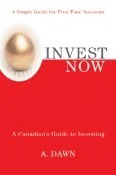
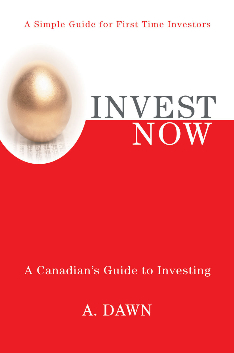
In my book Invest Now I mentioned that mutual funds are a less risky investment product than stocks and really suit those who are looking to keep risks at a minimum. I always come across financial gurus and regular investors complaining about the cost of mutual funds. However, they always fail to mention that stock investors may lose all their money if they pick the wrong stocks, but mutual fund investors are very unlikely to lose everything even if they pick the wrong mutual funds.

Just look at what happened to recently bankrupt Nortel. At the peak of the tech bubble, this superhero was trading at $1,231. And now its stocks are worthless. Let’s say you put in $100,000 in Nortel stock a week ago, or a year ago. How much is your $100,000 worth now? Nothing. How about the same $100,000 invested in a mutual fund a week or a year ago? It’s hard to say how much it would have been worth now (based on what you bought); but you can say in confidence that you would not have lost all your money—although you may have paid $2000 fees. Which one do you think is better? Paying a few thousand dollars in fees and keeping your money, or losing all your money without paying any fees?

The problem with stock is that it is extremely hard to pick winning individual stocks. On the other hand, mutual funds are designed for average investors; as a result, it’s not that hard to pick a mutual fund with a moderate rate of return. However, you need to be careful so you don’t end up paying hefty fees. In Invest Now, I discussed how you can invest in mutual funds without paying lots of fees. Also, I emphasized low-cost index funds. Index funds are not actively managed funds: no portfolio managers run the fund. Index funds mirror the market performance of an index by buying stocks or other instruments that match the underlying index’s composition.

In order to be a successful investor and realise your financial goals, you need to avoid unnecessary risks and paying sky-rocketed fees. Mutual funds, especially index funds, can offer all these with minimal effort and time. Even when everything goes wrong, it is unlikely that you will lose all your money with mutual funds. However, such is not the case with stocks. Just ask investors across the globe that were holding Nortel in their portfolio; they will be glad to tell you, had they known it before, they would have held mutual funds. Even the riskiest fund on earth with the highest fees would not have wiped out all their money in one day like Nortel did.
Munich Soccer Stadium

Sports - Munich Soccer Stadium

If you are a massive football fan then you will appreciate how well football stadiums are built and how they can have a big impact when they are fully built. One of the biggest stadiums in the world is the Munich Stadium which is held in Germany. In the next few paragraphs we are going to talk about the different aspects of stadium and the history behind it.

Some facts about Munich Stadium in Germany

  • The Capacity of this stadium holds 80,000 People.

  • It has some major football world cup events

  • It has been allowed to provide concerts in the stadium which has attracted some biggest names in the music industry.

If you do go to Germany and you are a football fan you should not miss this chance to visit the Munich stadium. You will be breath taken on how big the stadium actually is and you will be impressed on how beautiful the designers have made the stadium. If you get chance to watch a game inside the stadium you will find that the atmosphere will be electric. The crowd gets noisy and lively like a massive block party.

This stadium has been built for over 40 years and it has some had some amazing events. The first biggest event that was held in Munich stadium was in fact the world cup in 1974. Due to the capacity size it allowed Germany to hold the final and they produced an emphatic win against the Netherlands which came to 2-1. This produced the record attendance for a football game in Munich. The Munich stadium also held the Euro 1988 Cup. West Germany only got to play one game in that cup at Munich stadium in there group a match which was against Spain and they won 2-0.

England football team came across to the Munich stadium for a friendly in 1978 which they beat West Germany 2-1. England also came back to the Munich Stadium for the 2002 World cup Qualifier which they beat Germany 5 -1.

This stadium has also produced the Olympics in the summer of 1972. They allowed the Olympics at the Munich stadium due to the fact that it has a track around the center of the pitch.

If you are looking to take a tour around the stadium then one major part would be to see if you are able to go onto the pitch. If you are looking to go on the pitch then you are better to email the company to see if you will able to go on. Normally they allow people to go onto the pitch but only for a few minutes.

As you can see this stadium have had some of the most exciting football tournaments in the world which has provided the Munich stadium to gain some historic events since it has been built. It is defiantly a must if you are looking to go to Munich in Germany.

To streamline and minimize blog maintenance, I will be discontinuing maintaining the Travelnowsimply.com website (however, I will still hold the domain). I will gradually move all articles from this site to Entrepreneur Journey site. This article originally published on the above website on March 5, 2010.

Ten Tips To Stay Debt Free

How To Stay Debt Free

It all starts with a small amount. At first sight, you think this is nothing – you will be able to manage it, and will get rid of it shortly. However, the further you go, the harder it becomes. And this small, manageable amount starts becoming unmanageable. It takes over your life. Yes, I am talking about debts.

Want “The Best Advice” on avoiding debt? The answer is: not to    have any debt at all from the beginning. Follow these simple tips to stay out of debt:

·   Pay cash. Paying cash forces you to spend only the money you have. If you don’t have the money – it means you can’t afford it. Don’t buy things you can’t afford.

·   Use credit card only if you are able to pay in full each month. Beware of credit cards. Most of us fall into debt trap because of credit cards. If you aren’t able to control credit cards, get rid of it.

·   Avoid falling behind on your payments for your bills. If you start falling behind even only once, it will be hard to catch up.

·   Know your monthly income and expenses from all sources. To live debt free, income has to be greater than expenses. Maintain this ratio by cutting expenses.

·   Use personal finance software to track your income and expenses. When you visualize your spending pattern, it’s a lot easier to analyze and comprehend where your money is going.

·   Spend within your limits. Don’t buy stuff just because they are on sale. If you don’t need it, sale is not going to do any good.

·   Always buy on sale. If you are certain that you will be using items on sale over and over, buy them when they are on sale and stock up. Avoid paying full price.

·   If you already have accumulated credit card or other consumer debts, pay them off ASAP. Always pay over the minimum. Start paying off the smaller debts and move to the larger ones.

·   Set long-term and short-term realistic, doable goals. For example, short-term goals can be paying off smaller debts and long-term goals can be paying off larger debts and start saving money.

·   Be realistic. Set attainable and achievable goals. If your spending is more than your income, cut down on spending. However, if this is not possible for you, increase your income and stay in debt-free positive territory.

Blogging And Its Positive Effects

Why You Should Blog

A decade ago, had you mentioned a “blog” to just about anyone, they would have looked at you as though they thought you had gone mad. Even today there are many who don’t even know what a blog is, but their numbers are growing ever smaller compared to those who not only know, but blog enthusiastically themselves. In fact, the word blog has become more and more frequently used both as a verb and a noun. “I blogged about this” or “I wrote about it on my blog” are sentences that are technically possible, if a little self-involved. There is a persistent strain of opinion which holds that blogging is the preserve of the self-obsessed and conceited, but this is to do a tremendous disservice to the medium and many of its practitioners.

There are many different ways one can approach a personal blog. Some find that it is a good place to vent about things that have upset them, while simultaneously a good way of communicating positive feelings. Others may get creative with their blog and build up something of a character around it. Some of the most popular blogs are read by millions worldwide, considered by many to be better than a soap opera due to the interactivity that a good blog can have. Others just enjoy putting up opinions and observations, either inviting or at least not discouraging feedback. If all of this sounds a bit like a glorified diary, you’re close, but not quite there. A diary is, after all, intended to be extremely personal while a blog is very much shaped by its potential for wider readership.

So far we have seen blogs turned into books, films and TV shows, and we have further to that seen the medium itself take several different shapes. “Vlogging” is now an entity in itself, differing from blogging in that practitioners do not so much write about their subjects as speak directly to camera and post the video content on a blog, or on the popular video hosting site YouTube. Everyone with a webcam and a microphone, or with a modern cell phone, can now be the star of their own video show. This medium has the further advantage above blogging of being more demonstrative. Words typed sarcastically on a blog can become damaging by virtue of the fact that typing has no inflection. When vlogged, they are better understood.

Of course, you don’t need to make your blog public. It can be as private or as open as you wish, and you can ring-fence it for only your friends to see. Top bloggers have made careers in the wider media, too, so if you have a gift for the written word it can be advantageous to let your opinions be read by an audience. You may simply want an easily archived journal of your thoughts. The only limits are those which you choose to place yourself – which in itself is good practice. It is generally better to keep some things for your eyes only.

To streamline and minimize blog maintenance, I will be discontinuing maintaining the Simplepersonaldevelopment.com website (however, I will still hold the domain). I will gradually move all articles from this site to Entrepreneur Journey site. This article originally published on the above website on August 23, 2009.

NEW RULES OF RETIREMENT – A Dawn Journal Book Review

A Canadian Retirement Planning Book

First Published: ADawnJournal.com Feb 4, 2009

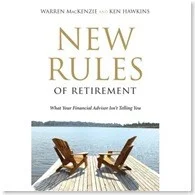
Bay Street veteran investment professionals and Toronto authors Warren Mackenzie and Ken Hawkins have sent me two copies of their recently published book NEW RULES OF RETIREMENT: WHAT YOUR FINANCIAL ADVISOR ISN’T TELLING YOU. One copy is for my free giveaway and one copy is for me to review. I just finished reading this book today, so here’s my review.

Retirement Planning Is Not Just Financial Planning

The majority of traditional financial planners will map your retirement planning based on your bank accounts. They will not look at the human aspect of retirement, and therefore will miss the bigger picture of retirement. This may sound odd, but remember that financial advisors are working for the financial industry and your bank accounts are what are making deep-pocketed profits for these financial institutions and advisors.

Retirement is a process which is made up of both financial and non-financial aspects. Of course, you will need to be in a stable financial situation to enjoy your retirement years, but you also need to look at it from a broader human perspective. You need to understand, plan, and consider your emotions, attitudes, goals and so on. In order to enjoy your retirement fully, you have to be ready to face different situations than what you have expected, consider different paths based on those unexpected situations, and tackle them with financial and psychological preparedness. The right preparation, expectations, and attitudes will help you make it through your retirement journey.

Things Have Changed

Nowadays, retirement is not the same as it used to be in the old days. In the old days, retirement was meant to be sitting idly and doing nothing but relaxing. These days, retirement is not just living a life of leisure and sedentary activities. Rather, retirement is an opportunity to take you to the second phase of your life. This is the other part of life which will be filled with activities you have always wanted to experience but never had a chance to do—pursuing your dreams, living in a new place, living a life full of activities, or embracing new challenges to live a more fulfilling and self-developed life.

Stay Away From Old Retirement Myths

The authors talk about some old retirement myths perpetuated in our society. If you are still planning your retirement based on these myths, it is high time you review your retirement road-map and throw away these myths. Here is the list of myths the authors pointed out in the book:

Retirement Means Not Working – Myth 1
Retirement Is Strictly An Economic Event – Myth 3
You Can Determine The Age At Which You Retire – Myth 4
Retirees Need 80 Percent Of Their Pre-Retirement Income To Maintain Their Standard Of Living – Myth 5
Retirees Need To Live Off Their Investment Incomes Without Touching The Principle – Myth 6
Retirees Should Take Little Financial Risk – Myth 7
Retirees Should Minimize Their RRSP/RRIF Withdrawals – Myth 8
Retirees Do Not Need Advice – Myth 9
The Most Important Objective In Retirement Is To Maintain Your Pre-Retirement Standard Of Living – Myth 10

The authors discussed these myths in the first chapter, explained why they are wrong, and then pointed out what you should do to protect yourself. The authors did a good job here starting the book with these myths; it gives the readers an idea of what to expect once you cross the door and also it makes coming chapters more riveting.

Thirty Eight Rules

The book consists of thirty eight rules. Each rule is one chapter. Authors talk about a wide range of topics covering a variety of subjects, such as how to plan for retirement, how to construct a simple portfolio, what government services are available to help you with your retirement, and so on.

What I Like

I like those chapters most wherein the authors talk about Old Age Security, Defined Benefit Plan, how early retirement affects your benefits, Life Annuity (a type of product), and how to make the most out of your RRSPs, RRIFs, etc. I believe these chapters provide invaluable information for lots of readers who have very little or no knowledge on these products and benefits. The authors explained them in simple ways and these chapters are what make this book distinctive amongst its peers.

What I Don’t Like

Due to the fact that the authors discussed so many topics in one place, you will have a feeling that it’s just kind of skimming the surface and not actually taking you too deep. This is understandable, however, as this 220-page book would have turned into a 2000-page book had the authors taken a deep dive.

My Take

If you are a regular ADJ reader, you know that I go by three very simple and straightforward ratings for my book review: A Must Read, Worth Reading, and Do Not Read. For this book, I will slightly modify my rating, still keeping within the range. This book is mainly targeted to baby boomers, and the publication timing is perfect in light of the current global financial meltdown (the first batch of baby boomers will be 63 in 2009 and will receive Old Age Security in 2011). If you are a baby boomer, or if you are over fifty, my rating is A Must Read.