Kuala Lumpur Full-Day City Tour – Part 3

Malaysia Travel Blog: Discover Amazing Kuala Lumpur City Tour

Kuala Lumpur Travel Blog: Part 6

National Mosque (Continued from Kuala Lumpur Full-Day City Tour – Part 2)

There were many reflecting pools and fountains throughout the mosque. A sense of tranquillity and peacefulness existed throughout the complex.

I noticed there was a point up to which non-Muslims can go inside the mosque. The employees were not letting visitors inside, which seemed to be the main prayer room, unless they were Muslims. 

Some of the Kuala Lumpur skylines were visible from the mosque. I saw 2 buildings connected on top, which looked like a boat, next to the St. Regis hotel. This building complex kind of looked like the Marina Bay Sands Hotel in Singapore. I was not sure if these 2 buildings were a part of the St. Regis hotel or separate.

Independence Square & The King’s Palace

From the National Mosque, I headed to Independence Square. This is also known as Merdeka Square or Dataran Merdeka. Independence Square features a panorama of long-stretch, fascinating buildings in an array of architectural styles. Here the remnants of the British Empire are clearly visible.

The King Palace is the official residence of the Malaysian supreme king and a symbol of Malaysian sovereignty. The palace is made of many golden domes and structures influenced by Islamic-style architecture.

The palace complex was huge and tourists only can come close to the entrance gate. The main palace was far from the gate, but still visible.

I stopped at a few more locations here and there. I will be heading to the Batu Caves, which are located north of Kuala Lumpur.

What Age Should You Retire?

Are You Ready to Retire?

First Published Date : August 14, 2010 ADawnJournal.com

Everyone knows that the general retirement age is 65, which is when people feel they will retire. However, for some retiring at the age of 65 is too late, while retiring at that age is just too early. So, how do you know when the best year of your life is to retire? It is a tricky balance. You want retire in time so that you can enjoy your remaining years because no one wants to retire at 85. However, you also want to make sure that when you do retire, you have the money to enjoy yourself. You can’t live on $10,000 a year if that is all you have to sustain you for the next 20 years if you retire at 65.

When looking at if you are psychologically ready to retire, see if any of these match what you feel:

1.   You find that work interferes with the things that you want to do with your life.

2.   You want more freedom with your life.

3.   You want to retire when you can still enjoy your retirement and still have your health.

4.   You are prepared to lower your costs in order to save more in your retirement.

5.   You are not fulfilled or happy in your job anymore.

6.   You have plans and goals you want to fulfill with your extra time.

The next thing you need to do is look at whether or not you are ready to retire financially. This can be harder to determine because there are so many variables. Do the following to determine if you are ready to retire:

1.   Look at how much you pay out for expenses now, and determine what you can cut back on. Then, look at your expenses at that point and how much money you need to live on for the next 30 years.

2.   Look at how much you have in your savings and retirement fund and divide it by 30. If it gives you enough to live on, you may be ready to retire.

3.   Determine how much money you have in spare in case of disaster. As you get older, medical costs can come up and that will cause severe problems with your finances.

4.   When you retire at 65, you should have enough money to last you for at least 25 years living just on pensions, retirement income and retirement savings. It is important to remember though that if you retire at 55, you need to have 35 years of savings and retirement income at your disposal. The sooner you retire, the more money you need to live off of because there are more years before you reach the end of your life, statistically speaking.

If you match these criteria, and you are ready for retirement, then you should seriously look at retiring. Retirement is something that you will look forward to, but if you retire too late, or too early, you will not be able to enjoy it as you would want to.

Some Facts About Brazil’s Economy

The Growing Power of Brazil

First Published Date: August 19, 2010 ADawnJournal.com

Brazil is a very interesting country with a very bright future if many economists are to be believed. Brazil, while considered a developing country in the past, is now one of the most important economies on Earth.

Brazil has the eighth largest economy in the world in terms of nominal GDP, and it ranks ninth in terms of purchasing power parity. Among all of the South American nations, it has the largest economy, and it has one of the fastest growing economies on Earth, with a GDP growth rate of five percent. Naturally, many are predicting that within a few decades, Brazil will have one of the five largest economies on the planet.

In 2009, Brazil was the top country in terms of upwards evolution of competitiveness. It gained eight positions, and passed Russia for the first time in history. Brazil is also beginning to close the gap with India and China.

Much of Brazil’s fast growth is as a result of the changes made to the economy in the 1990s, which focused on fiscal sustainability and the opening of the economy, helping to boost how competitive the economy is in the world. Brazil, as a result, now has a much better environment for private-sector development.

Brazil’s economy is in a wide amount of sectors. The country builds submarines and aircraft, as well as smaller-end technologies. In addition, Brazil was the only country in the entire Southern Hemisphere to help in the construction of the International Space Station.

Exports within the country amount to $158.9 billion. The biggest export for the economy of Brazil is transport equipment, iron ore, soybeans, footwear, coffee, automobiles and their parts, and machinery. The main countries that Brazil exports to are the United States (14 percent), Argentina (8.9 percent), China (8.3 percent), Netherlands (5.3 percent), Germany (4.5 percent) and Japan (3.1 percent)

Brazil imported $136 billion in goods in 2009, with their main imports being machinery, electric and transport equipment, oil, chemical products, automotive parts and electronics. The largest importers into the country are the United States (14.9 percent), China (11 percent), Argentina (7.7 percent), Germany (6.9 percent), Japan (3.9 percent), Nigeria (3.9 percent) and South Korea (3.1 percent).

Brazil, while greatly improving its economy, still has some work to do. The country still has a great deal of poverty, and low wages, along with environmental problems. However, as the country continues to move into the future, it is certain that it will become a leader on Earth in many sectors. Brazil already leads the world in the use of ethanol gas, with a large percentage of its vehicles running on ethanol. In the coming decades, most economists believe that the United States will fade in economic power, while Brazil, China, India and the European Union will grow in economic power to become the economic centers of the world. For many looking for countries to invest in, Brazil is a place that cannot go wrong for the time being, even weathering the worldwide recession quite easily.

Personal Finance Guide for Kids Age-by-Age

Teaching Children about Money: Goals by Age

First Published Date : August 22, 2010 ADawnJournal.com

Did you know anything about personal finance when you were a kid? I did not, and I hadn’t the slightest idea of how money and finances worked at that time. I wish things were different then. I wish I was taught to prepare myself to face the real world financially. It’s not just me; most of us were not given any money lessons at an early age and at schools and universities. It is time to take lessons from our past. As parents, our goals should be to financially prepare our kids to face the money challenges that exist in the present world. Today, I will present a simple age-by-age personal finance guide for kids. To make things simple, I have broken down the learning time frame into 4 different parts: age 1 to 5, 5 to 10, 10 to 15, and 15 and beyond.

Personal Finance Guide For Kids: Age Up To 5

Kids start to show interest in money and coins at an early age. During this time frame, start teaching kids the basic concepts of money. Here are some ideas:

Introduce them to various coins and bills.

Teach them how different coins and bills add up to a greater bills and coins. For example, 5 pennies make a nickel, 5 Loonies (1 dollar coin) make a 5 dollar bill and so on.

Explain how money and society work. Money is something that we exchange to buy various products and services to take care of ourselves.

Teach where money comes from. We go to work to earn money and this makes us sacrifice our time at home with family.

Buy them a piggy bank and encourage them to save money by putting money in it whenever they have some in their hands.

Personal Finance Guide for Kids: Age 5 to 10

Explain that money is not endless. We need to make choices between products or toys; we can’t have it all, as money is not endless. If your kids ask for many things at a time, an exercise you can do is to give them an amount, such as $5 or $10, and tell them to pick the one they think would be the best.

Tell them we need money to buy food and take care of ourselves. We can’t spend all money as soon as we get it because if we do that, we will be in trouble in the future and won’t have anything to take care of ourselves.

Involve kids in family planning and finances. Ask your kids to participate actively in family meetings regarding future planning and money issues. For example, if you are going on a vacation, ask your kids to research the best deals within your budget or ask everyone, including the kids, for their suggestions on fulfilling goals of making major purchases and so on.

Do not give kids allowance without proper guidance. Help them to budget their allowances, especially a certain percentage (15 to 20%) going to their savings accounts.

Teach them how to pay for a purchase and how to count the change they are getting back from the cashier.

Teach kids the power of giving. Tell them that we are fortunate to live in one of the wealthiest countries on earth and not everyone is as fortunate as we are. Explain to them that we can live a more meaningful and joyous life by sharing and giving what we have to those who are less fortunate.

Explain how a bank works, what a credit card is and why it charges interest. 

Explain to them what a budget is and why it is important to stay within a budget. However, do not over-emphasize the budget at this time.

Personal Finance Guide for Kids: Age 10 to 15

It is time to put some concepts you taught your kids in the previous age segment into practice at this time.

Set up a real savings account at the bank. Teach your kids how to handle bank accounts. Teach them about credit cards and how they work. You can also set up a credit card for them with a lower limit. Here is an article to deal with credit cards for kids: Should We Give Credit Cards to Kids?

Help your kids with setting goals. Explain to them how to set up goals and show them how to reach goals by making plans. For example, if they want to buy a bicycle or a gadget, instead of financing the full cost ask them to finance half from their savings by setting up goals to save that much.

Kids should pay for their expenses such as movie tickets, cell phone bills, snacks, etc. themselves. The reason? Using their allowances to pay for stuff they need will make them realize that money is limited and if they waste money on something, they won’t have money to buy other things.

Ask them to exercise the power of giving. Even from their small allowance, they can donate to charities and to those who are less fortunate.

Kids should budget for their expenses at this point and should spend less than their earnings or allowances.

Kids should not be paid for doing regular household chores. However, you can pay them for special projects which are outside regular chores such as such mowing the lawn, cleaning the backyard, and so on.

Personal Finance Guide for Kids: Age 15 and Beyond

This is the most critical time of kids’ lives as they are on the verge of stepping a foot into the real world. Personal finance education should follow a slightly different path at this stage.

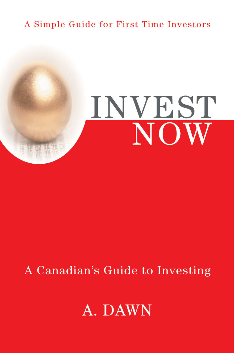
Start talking about more targeted personal finance teachings starting this point. Some of the examples are: Investing 101, debt management, credit cards, how financial markets and products work (Invest Now by A. Dawn is a recommended book to learn the basics of financial markets and products), and so on.

Some of the resources you can use for your kids can be found right here, written by your favourite personal finance author A. Dawn. The Personal Finance For Kids Section is just one to mention among a few of them here. There are tons more articles suitable for kids available for free on A Dawn Journal. Take your time to read them to enhance your knowledge on personal finance at your leisure by bookmarking this page.

Just because your kids have reached this age does not mean that you should stop talking about finances. Kids at this age need more financial advice and guidance than ever before. Have open discussions about money and finances whenever opportunity exists.

I have taken my time to write this article suitable “in general” for all kids. These guidelines or tips are not set in stone. It is recommended that, based your kids’ ability or interest, you may need to switch around these tips. For example, if you find your 7-year-old seems to be very interested in learning about finances, try using some tips from the 10 to 15 age group and observe how she reacts. It is the parents’ responsibility to secure their kids’ financial future by guiding them through a solid financial roadmap from their early days.

Kuala Lumpur Full-Day City Tour – Part 2

Malaysia Travel Blog: Discover Amazing Kuala Lumpur City Tour

Kuala Lumpur Travel Blog: Part 5

Kuala Lumpur Cocoa Boutique

My tour guide took me to the tour vehicle, which was a car. It appeared that I was the only one on the tour, which was not a bad thing. Our first stop was at the Cocoa Boutique, the largest chocolate boutique in Malaysia.

There were more than 300 varieties of chocolate or chocolate-made art works. Some of them were really big, like a big dragon made of chocolate.

The personal chocolate guide there gave me a tour of the store, providing details on the history of chocolate and even how some specialty chocolates were made. Everything seemed to be overpriced and I didn’t buy anything. That place was crowded even in the early morning.

National Mosque

The next itinerary on the list was the National Mosque. This place was huge. I had to enter my name and country of origin and remove my shoes before entering the mosque. All of a sudden a man came out of nowhere, running towards me and trying to tell me something. I eventually discerned that he was saying Justin Trudeau was a very, very good man. He saw Canada next my name and came running to me just to tell me that.

The National Mosque architecture reflects contemporary traditional Islamic art with the help of calligraphy, ornamentation, and other past and present art works.

The roof of the mosque was the most strikingly designed and unique. It looked like a multi-fold umbrella that symbolizes the aspirations of Malaysia as an independent nation. The minaret is 73 metres high (240 ft) and the main roof has a 16-pointed star. 15,000 people can pray in the mosque together and it is situated among 13 acres (53,000 m2) of gardens in the heart of Kuala Lumpur.