Why I Still Carry the Scotiabank Passport Visa Infinite With a 900 Credit Score

Why I Still Carry the Scotiabank Passport Visa Infinite With a 900 Credit Score

With a 900 credit score, I can qualify for virtually any premium credit card in Canada, including cards with annual fees approaching $1,000. Yet the Scotiabank Passport Visa Infinite remains permanently in my wallet, and I continue renewing its $150 annual fee every year without hesitation.

I spend a significant amount of time traveling international. Over the years, I've learned that the best travel credit card is not necessarily the most expensive one. It's the card that consistently saves you money and makes travel easier.

When you strip away flashy metal cards, luxury marketing, and complicated rewards programs, the Scotiabank Passport Visa Infinite continues to deliver exceptional value. In my case, the card provides an estimated $1,350 to $2,200+ in annual travel utility from a fee of just $150 per year.

Here are the five reasons I continue renewing it every year.

Annual Value at a Glance ($150 Annual Fee vs. Real-World Return)

  • Free Supplementary Cardholder Travel Coverage: Approximately $250-$500+ CAD in standalone travel insurance value.

  • Built-In Travel and Car Rental Insurance: Approximately $500-$1,000+ CAD in coverage that would otherwise need to be purchased separately.

  • 6 Complimentary Airport Lounge Visits: Approximately $350-$420 CAD in annual value.

  • GigSky Global eSIM Benefit: Approximately $150-$200 CAD in mobile data and roaming savings.

  • No Foreign Transaction Fees: $100+ CAD saved for every $4,000 spent abroad.

Total Potential Annual Travel Value: $1,350-$2,200+ CAD

Actual value will vary depending on your travel habits, but I personally use most of these benefits every year. That's why paying the $150 annual fee remains an easy decision for me.

1. Free Travel Insurance Coverage for a Supplementary Cardholder

This is one of the most underrated benefits of the card and one of the main reasons I keep it.

Most major Canadian travel credit cards limit insurance coverage to the primary cardholder, spouse, and dependent children. That can become a problem if you frequently travel with a boyfriend, girlfriend, parent, sibling, friend, or travel companion.

The Scotiabank Passport Visa Infinite allows the first supplementary cardholder at no additional annual fee.

Because supplementary cardholders receive full cardmember status under the insurance certificate, they can receive valuable travel insurance benefits without the need to purchase a separate policy.

Effectively, you can provide a travel companion or family member with meaningful travel protection while paying nothing additional in annual fees.

Estimated annual value: $250-$500+

2. Built-In Travel and Car Rental Insurance Worth Hundreds of Dollars

Travel insurance is easy to overlook until something goes wrong.

Purchasing comprehensive annual travel insurance separately can easily cost hundreds of dollars each year, especially for frequent travelers.

The Scotiabank Passport Visa Infinite includes a strong collection of travel protections, including:

  • Emergency travel medical insurance

  • Trip cancellation insurance

  • Trip interruption insurance

  • Flight delay insurance

  • Delayed and lost baggage insurance

  • Hotel burglary coverage

  • Rental car collision and loss damage insurance

One benefit I particularly appreciate is the extended rental car coverage period. Many travel cards limit rental coverage to shorter periods, while Scotia provides protection for much longer rentals.

If you've ever rented a vehicle abroad, you know how quickly optional rental insurance can add up at the counter.

Avoiding those daily charges can save hundreds of dollars on a single trip.

Estimated annual value: $500-$1,000+

3. Airport Lounge Access That Can Pay for the Card by Itself

Airport lounges are one of those travel benefits that become more valuable the more you travel.

The card includes six complimentary airport lounge visits every year through the Visa Airport Companion Program.

Those visits provide:

  • Comfortable seating

  • Complimentary food and drinks

  • Wi-Fi access

  • Charging stations

  • A quieter airport experience

Considering today's airport prices, a meal, coffee, snack, and bottle of water can easily cost more than many travelers realize.

A comparable DragonPass membership with lounge access can easily represent several hundred dollars in value.

Estimated annual value: $350-$420

I've often found that just a few lounge visits throughout the year offset a significant portion of the card's annual fee.

4. Complimentary GigSky Global eSIM Benefit

One of the newer benefits offered with the card is complimentary GigSky global mobile data.

Canadian carriers routinely charge expensive daily roaming fees for international travel. Depending on the length of your trip, those charges can quickly become substantial.

With GigSky, you can arrive in a foreign country and have data available immediately on a compatible eSIM-enabled phone.

For frequent travelers, that means:

  • No searching for local SIM cards

  • No waiting in airport kiosks

  • No expensive daily roaming fees

  • Instant access to maps, rideshare apps, and messaging services

I wouldn't keep the card for this benefit alone, but it's a useful addition that makes travel more convenient.

Estimated annual value: $150-$200

5. No Foreign Transaction Fees

This is probably the feature I use most frequently.

Many Canadian credit cards charge a 2.5% foreign transaction fee whenever you make purchases outside Canada or in another currency.

The Scotiabank Passport Visa Infinite charges none.

That means every purchase made abroad avoids that additional markup.

The savings become meaningful surprisingly quickly:

  • Spend $1,000 abroad and save approximately $25.

  • Spend $2,000 abroad and save approximately $50.

  • Spend $4,000 abroad and save approximately $100.

Whether I'm paying for hotels, restaurants, transportation, attraction tickets, or everyday purchases, I know I'm not paying unnecessary foreign transaction fees.

For international travelers, this benefit alone can justify a large portion of the annual fee.

Estimated annual value: $100+ annually

Downsides

No credit card is perfect, and there are a few drawbacks worth mentioning.

  • The $150 annual fee may not make sense for occasional travelers.

  • Scene+ points are not as flexible as airline-focused programs such as Aeroplan.

  • Lounge access is limited to six visits per year.

  • Some premium cards offer larger welcome bonuses.

For me, those negatives are outweighed by the practical value this card provides throughout the year.

Final Thoughts

After years of traveling through North America, Europe, the Middle East, and Asia, I continue renewing the Scotiabank Passport Visa Infinite for one simple reason:

It saves me more money than it costs.

Between the built-in insurance coverage, rental car protection, airport lounge access, GigSky mobile data benefit, supplementary cardholder coverage, and elimination of foreign transaction fees, the card consistently delivers real-world value every year.

Could I qualify for more expensive premium cards? Absolutely.

Do I need them? Not necessarily.

When I evaluate a travel credit card, I focus on practical benefits rather than prestige. The Scotiabank Passport Visa Infinite continues to provide exactly that.

That's why, even with a 900 credit score and access to virtually every premium credit card in Canada, it still has a permanent place in my wallet.

Watch the Full Video Review

For a complete breakdown of these benefits and why I continue renewing the card every year, watch the full video below.

Why Scotia Passport Visa Infinite Is My #1 Travel Card


United Airlines: San Francisco to Manila (Economy Class Flight Review)

United Airlines Economy Review: SFO to Manila (MNL) Non-Stop

I never flew United before and this was a long, 14-hour route, so I had mixed anticipation how this trip would be. Flying non-stop from San Francisco International Airport (SFO) to Manila Ninoy Aquino International Airport (MNL) is one of United Airlines’ longest international routes.

Boarding took place from San Francisco’s International Terminal, and the process was well organized. However, before our flight we explored SFO and found it confusing and not user-friendly like many other big airports. Once onboard, the aircraft offered the standard long-haul United economy experience, including seat-back entertainment screens, USB charging, power outlets, onboard Wi‑Fi, and complimentary messaging services for supported apps.

The in-flight entertainment system provided a good selection of movies, television shows, flight information, and moving-map displays. However, compared to most big Asian flights, it felt inadequate and lacking.

Meal service began shortly after departure. I had pre‑ordered a special meal, which included chicken, rice, salad, and rice pudding. The special meal was delivered before the regular cabin service and arrived hot. Several hours later, a mid‑flight snack service was offered. My special meal selection included a chickpea wrap, while other passengers received different snack options.

Approximately one hour before arrival in Manila, breakfast was served. The meal included eggs, bread, fruit, and vegetables. While simple, it provided a reasonable final meal before landing after a long overnight flight across the Pacific.

Food was on par with other North American airlines but miles behind those like Turkish, EVA, and other Asian airlines. I felt like had I not ordered special meals, my experience probably would have been worse.

One area where United performed well was cabin service. Flight attendants remained professional, attentive, and friendly throughout the journey. The washrooms were also kept surprisingly clean considering the length of the flight and the number of passengers onboard.

This is where I felt like Unites Airlines is ahead of Air Canada, based on my personal experience with both. 

Overall, this was a solid long‑haul economy experience. While United Airlines Economy Class is focused on practicality rather than luxury, the flight delivered reliable service, multiple meal offerings, entertainment options, and a comfortable non‑stop connection between San Francisco and Manila.

EgyptAir Business Class Review: Cairo to Toronto on the Newer 787 Cabin

EgyptAir Business Class CAI → YYZ: A Surprisingly Excellent Long‑Haul Experience

This was our last leg of our month-long trip. We were both exhausted and excited. Flying from Cairo to Toronto on EgyptAir Business Class turned out to be one of the most pleasant long‑haul flights we’ve had in recent months. After passing an additional security check at the gate, we boarded smoothly despite a bit of chaos in the area.

Once inside the aircraft, the cabin immediately felt newer and more refined than the older EgyptAir aircraft I experienced on the Abu Dhabi–Cairo leg of our trip. As I settled into seat 9K, the spacious layout and thoughtful amenities set the tone for a comfortable journey.

The seat area included a full pajama set, amenity kit, headphones, multiple storage compartments, and a proper bedding setup. A refreshing towel was offered shortly after boarding, something I also appreciated on my previous EgyptAir Business Class flight.

A welcome orange juice arrived next, followed by the menu. The selection was similar to the Abu Dhabi–Cairo flight but with lot more options. Dinner began with a generous appetizer plate featuring salmon, salad, and fresh vegetables. The main course—beef with mashed potatoes, okra, and carrots—was hearty and well portioned. Dessert was a smooth white chocolate mousse that wrapped up the meal nicely.

Mid‑flight, I ordered some guava juice and cookies while resting. The crew remained attentive throughout, consistently checking in without being intrusive.

About 1.5 hours before landing, they started serving breakfast. Omelette, potatoes, sausage, bread, and fresh orange juice. Simple, familiar, and satisfying.

From cabin comfort to service quality, EgyptAir exceeded expectations on this long transatlantic route. I would not hesitate to fly EgyptAir Business Class again.

NB - We didn’t hesitate to book another EgyptAir Business class flight this year IST-CAI-YYZ. I will write and post video on this later.

The Ancient Sea Inside Us: Why Humans Are Drawn to the Ocean

Humans Are Not Made of the Ocean — The Ocean Made Us

It’s often said that humans are “made of the ocean.” Taken literally, that isn’t true. Yet the idea refuses to disappear, not because it is scientifically precise, but because it captures something deeper than numbers ever could.

The popular claim that the human body is 97% water is a myth. In reality, the average adult body is about 60% water, though that percentage varies by age and organ. That water is not seawater. In fact, drinking seawater is harmful; our bodies survive only because that internal water is delicately regulated.

Still, the ocean feels uncannily familiar.

A Familiarity Older Than Memory

When I was a child, being near the ocean always altered my state of mind. It wasn’t just the sight of water stretching toward the horizon. It was the salt in the air, the cool moisture carried by the breeze, the steady, rhythmic sound of waves folding into themselves. Something would settle inside me—quiet, grounding, inexplicable.

It felt less like discovering a place and more like remembering one, as if I were a lost sailor who had finally reached shore, not somewhere new, but somewhere known.

Different Oceans, the Same Feeling

As the years passed, that feeling didn’t fade. It intensified.

Every time I encountered the sea—along the coasts of Canada and the United States, across the warm waters of Cuba and Jamaica, and later in Australia, New Zealand, Thailand, and the Philippines—the same sensation returned. Different oceans, different cultures, different climates, yet the response was identical.

It wasn’t tied to a country.
It wasn’t tied to a memory.
It was tied to the water itself.

When Paradise Felt Like Belonging

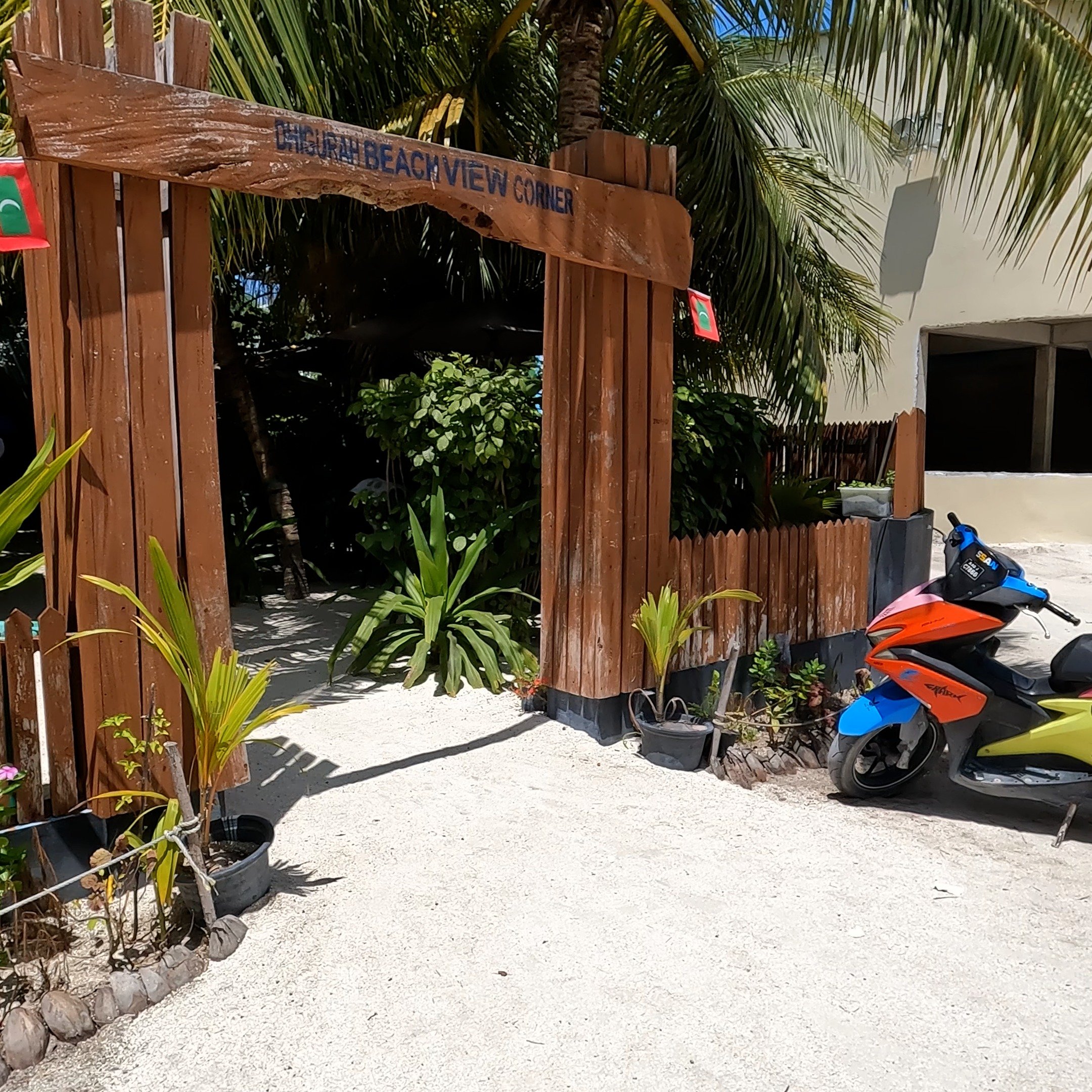
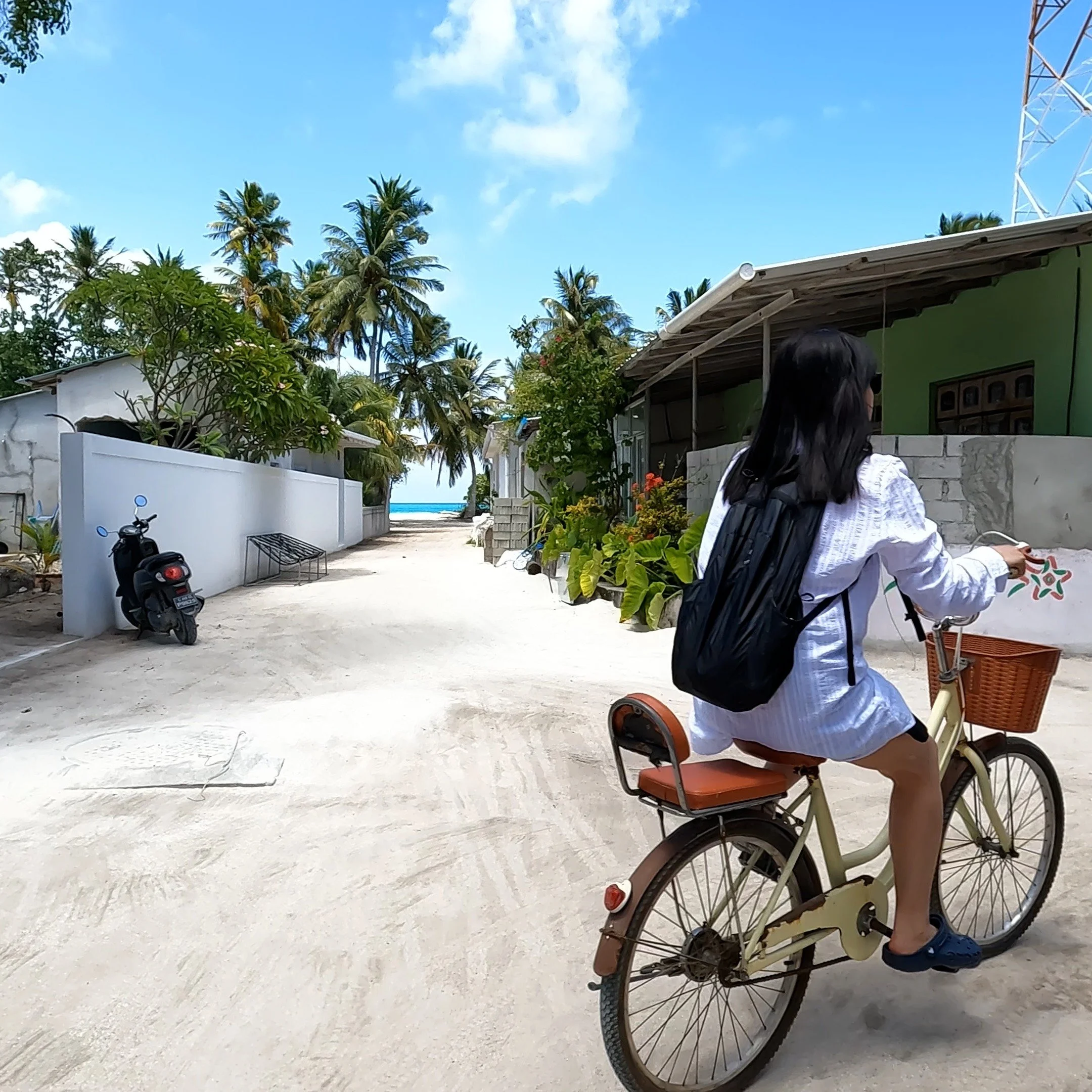
By the time I reached the Maldives, the feeling had reached a kind of clarity. Standing before vast, uninterrupted blue, I found myself speechless. The beauty and scale of the ocean didn’t merely impress me—it humbled me.

In that moment, the sea stopped feeling like a destination.
It felt like paradise.
More than that, it felt like belonging.

What Science Reveals About the Pull of the Sea

Science offers insight into why this experience is so widespread. Humans experience reduced stress near ocean environments. The brain responds positively to rhythmic wave sounds. Vision is calmed by large, horizontal water expanses.

These responses are not learned; they are inherited.

Life began in the sea billions of years ago, and long after our ancestors moved onto land, our bodies retained the memory of water as safety, continuity, and life. Human blood chemistry still echoes ancient oceans. Human development begins suspended in fluid. Even today, our bodies behave as though they are protecting an inland remnant of the sea.

The Ocean Never Truly Left Us

So no, humans are not composed of ocean water.

But the ocean shaped us—biologically, psychologically, and emotionally. And perhaps that is why, when we stand at its edge, we do not feel like visitors.

We feel like we’ve returned.

View my entire Maldives experience here

We Visited the Incredible Turkish Airlines Miles & Smiles Lounge at Istanbul Airport

Turkish Airlines Miles & Smiles Lounge IST: A Premium Experience in Istanbul

Our Dubai to Toronto Turkish Airlines business class flight had transit in Istanbul, and gave us an opportunity to check out the Miles & Smiles Lounge. Nestled in the sprawling new terminal of IST, this huge lounge offers a refined escape from the airport bustle, blending Turkish hospitality with modern luxury.

We entered using machine boarding pass readers, without any human reception counter. Upon entry, guests are greeted by sleek architecture and warm lighting that immediately sets a tranquil tone. The lounge is spacious, thoughtfully designed with separate zones for dining, relaxation, and work. Whether you're looking to catch up on emails or simply unwind before your flight, the environment caters to both productivity and comfort.

One of the standout features is the culinary experience. Turkish Airlines takes pride in showcasing its national flavors and the lounge delivers, with a buffet that includes fresh salads, grilled meats, traditional Turkish dishes, and decadent desserts. There are many standing food stalls where you can order a variety of items. We tried a few of those and the food was amazing. The beverage selection is equally impressive, offering everything from Turkish tea to international spirits and barista-made coffee and other beverages.

For those seeking entertainment or a moment of leisure, the lounge includes a cinema room, gaming consoles, and even a golf simulator. Families will appreciate the dedicated children’s play area, while business travelers can make use of private meeting rooms and high-speed Wi-Fi.

The shower suites are a welcome touch for long-haul travelers, offering a chance to refresh with high-end amenities and spotless facilities. Cleanliness and service are consistently praised, with attentive staff ensuring guests feel well cared for. There were mini hotel suites for those with a longer layover.

Overall, the Miles & Smiles Lounge at IST is more than just a waiting area—it’s a destination in itself. Our only regret was we didn’t have enough time to enjoy everything and were rushing to catch our next flight.

For frequent flyers and loyal Turkish Airlines customers, this lounge is a compelling reason to maintain status—and a reminder that travel can still feel indulgent.

I have a video coverage of this lounge here:

We Tried The "World's Best Airport Lounge" (Turkish Airlines Istanbul)