North Korea's Underground Illegal Economy

The Black Economy of North Korea

First Published Date: November 23, 2011 ADawnJournal.com

Like many other 3rd world countries, but on a larger scale, North Korean elites live a life of luxury accompanied by imported luxury goods such as luxury cars, yachts, the latest digital electronics, fine wines, expensive shoes, and so on. However, the country has difficulty feeding its general population. Its deteriorating rationing system can only feed about 4 million North Koreans. The other 20 million rely on the black market economy. Also, the government elites need the black market or illegal economic activities to generate foreign currency to support their lifestyle. It’s a situation where both groups benefit. For one group, it is essential to buy food in order to survive; for the other group, it is essential to buy their luxury goods.

According to an estimate, the North Korean regime has spent US$ 1.04 billion or possibly more since 2008 to import luxury goods from foreign countries. To buy these goods, North Korea needs foreign currency. However, its own currency can’t be converted to foreign currency, as North Korean currency is worthless outside North Korea. So, where does Kim Jong II get U.S. dollars to fund his regime?

The country does not have a manufacturing sector to manufacture anything that can be sold outside to get foreign currency. There are hundreds of abandoned manufacturing factories all over North Korea with broken glass or windows; they look like ghost factories. North Korea uses thousands of acres of land to grow opium and use these about-to-collapse factories to manufacture narcotics at night on state level. Then the North Korean government uses government-backed drug dealers to transport it to China. In North Korea, the government uses its law-enforcement agencies to crack down on small non-government drug dealers so government drug dealers can mind their business without any interruptions and provide dollars to the regime.

Although there is nothing being manufactured in North Korea, the government is very good at manufacturing illegal weapons. The government uses its military and other departments to manufacture a wide array of weapons ranging from rifles to missiles, chemicals and nuclear warheads. These weapons are sold to other rogue regimes, drug dealers, and terrorists across the globe through the black market to earn foreign currency.

North Korea manufactures counterfeit U.S. dollars (supernotes) and sell them in the underground black market (mainly in China across its border) for a 40 to 50 percent discount to get real U.S. dollars. North Korea also manufactures gigantic monuments depicting 3rd world country “glorious” leaders. These monuments cost millions of dollars a piece.

The pain, agony, and suffering of the North Korean population is deplorable. However, its black market economy is booming, and so is the living standard and lifestyle of North Korean elites.


First Impressions of Cairo | Egypt Travel Blog: Day 0 (Part 2)

Airport to the Oasis Hotel, Alexandria Desert Road, Giza, Cairo, Egypt

Egypt Travel Blog: 10 DAYS Egypt Explorer - Felucca Cruise & Red Sea

My airport guide brought me to a car in the parking lot. There were no other passengers or guides. He said the driver would take me to my hotel, so we headed towards my hotel, which would be about an hour's drive.

After exiting the airport, the highway to Giza seemed to be on high land and it offered a very nice view of Cairo from afar.

My first impression of Cairo was on the drive from the airport to the hotel. The first thing on the street I noticed was that no one was following lanes and driving was chaotic. Some drivers were cursing at each other for trying to cut through or whimsical overtaking, although it seemed to be the norm. I instantly realized that I was no longer in Canada.

One strange thing that struck me right away is the intertwining of ancient and modern Egypt. Although it’s a modern city, Cairo still has that ancient feeling. It’s like Ancient Egypt lives within present Egypt’s modern structure and modern landscape. I have not had this kind feeling anywhere else - that I am in a very ancient city. The structures, air, noise, smell, landscapes, sights in the distance … everything reminded me that I am experiencing a living history 3000 years old. 

I noticed lots of frames of abandoned buildings that were never completed. I was not sure why so many abandoned buildings were left standing like shadows of ghosts.

I will write more about Cairo in future posts, but if you want me to summarize Cairo, I will tell you this: Cairo is crazy, intense, chaotic, confusion, mayhem, noisy, polluted, hot, unthinkable, uncontrolled, disorganized, and dirty.

But don’t get me wrong here. I didn’t say I disliked Cairo. What I mentioned above is what makes Cairo unique. Cairo is also colorful, vibrant, ancient, full of life, welcoming, safe, friendly, bubbly, warm, and accommodating.

There was something about the ancient sprawling mega metropolis that tugged at my heart and I put Cairo on my list of Forever in Love. I will not hesitate to visit Cairo many times in the future.

India’s Falling Rupee and Its Economic Future

India’’s All-Time Low Rupee Causes Downward Chain Reactions

Published Date: December 1, 2011 ADawnJournak.com

The Indian falling rupee has reached an all-time low when it reached 52 against the US dollar on November 21. The rupee has lost 16 percent of its value against the US dollar this year – making it the most depreciated currency in Asia and the 3rd most depreciated in the world.

The European debt crisis, slowing domestic economy, high interest rates, and fear that India will be hit by a shortage of US dollars are some of the factors that are putting pressure on Indian currency and causing the fall. According to data released by India’s Securities and Exchange board, foreign funds bought only $392 million of Indian stocks this year in comparison to $30 billion in 2010. Figures like this show that foreign investors are nervous about India’s weak economy and the sentiment will continue to deteriorate with the declining Indian rupee.

India’s targeted fiscal deficit is at 4.6 percent of its GDP. It is unlikely that this target will be achieved. It was initially thought that India would be unaffected by the Euro crisis and global economic slowdown. However, recent steady streams of financial news and data show that this is not the case. And the recent downward currency fall adds more worries to an economy that is already on a slippery slope.

22 percent of India’s GDP is made up of imports and India imports 21 percent of the world’s pulses to meet domestic demands. Also, India imports 70 percent of its gas and oil demands. A weaker rupee will make imports more expensive, and thus will increase inflation and raise the current account deficit.

High inflation and high interest rates cause corporate profits to decline and make foreign investors withdraw investments – adding more pressure on a currency that is already declining. To fight its account deficit, India needs direct foreign investments. With a declining currency, declining foreign investments, Euro debt crisis, global economic slowdown, and 320 billion foreign exchange reserves, India has a lot of work to do to in the coming months.  

Ten Wallet Tips You Need to Know Before Leaving Home

Don’t Leave Home Without Following These Wallet/Purse Tips

First Published Date : December 8, 2011

“Why carry something if you don’t need it?” Twenty years ago, a senior taxi driver in New York City gave me that advice – the best wallet tip ever and I have been religiously following it ever since. Today, I will share some wallet or purse tips you should follow to make your life easier, simpler, and safer.

1. Go through your wallet and get rid of everything you will not use on a regular basis. There is no point carrying all the cards and receipts in your wallet. I keep only those what I use everyday. If I use a credit or debit card occasionally, I leave it home and only keep it with me when I will be using it.  

2. At any point, you should know exactly what items are in your wallet. This way, if you lose anything you will be able to detect it right away, reducing your chances for being a victim if someone else gets ahold of your cards.

3. Make a list of everything you carry in your wallet. Write down your credit card number, customer service phone number, and anything else you would require to block your credit or debit cards in case of theft or loss of your wallet. Better yet, you can scan the back and front of all your cards as well. Keep this list handy at home, in hotel safe, or online securely in such a way that you will have access to it when you need to call your financial institutions in case of emergency.

4. Do not carry wallet in your rear pocket. Thieves use very sharp tools to cut pockets and it’s a lot easier to cut when it’s in your back or rear pocket.

5. Be careful and pay attention to what’s going on around you. Thieves work together in crowded places and try to distract you by pushing you, causing artificial arguments among themselves, or anything else to cause distractions so they can use that split second to grab your wallet while you are distracted.

6. Keep some cash separated from your wallet in a different place on you. If you lose your wallet, this ensures that at least you will have some money to get home.

7. Do not keep your home or car keys in your wallet. If thieves get ahold of keys, they will be easily able to access your home or car because it’s not hard to find information (home address on driver’s license, vehicle information on insurance or registration card, etc.) leading thieves to further carry on their operations.

8. Do not write your PIN number on the back of your cards or carry it with you in your wallet. Also, do not use your date of birth, postal code, or your phone number as your PIN. If thieves have your wallet, they will have access to enough information to guess your PIN by going through your wallet.

9. Do not leave your wallet in a jacket, coat, or anywhere else if you’re checking out these items in a restaurant, movie theatre, or anywhere else.

10. If you are wondering what’s in my wallet, here are the items I always carry with me if I am in Toronto:

– One bank card (Interac card)
– One credit card
– Driver’s license
– Toronto Transit Commission Metropass

If I travel, I modify these items depending on where I am traveling to.

NB – You do not need to carry your rewards or points card anymore as smart phone apps have the capability to carry these cards digitally on your smart phone. 

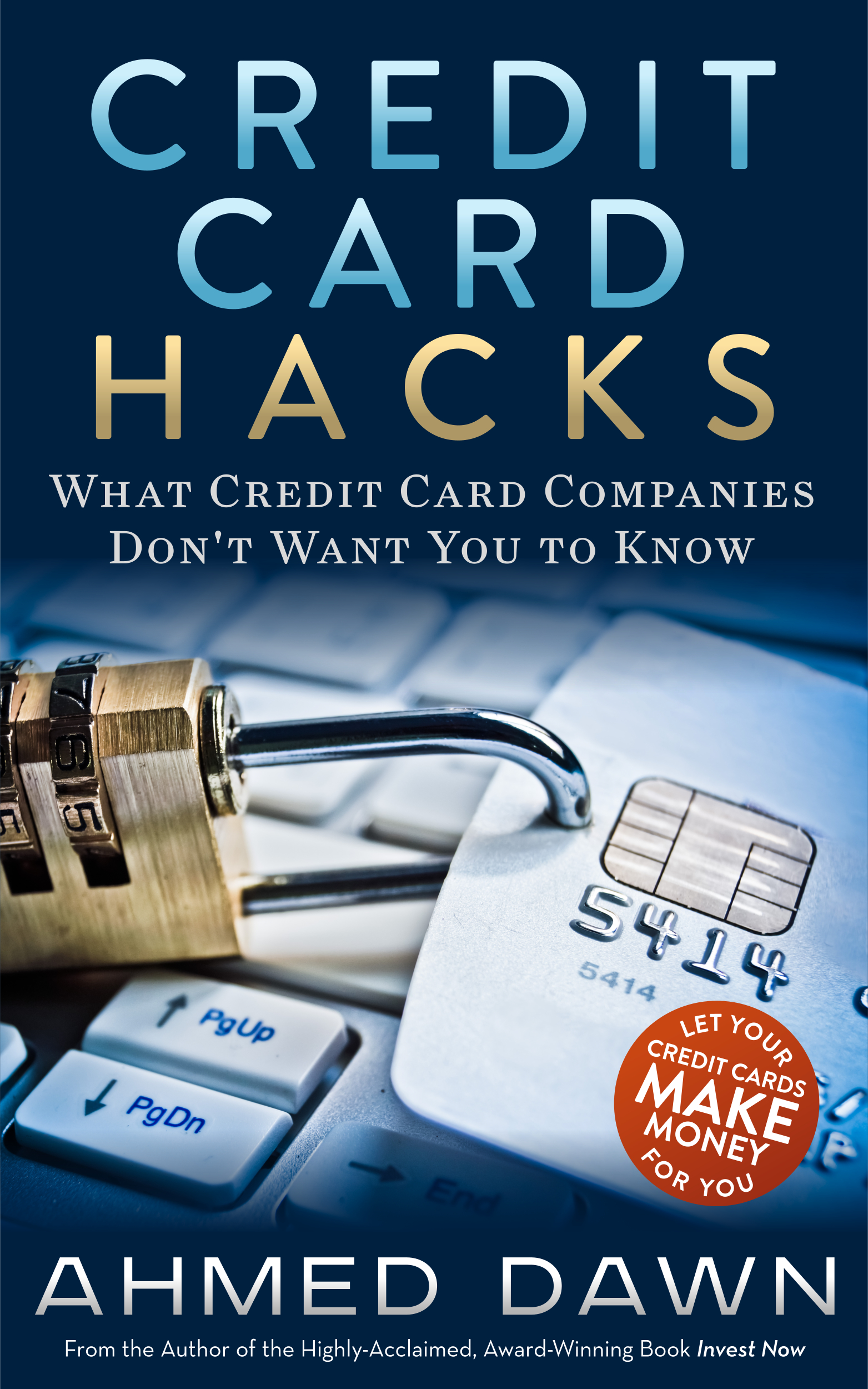
Financial Website A Dawn Journal – Best of the Best Blogger Series Interview

Reputable Website Interviews Financial Author Ahmed Dawn

First Published Date: December 15, 2011 ADawnJournal.com

Canada’s Personal Finance Blog A Dawn Journal’s reputation and traffic is on the rise. And it’s no wonder that the well-written financial content and hard work will get noticed and will be recognized. Recently, a widely respected and admired financial website Credit Card Assist has respectfully invited financial author Ahmed Dawn (AKA A. Dawn) to sit down for an interview with a variety of questions. According to Credit Card Assist:

Ahmed is yet another example of an up-and-coming, new generation blogging entrepreneur that people should really be paying attention to. He has a no-nonsense, pragmatic approach to investing and uses ‘simple and understandable’ terminology to take the guess work out of the investment process for his readers.”

The interview can be accessed right here: A Dawn Journal – Best of the Best Blogger Series

This is an opportunity for my readers to know more about me. Wide ranging questions such as a little peak into my work life, what inspired me to write my book Invest Now, more on my blogging entrepreneurship – all can be found in this interview.

So it seems quite reasonable that with a no-nonsense, pragmatic approach to personal finance and its ability to break down complex subjects in simple terms, A Dawn Journal is becoming a regular read for an increasing number of readers in Canada and across the globe. And this trend will continue for years to come. I thank you all my readers and I appreciate your time spent on A Dawn Journal. Your support and courage are an inspiration to me all the time and that’s what made everything possible.