The Real Reason the Maldives Looks Like It’s From Another Planet
/Why the Maldives Doesn’t Feel Like It Belongs on Earth
The Maldives: A Living, Sinking, Self‑Repairing Country Built by Coral
By Ahmed Dawn — understanding places as systems, not postcards.
1. A Country Built by Biology, Not Geology
Most countries are shaped by:
mountains
rivers
volcanoes
tectonic plates
The Maldives is shaped by coral.
It is the only nation on Earth where:
26 atolls form the entire country
1,200+ islands exist
99% of the territory is ocean
Only 1% is land
Every island is coral‑built
No mountains. No rivers. No continental rock. Just coral reefs building land over thousands of years.
This alone makes the Maldives geologically unique — but the deeper story is even more extraordinary.
2. How the Maldives Was Created: Coral as the Architect
The Maldives sits on the Chagos–Laccadive Ridge — a long underwater volcanic backbone.
Corals colonized this ridge and built:
ring‑shaped reefs (atolls)
shallow inner seas (lagoons)
sandbanks
islands
The process:
Coral grows upward toward sunlight.
Waves break coral pieces.
Parrotfish grind coral into fine white sand.
Currents move sand into lagoons.
Sand piles up and becomes islands.
Every natural island is literally:
dead coral + coral sand + wave‑shaped sediment.
No other country is built this way.
3. Natural Islands: Alive, Moving, and Self‑Repairing
Natural islands like Dhigurah, Ukulhas, Rasdhoo, and Thoddoo:
sit only 1.0–1.5 m above sea level
shift, grow, shrink, and reshape
repair themselves through sand movement
depend entirely on the surrounding reef system
They behave like living organisms.
Storms remove sand from one side. Currents deposit sand on another. Parrotfish and coral keep producing new material.
A natural Maldivian island is never “finished.” It is always adjusting.
4. Parrotfish: The Hidden Engineers of the Maldives
Most countries get sand from rivers and mountains. The Maldives gets sand from parrotfish.
These fish:
bite coral
grind it internally
digest algae
excrete pure white, powder‑soft sand
A single large parrotfish can produce hundreds of kilograms to about a ton of sand per year (order of magnitude).
Multiply that across thousands of fish and thousands of reefs — and you get:
constant sand production
constant beach renewal
constant island maintenance
Without parrotfish, the Maldives would not look like the Maldives.
5. Coral Behavior: How Corals “React” Without Thinking
Corals:
have no brain
have no awareness
do not “decide” anything
They simply respond to:
light
water flow
temperature
sediment
available hard surfaces
Where conditions are good, they grow. Where conditions are bad, they die.
Sand production is not intentional — it is a side effect of coral growth, breakage, and parrotfish grazing.
Natural islands survive because they sit inside a functioning atoll reef system, not because corals consciously protect them.
6. Atolls, Lagoons, and House Reefs: The Real Structure
6.1 Atoll Reef = Life Support
The outer atoll reef:
breaks 90% of wave energy
produces coral sand
maintains lagoon depth
supports coral and parrotfish populations
This is the real engine of island survival.
6.2 Lagoon = The Calm Inner Sea
A lagoon is the shallow, protected water inside the atoll.
It:
collects sand
hosts sandbanks
creates the turquoise color
allows islands to form
6.3 House Reef = Snorkeling Feature Only
A house reef is simply a reef close enough to swim to.
It has nothing to do with island survival.
Dhigurah, Thoddoo, Maafushi — all survive perfectly with no house reef because the atoll reef is doing the real work.
7. Artificial Islands: High, Engineered, Coral‑Optional
Artificial islands like:
Hulhumalé
Crossroads
Saii Lagoon
Hard Rock
are built using:
dredged sand
compaction
sea walls
breakwaters
They sit 2–3.5 m above sea level — much higher than natural islands.
They do not rely on:
coral sand
parrotfish
reef protection
Corals may grow around them, but the island does not depend on coral for survival.
Artificial islands = engineering. Natural islands = biology.
8. Climate Change: A Low‑Lying Country Under Real Threat
The Maldives is one of the most climate‑vulnerable countries on Earth.
Why:
80% of land is <1 m above mean sea level
sea level is rising
storms are intensifying
coral bleaching events are increasing
This does not mean:
“The Maldives will disappear in 30 years.”
But it does mean:
more flooding
more erosion
more infrastructure risk
higher adaptation costs
The system is still functioning — but under pressure.
9. Coral Adaptation: A System Trying to Keep Up
Corals are stressed by:
warming seas
acidification
sediment
pollution
Yet they still show:
heat‑tolerant strains
partial recovery after bleaching
ability to grow upward with rising sea levels (within limits)
So yes — in a systems sense:
corals are trying to adjust to protect the islands they originally built.
But their ability to keep up is not unlimited.
10. Maldivian Sand: Powder‑Soft, Cool, and Unique
Maldives sand is different from most beaches.
10.1 Composition
It is mostly:
coral fragments
shell fragments
calcium carbonate
This gives it:
a powder‑soft texture
bright white color
extremely fine grains
10.2 Temperature
Because it is:
white
reflective
calcium‑based
It does not heat up like silica sand.
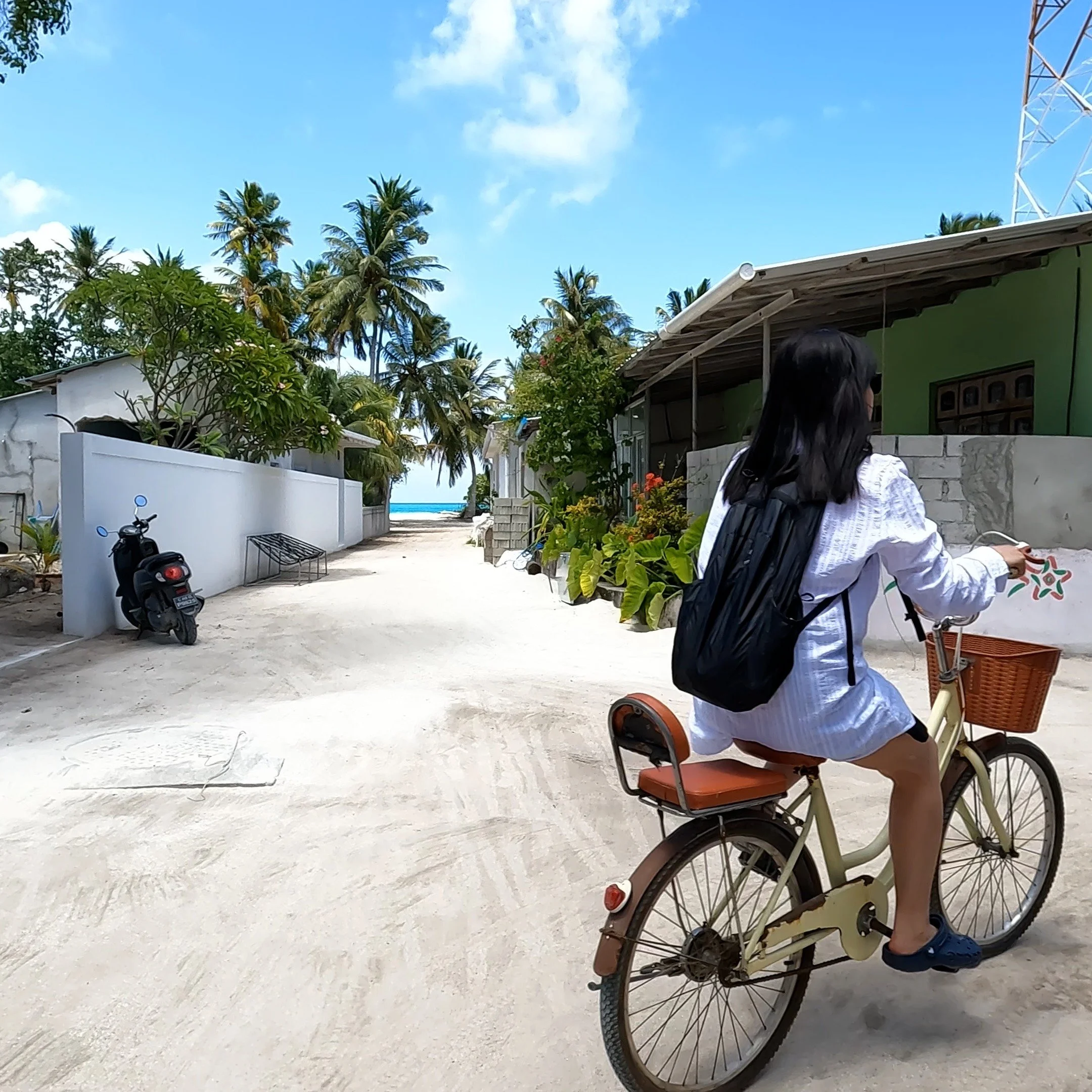
You can walk barefoot at noon without burning your feet.
This is one of the subtle but powerful differences that people feel but rarely understand.
11. The Indian Ocean: Shared by Many, Matched by None
The Maldives sits in the Indian Ocean, which touches the shores of 30+ countries, including:
India
Sri Lanka
Bangladesh
Indonesia
Thailand
Kenya
Tanzania
South Africa
Australia
Oman
Yemen
Maldives
and many more
Same ocean. Same water body. Same basin.
Yet the Maldives looks visually different.
Why Maldivian water looks unreal:
shallow lagoons
bright white coral sand
high light penetration
minimal river runoff
clean reef‑filtered water
strong sunlight
sharp depth transitions
This creates colors that look:
turquoise
electric blue
milky aqua
amber‑tinted at sunset
almost painted
Other Indian Ocean countries do not have this combination.
The Maldives is the purest expression of coral + lagoon + white sand + sunlight.
12. Natural vs Artificial Islands in a Warming World
Natural islands
Pros:
self‑repairing
biologically alive
constantly renewed
Cons:
low elevation
dependent on coral health
vulnerable to sea‑level rise
Artificial islands
Pros:
higher elevation
engineered protection
independent of coral
Cons:
expensive
ecologically disruptive
static, not self‑repairing
The Maldives is now using both strategies to survive the future.
13. The Maldives as a System, Not a Destination
When you put everything together, the Maldives is:
a nation built by coral
maintained by parrotfish
shaped by waves
stabilized by lagoons
threatened by climate change
visually unmatched in the Indian Ocean
a self‑repairing system under stress
This is not just a travel destination. It is a living machine.
14. Different Oceans, Same Feeling — A Personal Note
Across my travels, I noticed something consistent.
Whether I stood on the shores of:
Canada
the United States
Cuba
Jamaica
Australia
New Zealand
Thailand
the Philippines
…the reaction was always the same.
Different countries. Different climates. Different cultures. Same internal response.
It wasn’t tied to a place. It wasn’t tied to a memory. It was tied to water itself — the ancient pull of the sea.
When the Maldives brought clarity
By the time I reached the Maldives, that feeling sharpened.
Standing in front of endless blue — water so clear it looked unreal — something clicked.
The ocean didn’t feel like a destination anymore. It felt like recognition.
And in that moment, I understood why people call the Maldives paradise on Earth.
Because if you translate that phrase literally, it suggests paradise is from heaven — not from this world.
And the Maldives truly behaves that way.
The colors, the clarity, the sand, the reefs, the lagoons — everything feels like it belongs to another planet entirely.
A place that looks Earth‑like, but not Earth‑made.
A reminder that there is no other country on this planet with these characteristics, this structure, this water, this system.
The Maldives is not just paradise on Earth. It is the closest thing we have to paradise that slipped through from somewhere else.