What Is Supply and Demand?

Understanding Supply and Demand

First Published: ADawnJournal.com April 18, 2010

Two highly important concepts that drive economics around the world is the concept of supply and demand. Supply and demand is an economic model of price determination within an economic market. In supply and demand, it states that in a competitive market the price will function to equalize the amount of quantity demanded by the consumers, with the quantity available from producers. When supply and demand is equal, there is equilibrium between price and quantity.

The concept of supply and demand, and the power of it, has been understood for several centuries, all the way back to Muslim economists Ibn Taymiyyah, who lived during the 13th and 14th centuries, and wrote β€œIf desire for goods increases, while its availability decreases, its price rises. On the other hand, if availability of the good increases and the desire for its decreases, the price comes down.”

The phrase of supply and demand was first used by James Denham-Steuart in a book published in 1767, and in the iconic economic book, The Wealth of Nations, by Adams Smith; supply and demand is mentioned as well. As things progressed into the 19th century, the idea set in that supply was not fixed but could change and the idea that the price was set by the most expensive price, which itself is the price of the margin. This was a big change from the previous concepts of supply. The famous supply and demand graph, which shows the curves of both, appeared for the first time in 1870 in an essay written by Fleeming Jenkin. This model of supply and demand was further popularized in 1890 in an essay in Alfred Marshall. In this graph, equilibrium is reached where the two points cross.

The Graphic Representation

The model of supply and demand is a partial equilibrium model, which shows the determination of the price of a good and the quantity of the good. On the graph, which most believe was created in its common form, by Alfred Marshall; you have the price on the vertical axis and the quantity of the product on the horizontal axis.

The supply curve represents the amount of a good that the producer is able to, or willing to, sell at a certain price. The demand curve represents the amount of a good that buyers are willing to purchase at a certain price. Usually, the demand curve is represented as a downward slope, so that when the price decreases, customers will begin to buy more of the good.

How It Works

So, how does supply and demand work? Well, when there is a greater demand for a product, and if the product is scarce, then the price of the product is going to go up as a result. In contrast, if the demand for a product is low and the product is abundant, then the price of the product is going to go down as a result. However, if the demand for the product is high, and the supply is high, then we should have reached equilibrium for the product.

Elasticity of Supply-Demand

Elasticity is a very important concept in supply and demand. Elasticity refers to how supply and demand works, and how the price is determined. Elasticity can be defined as the percentage change in one variable that is divided by the percentage change in other variables. So, elasticity is the relative change in supply and demand.

It is very useful to know exactly how much supply and demand will change when the price changes. This is known as the price elasticity of demand and the price elasticity of supply. This helps economists answer several questions including will a tax on a good increase the price, and will it affect the quantity that customers want? Will an increase in the price offset the decrease in sales volume and will someone who holds a monopoly be able to increase the price of a product and not affect the revenue from sales?

The slope of a line corresponds elasticity and it is typically shown as a percentage, so that the units of measure do not matter, only the slope does.

To calculate the elasticity of supply and demand, you take the percentage change in quantity over the percentage change in price. So, if the price moves up by five cents, and the quantity of product sold to go up by two, the slope will be 2/0.05, which is 40 products per dollar. This means that the quantity of the product increased by two percent, the price by five percent and that makes the price elasticity of supply to be 2/5, which is .4, or 40 percent.

Changes in the unit of measurement, or the currency, do not change the elasticity of supply or demand either because it is measured in percentages.

When the demand or supply quantity changes a great deal when the price has only changed slightly, then this is called elastic. However, if the quantity of supply or demand changes a little bit, and the price changes a lot, then it is inelastic.

In macroeconomics, supply and demand has been used to explain the variables in a market economy, including price level and total output. Within macroeconomics, supply and demand is often used in relation to money supply to demand and interest rates as well.

Another important concept within supply and demand is the demand shortfall, which results when the demand of a product ends up being lower than was originally projected as the demand for the product. These shortfalls are typically caused by the over-estimation in planning of new products. For example, when Coke created New Coke, they anticipated a huge amount of demand, but this never materialized. Hence, there was a demand shortfall to what they had expected.

When there is a demand shortfall from demand overestimation, it is typically caused by strategic misrepresentation in which the strategy of a company was flawed, or optimism bias.
India in The 21st Century

India and The 21st Century

First Published: ADawnJournal.com May 1, 2010

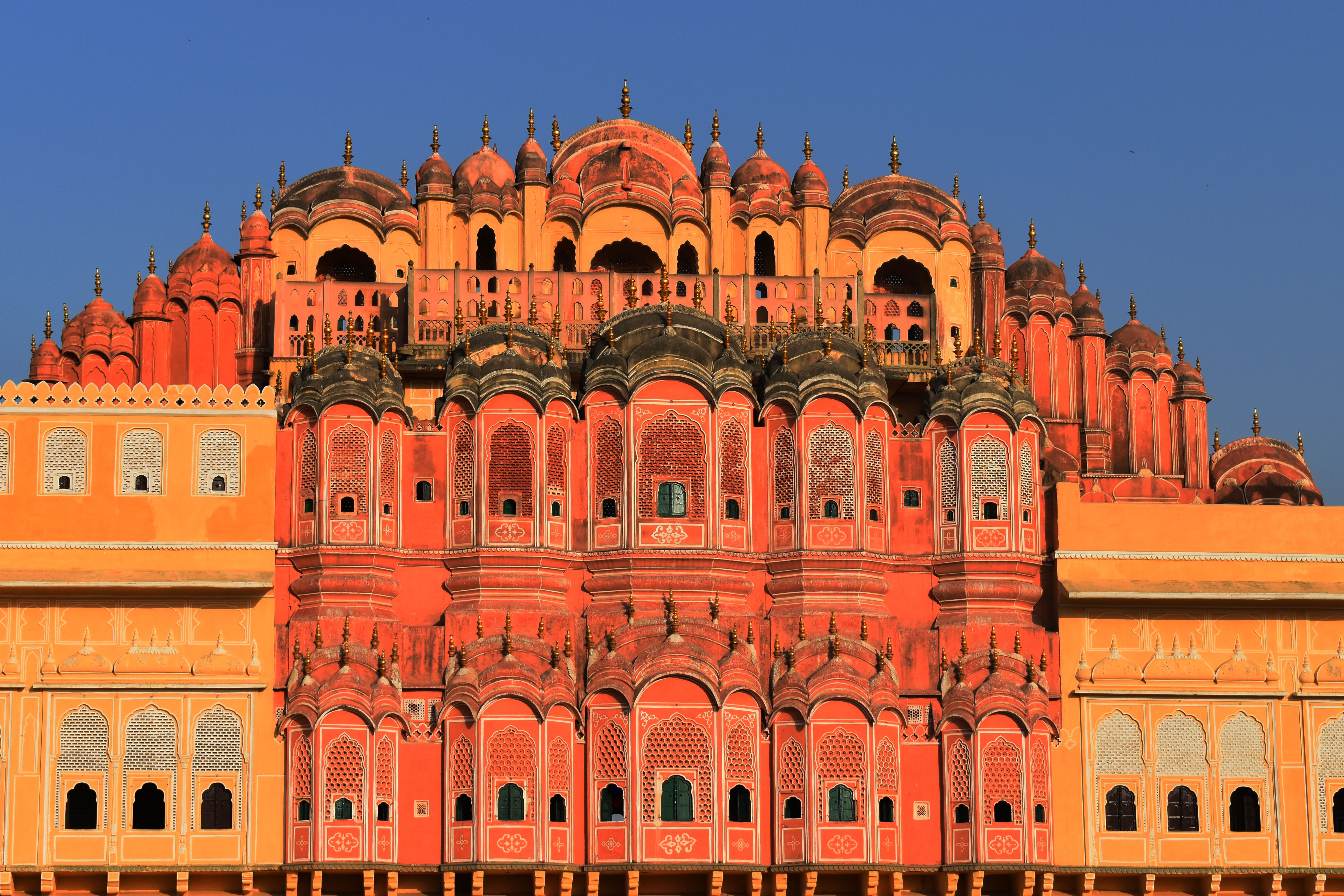
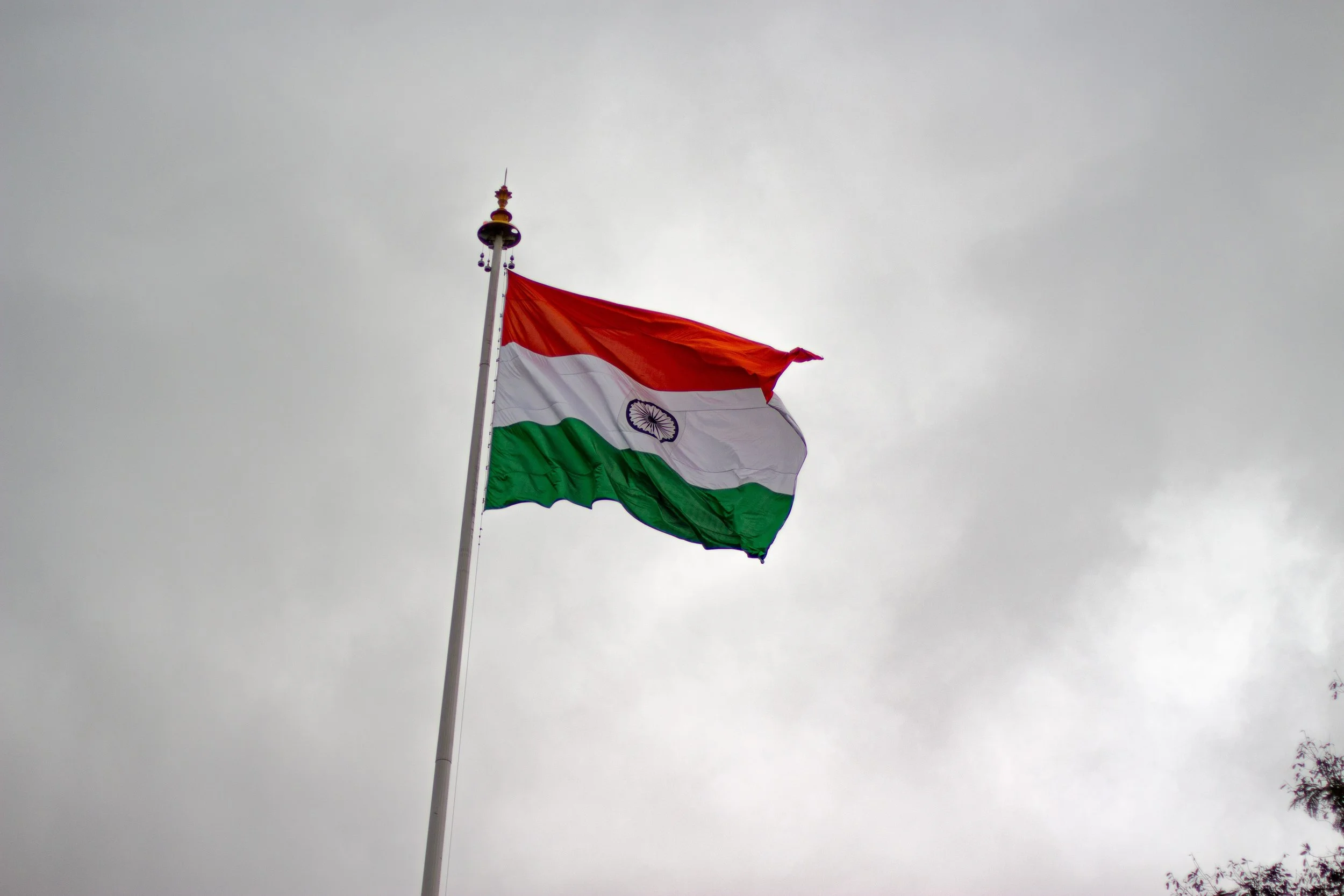
India is one of the oldest civilizations on Earth. Going back 5,000 years, there has been organized civilizations living on the Indian subcontinent. Through all this time, India has had an immense impact on our civilization. It was in India where Buddhism first came into being, as did the Hindu religion. In addition, India was as far as Alexander the Great reached before turning back his army and India gave us two of the most important people of the 20th century; Mahatma Gandhi and Mother Teresa. What does the 21st century hold for this amazing country? Well, if many experts can be believed, the 21st century may be the century where India becomes a superpower.

Many publications and academic papers cite India as being a potential great power in the 21st century but there are many challenges facing the country. Many consider India to be the underdog in becoming a superpower because of these challenges. First of all, most consider China an emerging superpower, but China is several decades ahead of India in several regards and the average Chinese individual has a better life than the average Indian individual. Other problems that relate to India include immense rural poverty, slums that are often full of disease, corruption and the huge maternal mortality rates that exist within the India subcontinent.

Another problem with India attaining the superpower label in the 21st century is that there are a lot of Indians leaving the country, in massive numbers, which is something that China is also suffering from.

This doesn’t mean that the country is not making headway. For one thing, the caste system which has existed for centuries is being dismantled to allow more upward momentum within the country, allowing more to live the lives they have always dreamed of. In addition, the country, unlike China, is completely democratic and is the world’s largest democracy.

Will India become a superpower on the scale of China, Russia, the European Union or the United States in the 21st century? Well, most likely it will not occur within the first 50 years of the century. As the century draws to a close, there is a chance that the country may be able to move more towards becoming a superpower. This does not mean that India will not be important. It will be highly influential in the 21st century and will probably find its way into the upper echelon of countries at the United Nations. The country also has a very successful professional class of people and more and more people are coming out of poverty within the country. The relationship of India with Pakistan is also a problem as both countries are nuclear states and there may be the demand by many other countries that for the country to join the superpowers of the world, some sort of peaceful resolution over the Kashmir region between India and Pakistan must be reached.

India is going to be a powerful country, without a doubt, in the 21st century. Will it be a superpower? Not for many years to come.

What Is The International Monetary Fund (IMF)

The International Monetary Fund (IMF)

First Published: ADawnJournal.com May 8, 2010

Whether you know it or not, there is an organization that has a huge impact on your life and while you probably have heard of it, you may not truly realize all that the International Monetary Fund (IMF) does for you. The IMF is an international organization that looks over the global financial system by applying the policies of macroeconomics to the countries that are members of the Fund. This includes overseeing the exchange rates of countries, as well as the balance of payments within these countries.

The IMF was formed with the objective of stabilizing international exchange rate, while also helping countries develop financially through liberalized economic policies as well as providing loans, aid and restructuring finances. In addition, the IMF offers leveraged loans to poorer countries in order to help them out.

Headquartered out of Washington D.C., the IMF was formed in July of 1944 by the 45 original members during the United Nations Monetary and Financial Conference at the Mount Washington Hotel in New Hampshire. Everything was officially organized on December 27, 1945 when the first 29 countries signed the Articles of Agreement. During the Second World War, the world’s finances were in a chaotic state and it was the purpose of the IMF to help aid in the reconstruction of the international payment system of the world, as well as stabilize the exchange rates that were fluctuating widely at the time. At the time, countries would contribute into a pool that they could temporarily borrow from.

The IMF currently has 186 countries in its membership which work together to create global monetary cooperation, secure financial stability, facilitate international trade, promote high employment and sustainable economic growth, while reducing poverty, in the words of the IMF itself.

All UN member states, with the exception of Taiwan, North Korea, Cuba, Andorra, Monaco, Liechtenstein, Tuvalu and Nauru, are members of the IMF.

All of these member states are represented by a 24-member Executive Board. There are five Executive Directors, which are appointed by the five members that have the largest quotas. The rest are made of Executive Directors that have been elected by the remaining members. All the members of the IMF then appoint a Governor to the IMF Board of Governors.

The influence of the IMF has increased greatly over the global economy as the numbers of members have increased over the years. Many cite the IMF as a contributing factor to the political independence of many developing countries, as well as helping usher in the end of the Cold War with the collapse of the Soviet Union.

Of course, things have not always been rosy for the IMF. In 2008, when the financial crisis was just beginning, the IMF decided to sell some of its gold reserves. In addition, the IMF has decided to implement a new framework for the organization to help deal with a $400 million budget deficit. By 2011, it is estimated that there will be roughly $100 million in spending cuts and the removal of 380 staff positions in order to help save money.

This was not the end to the changes implemented within the IMF. At the 2009 G-20 London Summit, the IMF decided it would need more financial resources to meet the needs of its member countries as a result of the huge financial toll the global financial crisis was taking. To help, the G-20 leaders, who represent the 20 largest economies on Earth, pledged to increase the supplemental cash to the IMF from $50 billion to $500 billion, while allocating an additional $250 billion to member countries.

Through thick and thin, boom and bust, financial turmoil and recessions, the IMF has been a constant that, in various ways, is trying to make the world a better place. The lack of wars between its member countries on the whole seems to show that it has been a success at this.

IMF Website Link: The International Monetary Fund (IMF)

Canada Exceeds Economic Expectations

Canada Sees Improved Economic Forecast

First Published: ADawnJournal.com February 15, 2010

While places like the United States are struggling to cope with the impact of the recession, the Canadian economy seems to be rising above the recession and moving back into the black. This is in no small part to the housing market in places like Vancouver and Toronto, which have seen record rebounds after hitting all-time lows in early-2009. As a result, Jim Flaherty, the Finance Minister of Canada, has revised the economic forecast of the country upward.

Ottawa revised its growth estimate from 2.3 percent for 2010 to 2.6 percent. That .3 percent may not seem like much, but it accounts for millions upon millions of dollars in the Canadian economy and any growth is good growth in these tough economic times. The government has also forecasted that the growth will reach 3.2 percent in 2011, before falling over the next three years to 2.6 percent by 2014.

Of course, this is all just speculation and there is no way to completely know how the economy is going to do. During the 2008 Federal Election, Prime Minister Stephen Harper stated there would be no deficit for the government if they were elected, but come March the country was running in a deficit. It is impossible to predict how the economy will do; all that can be done is to speculate.

Currently, the Canadian debt-to-GDP ratio is about 30 percent, which is the lowest in the G-7 countries, and about half of the level in the U.S. and U.K. Unemployment rate of the country is a full 1.5 percent lower than what is seen in the United States right now.

All things considered given the potential growth, the government is not stating when Canada will have a balanced budget as there are still sectors in the country struggling and the largest trading partner of the country is still running in a recession. For the next two to three years, there is really no way to know when there will be a balanced budget, even if the economy continues to grow at over two percent per year.

It is estimated that by 2015, the government’s budget should be balanced, but again there really is no way to know for certain.

* * *

Speaking of the housing market, across the country there were major gains in January, including in Toronto where the highest-ever gains for the month of January were seen. Toronto and Vancouver, along with other places like Calgary, are bringing the housing market out of its pit falls and the surging market sales are expected to continue until June of this year. It is at this point that the Bank of Canada will increase the record low interest rate, which currently sits at .25 percent. Once this happens, the housing market will slow and many are worried that the country will go through another housing bubble as those who got mortgages when they were cheap can no longer afford them. This is just another reason why it is so hard to predict how the economy will do. Enough people not being able to pay their mortgages – thanks(!) to a higher interest rate could send everything back into a tail spin.

A Brief History of An Emerging Giant: China

China: An Emerging Giant

First Published: February 24, 2010 ADawnJournal.com

Many people call China an emerging country that is becoming one of the most powerful on Earth, but it is very important to remember that China is not new, nor newly powerful. In fact, China is one of the oldest civilizations on Earth. For the past 6,000 years, China has been a constant power, and the only country to last this long. For more than 4,000 years, the country used a political system that was based on hereditary monarchies, but that changed in 1911 when the Republic of China was founded. This caused a great deal of problems and the country erupted into civil war. By the 1940s, the country was in shambles and taken over by the Japanese. However, in 1949 the country staged its β€œGlorious Revolution” and the Republic of China was pushed out of the country so that the communist party could take power. The country is now called The People’s Republic of China.

What is amazing about the country is that while it is communist, in 1978 it introduced a market-based economy and that allowed the country to become the fifth fastest growing economy on Earth and the fastest growing of the top 20 economies in the world. In addition, China exports more goods than any other country and it imports the third most goods.

For most of the 20th century, China was thought of as a place for the poor, with many poor conditions, but the country has worked very hard to reduce its poverty. While the country had a poverty rate of 53 percent in 1981, the industrialization of the country helped to build a large middle class, and the poverty level is now down to eight percent. That is a drop of over 40 percent in only 29 years.

China has also shown itself to be forward thinking in many ways. The country, widely known for its environmental problems, is now becoming a world leader in renewable energy. The country also implemented a one-child policy to stop a rapidly increasing birth rate, well before high populations around the world were even though of as a problem. While the country still has problems with freedom of the press and human rights, it is rapidly changing. It is currently the third largest economy on Earth and is a permanent member of the United Nations Security Council. The country is also a member of the G-20, the World Trade Organization, the Shanghai Cooperation Organization and one of the few countries that have nuclear weapons. While China does have the largest standing army on Earth and the second-largest defence budget after the United States, it has not shown itself as one looking for war.

Many have said that the 21st century is the century for China and they may be right. The 20th century was the American century, the 19th century was the British century, it is time for a new giant and that giant is most likely going to be the country that has existed for 6,000 years and may exist for many more to come.