Why So Many Complaints about Indian Visa and BLS?

My Indian Visa Experienc

My Indian Visa Experienc

My Indian Tourist Visa Experience

Last week, I wrote about how to obtain an Indian visa from Canada. Today, I will talk about my overall experience going through the visa procedure.

Before starting to apply, I was researching the rules and requirements online for Canadians getting an Indian visa. I noticed enormous amounts of negative reviews and ratings on the Indian Consulate and BLS International, the 3rd party outsourcer that looks after Indian visa processing. This made me very nervous and I was almost certain that these guys would put me through lots of headaches and hassle issuing me an Indian tourist visa.

So the day I reached the BLS Toronto location, I didn’t know what to expect. I was ready to accept a lengthy wait time both at the BLS office and, after the submission, waiting for the visa to arrive. To my surprise, no such things happened. At the BLS centre, I was done with everything within one to two hours and the staff was friendly and accommodating. I didn’t find anything to complain about or see anyone else going through any hassle or difficulty.

Another big shock was waiting for me after two days when I received my passport with my Indian visa via FedEx. Yes, I got it in just two business days when I was told by many people it could take weeks or more than a month.

And for those days I was waiting for the visa, I was updated by BLS via texts and emails on the status of my application, such as, my visa app was received at the consulate, my passport was released by the consulate, my passport was dispatched to FedEx, and so on.

Before writing this article, I thought it going to be another negative review. However, throughout the whole process, I found nothing to complain about and would like to give these guys (BLS and Indian Consulate) the credit they deserve for a job well done. I don’t know why others had so many problems and I understand that everyone’s experience is different. But mine was fantastic and I thank you for everyone’s hard work and friendly service that I received at the BLS and Indian Consulate.

Search Engine Optimization - Good, Bad Or Both?

Don’t Just Use SEO Without Relevant References

For any entrepreneur who is serious about making money in this day and age, the Internet is a powerful, and some would argue indispensable, tool. A web presence enables you to reach customers wherever you want – and for companies with a mail order aspect this has been proven to drive orders up by allowing them to sell far and wide. In order to increase your web presence, there are many tools available. Some of these tools are more effective than others, but one which has proven to be immensely popular is Search Engine Optimization, or SEO for short. SEO has become one of the ultimate buzzwords in Internet marketing – and is seen as being immensely desirable for the purposes of increasing presence.

Search engines are seen as being hugely important in increasing your web presence. Many people who are looking for something specific will, without even thinking, turn to the search engines, and most usually Google. By entering their required search term, they will turn up relevant results in the search engine and pick from the list that they see. Because people tend to read a page from top to bottom, having the result which ranks first in Google for a specific search term is considered very lucrative. Search Engine Optimization works by making a web page more “attractive” to the robots which search the Internet for relevant results. It does this by reading the keywords which people are searching for and judging by their volume on the page how apposite the site is for the searcher.

So far, so good, then. To create a page that will bring in the attention of someone who is looking for, say, tickets for a Justin Timberlake concert, the SEO user will make as many references as possible in the text of their web page to “justin timberlake tickets”, “justin timberlake concert”, “justin timberlake concert tickets”, and a range of other phrases which can include the venues at which Justin will be appearing, as well as eyecatching words like “cheap”, “cut price”, “front row” and so forth. Then when the potential customer searches for “cheap justin timberlake tickets Chicago” or a similar search term, the site with the most relevant references will appear high in the Google search results.

So what is the drawback to SEO, if it is bringing in traffic? The answer is that people know SEO works, and can occasionally be very indiscriminate in their use of search terms. Look at the two sentences that follow:

“I have found a fail-safe way to get cheap front row tickets for Justin Timberlake in Chicago – read on for more info!”

“Cheap Justin Timberlake tickets Chicago I have found Justin Timberlake concert tickets front row – CLICK HERE!!!”

The first sentence holds more promise for the questing Timberlake fan, as it reads like something a sentient person might write. The latter is stuffed with search terms and reads like gibberish – but at least initially will get into the search engines at a higher level due to its SEO volume. More and more people, conscious of the power of SEO, are using nothing but optimization to drive traffic, and it is becoming problematic for the person looking to find relevant information. Search engines are, however, developing to forestall this problem – but it is not, as yet, an exact science, and poor SEO is still slipping through the net.

First Published: EntrepreneurJourney.com Oct 5, 2009

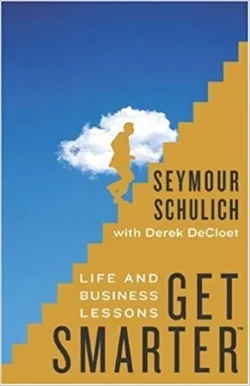
Get Smarter by Seymour Schulich - A Must Read book

Affiliated Link: I collect Small Commission If You Purchase Using this Link

Affiliated Link: I collect Small Commission If You Purchase Using this Link

Life and Business Lessons

Get Smarter by Seymour Schulich is a business book full of life and business lessons from business and non-business perspectives. Seymour Schulich is a self-made Canadian billionaire and a great philanthropist. So far, he has donated over $200 million dollar to various educational and non-educational organizations. This is a book you must read and its money well spent – if you are buying this book.

Schulich has taken a very laid-back approach to describe his thoughts and you will never be bored reading this book. I will list some of my favourite chapters here:


  • Money’s Value Falls 90 Per Cent Every Thirty Years
  • There’s No Such Thing As Overnight Success

  • Never Envy the Rich Man or Any Person

  • China

  • Spending Money

Get Smarter has 49 chapters in total. In appendix, Schulich describes his top ten movies, his trip to the Arab World and a reading list. Let me end this post by describing a quote by author’s which basically spells out the essence of personal finance teaching – “I have a 12-year-old car, a 35-year-old house and the same wife,”

First Published: ADawnJournal.com Dec 13, 2007

My Favourite Money Quotes

Money Quote Tips

I would like to share two of my favourite money quotes with you. The first quote is going to be in my first book Invest Now. The second quote will be in my second book Save Now, although I am not 100% decided yet about the second quote.

First Quote 

Money is like a sixth sense—and you can’t make use of the other five without it.

—William Somerset Maugham

Second Quote

The art is not in making money, but in keeping it.

—Proverb

First Published: ADawnJournal.com Dec 10, 2007

Entrepreneurs And Opportunism vs Cynicism

Don’t Be An Ambulance Chaser

There is no doubt that although the majority of entrepreneurs are simply individuals who spot a gap in the market where it exists, and use their business sense to make it work for them, there are others who see an opportunity for profit everywhere, and even take an approach which morally compromises them. It is important for an entrepreneur who wishes to be taken seriously that they do not get a reputation for the latter. It may make short-term business sense to be ready to make money where others would feel morally compromised, but in the long term fewer people will want to do business with someone who has a reputation for being morally blind.

In cases of natural disaster, a high-profile death, national emergency or other such events, some people will see the chance to make money and care little about how their actions will be interpreted. In the aftermath of the terrorist attacks of September 11th, 2001, almost the entire world was united in revulsion about the events and in sympathy for the victims and their families, as well as being strident in their insistence that such a thing should never happen again. It was also the case, however, that a few individuals saw the opportunity to play on people’s fears by spotting a sales opportunity – hiking up prices on essential living items in the knowledge that people would be reluctant to leave their homes, selling security devices which would be useless in the event of another attack to play on the very real desire for safety, and so forth.

It is desirable for an entrepreneur to be opportunistic. Seeing the chance to make money where it exists is how an entrepreneur makes a living. While there is a lot of moral relativism around – “Someone was going to get rich off this, why not me?” is a favourite defence – it is essential for a businessman to consider the matter of public relations. OK, most people will view the concept of public relations to be something of a pseudo-science. The truth of the matter is that in business, it is important. In most cases, our conscience will restrain us from doing something that the majority of people would find distasteful. It can be tempting to look at someone profiting from a tragedy and think “Well, if that ass can do it, I don’t see why I should suffer because of my conscience.” But there are very good reasons not to give in to that thinking.

When someone makes a living off preying on the fears and the sorrows of individuals or groups, they gain a reputation as an “ambulance chaser” – from the branch of law known as “personal injury”, where people are encouraged to find someone culpable for an accident and sue them regardless of genuine responsibility. Ambulance chasers are not widely respected and will find that anyone who has a genuine choice as to whom they do business with will avoid them like the plague. It may be a way of making short-term cash, but in the long run it is not really a sound business approach.

First Published: Seo 28, 2009 entrepreneurjourney.com