The Equal-Weight ETFs from BMO

Market-Cap Weighted or Equal-Weighted ETFs?

First Published: ADawnJournal.com May 30, 2010

Buying exchange-traded funds in Canada got much easier thanks to BMO Financial Group and the release of eight different ETFs that are equal-weighted and three that are currency-hedged. These two different types of ETFs are part of a key strategy by the Bank of Montreal to help set itself apart from ETFs that are put out by iShares and Vanguard, which currently dominate the market.

The currency strategy uses hedging to hedge foreign funds back into the Canadian dollar and this has actually been used quite a bit by iShares and Criterion Investments, which focuses only on currency hedging. However, that is not what is putting the Bank of Montreal in the papers these days; equal-weighting is.

Critics of ETFs say that market-cap weighted funds created high concentrations of large-cap stocks that are often over-valued. When the large-cap stocks get more and more overvalued, there is a greater weighting on them in the fund and that creates a higher risk for investors who put their money into the ETF. However, according to BMO, equal-weighting prevents this and therefore makes investing safer for ETF investors. How it works is if the top 10 stocks on the TSX represent 40 percent of the market cap of the index, equal-weighting puts every stock at the same weight no matter how large or small the market cap. That means that if there are 50 stocks on an ETF, each stock has a two percent weight within the stock.

However, BMO is not the only ones who offer the equal-weighted ETFs. Claymore Investments also offer them and the company states that it helps investors avoid overweighting overvalued stocks and underweighting undervalued stocks. Critics of the ETF state that often happens, as we have said, with ETFs that are not equal-weighted.

Exchange-traded funds are often looked at as a safe investment for many investors because with these you are not trying to beat the market, but instead just mirror the index. Too many times investors want to beat the stock market and that leads many of them down a road to ruin. With exchange-traded funds, even those that are not equal-weighted, there is a much safer path to go down. No, you do not make as much with these funds but if you can diversify your portfolio with them you help the hedge your bets in case the market takes a downturn.

It is very important that you do not put all your eggs in one basket. Now, with the equal-weighted ETF from banks and companies like Bank of Montreal and Claymore Investments, it is possible to make the safe investment of an ETF even safer for investors. You can expect that in the coming years, many investors will be putting their money into the equal-weighted ETFs instead of risking it in mad-cap investments that could cost the investor everything they have

What Are Mutual Funds? Advantages and Disadvantages of Mutual Funds

Mutual Funds 101: Part 1

First Published: ADawnJournal.com May 30, 2010

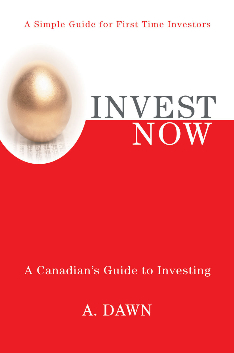
The following is an Excerpt from my first book Invest Now. Invest Now is jam-packed with timely information and timeless advice for the beginning Canadian investor. Invest Now covers a broad range of topics including Internet Scams. To purchase a copy, visit Chapters Indigo or click here to buy online – Invest Now: A Canadian’s Guide to Investing

Mutual Funds: The First-Time Investor’s Friend

If you had a friend who was very knowledgeable in the stock market, you would definitely want him to manage your stock investments. What if this friend agreed to do everything for a small fee? Wouldn’t you hire him? A mutual fund is just like this hypothetical friend. A mutual fund is a collection of investment products, such as stocks, bonds, T-bills, and so on. Mutual fund companies collect money from investors and hire professionals to manage your money. These professionals are called fund managers. When you buy a mutual fund, you buy a portion of the fund (or a portion of what the funds hold altogether).

Why Are Mutual Funds Suitable for First-Time Investors?

You need years of experience, lots of money, intensive knowledge, and various tools to pick an individual stock. A mutual fund does all that for you while keeping risk to a minimum. It’s no wonder that mutual funds’ assets are skyrocketing with the speed of a space shuttle.

To pick the most suitable funds for you, you need to know a few things. Let me start with the advantages of mutual funds; you can use these advantages to overcome obstacles you will face as a first-time investor.

Advantages of Mutual Funds

Low Minimums and PAC

Low minimums are the best feature mutual funds offer. Have you heard your friends saying they don’t have enough money to invest, and that’s why they never save? If you are using same excuse, put it aside. Most mutual funds will let you start with as little as $500, and some will let you start with just $100. If you agree to let fund companies take money out of your bank account systematicallyβ€”either monthly, weekly, biweekly, quarterly, semi-annually or annually, you can start with as little as $25. This convenient option is a good one for those who can’t put in one lump-sum payment to start with. You will not find this type of convenience investing in stocks and bonds. The above-mentioned feature is called PAC (pre-authorized checking), AIP (automatic investment plan) or SIP (systematic investment plan). I will use PAC in this book, because PAC is widely used and recognized.

PAC is nothing but systematically investing your money with a financial institution. One great advantage of having PAC is that it gives you the power of dollar-cost averaging.

Dollar-cost average simply refers to the averaging of your cost per share or per unit. Suppose you are running a PAC for $25 monthly on the 15th of each month. Your mutual fund unit price will not be the same on the 15th of each month. But you will be adding the same $25 each month. If unit price goes up, you will be buying fewer units. If unit price goes down, you will be buying more units. Running a PAC year after year and calculating your average cost per share after a few years will prompt gains. Research has shown that if you do dollar-cost averaging, you end up buying more units rather than spending one set lump sum.

Dollar-cost averaging on stocks or bonds will cost you a lot of money, with transaction fees every time you buy. But you can do a dollar-cost average on mutual funds without additional cost or transaction fees. Just run a PAC, and you are good to go. This feature is very suitable for first-time investors.

Professional Management

Choosing an individual stock or bond can be an enormous task for new investors. All the research and decision-making can be daunting. Everyday investors don’t have the tools or resources to make a prudent decision. When you buy mutual funds, you are buying the expertise and service of the group of professionals who manage those funds. Each group consists of a fund manager and a few analysts. This group is responsible for doing all the research and for deciding when and what to buy and sell. Basically, everything is done by the fund manager and his team. You don’t have to spend days and nights analyzing stocks and monitoring your portfolio. Remember, these professionals cost you money, but I will discuss how to keep your costs minimal.

Diversification and Convenience

Whether you are a stock or a mutual-fund investor, it is very important to diversify. The old saying β€œDon’t put all your eggs in one basket” still applies. Diversification reduces your risk by spreading your money across different companies, countries and types of assets. A mutual fund is lot more diversified than a stock or a bond, because a typical fund holds 20 to 50 stocks or a mixture of stocks, bonds, T-bills and so on. I will share my own simple diversification strategy a little later.

Diversification can be a headache if you invest in stocks or bonds. You need to do lots of trading, and you have to keep track all of your portfolios constantly. If you don’t mind the complex task of managing your own portfolio and enjoy doing it, that’s fine. But such an endeavour would require a lot of effort for first-time investors as they pick different types of investment products and attempt to manage them. A mutual fund gives you exposure throughout the world with diversification and convenienceβ€”nothing needed from your side.

Regulation

When I first started investing, a junior mining company’s stock was going through the roof. This ten-cent stock was trading at close to two dollars, and rumour was it would reach five dollars soon. I started dreaming of becoming a millionaire in couple of weeks and had already made some plans to retire in the Bahamas the next month.

My emotions ran high; I did not hesitate to invest a few thousand dollars. My investment went up for one day. Starting the second day, my investment started to fall, and after one week my investment was down to four hundred dollars. Basically, I lost all my money. In a mutual fund, it is unlikely that you will lose your money overnight. In the financial world, nothing is guaranteed, but a mutual fund offers a better degree of protection than stocks due to stringent rules and regulations. Mutual funds are highly regulated, ensuring how funds are managed and how investors are informed.

A few points on mutual funds are worth mentioning

A mutual-fund company does not physically hold its assets. A third party, called the custodian, holds securities on behalf of the fund company. If the fund company is in trouble, your money is protected. Fund managers can’t just walk out with your money. The custodian can be either a bank or a trust company.

Fund companies need approval from unit holders to make any significant change. Also, any change in the fund’s investment objective has to be approved by unit holders.

Fund companies have to disclose the fund’s holdings on a regular basis.

Fund companies have to disclose the fund’s unit value regularly.

Fund companies need to publish procedures for the purchase and sale of funds.

Remember, these rules are in place to provide you some degree of safety. No investment is guaranteed, and any investment can decline in value.

Liquidity

Mutual funds are very easy to sell and buy. Your money is not tied up for any specified terms or years. Keep in mind that, except for money-market funds, you will incur an early redemption fee if you redeem your fund within the first sixty days of purchase. Consult your mutual-fund prospectus to find out more.

Transaction Cost

Mutual funds offer another convenient feature. Suppose you want to buy a few Canadian stocks and a couple of international stocks to start your investment. You will be spending the following if you are buying stocks:

(Assume trading cost per transaction is $29)

Three Canadian stocks trading on TSX = 3 Γ— $29 = $87 CAD

Two American stocks trading on NYSE = 2 Γ— $29 = $58 US

Imagine your cost in buying on the European and Asian exchanges. Selling would be equally expensive. You can avoid all these costs if you buy mutual funds. However, you do pay on mutual funds, and I will explain how in a moment.

Disadvantages of Mutual Funds

Nothing in life comes without disadvantages. Now that we have discussed the pros of mutual funds, let’s go over the cons.

Fees and Expenses

When you buy mutual funds, you pay fees to compensate companies for doing all the work. These fees are called management-expense ratios (MERs). Depending on what type of load (front load, back load or low load) you buy, you might pay commission and redemption fees. I will discuss MERs and load a little later in order to show you how to keep your cost minimal.

No Insurance

The Canadian Deposit Insurance Corporation (CDIC) does not insure mutual funds the way it insures bank accounts, loans and so on. Keep in mind that other investments, such as stocks or bonds, are not insured by the CDIC either.

Loss of Controls

Fund managers, not mutual fund holders, make the decisions on a fund’s portfolio. When you buy mutual funds, you give up your authority and abide by the fund company’s decisions.

Trading Limitations

Stocks can be traded as many times as you want throughout the day (North American markets are open from 9:30 a.m. to 4:00 p.m., Monday through Friday). Mutual funds are priced only once a day, after the markets close. Regardless of how many times you buy or sell in a day, you will get only one price for that day. It does not change every second, like stocks.

Cash Holding

Mutual funds need to hold large amounts of cash to pay for redemptions (when someone is selling). Had this cash been invested, you would have made money on this cash. In other words, investors lose growth potential on that cash portion.

Mutual funds carry some other disadvantages, but these are the most important ones.

Next, let’s discuss the fees and expenses you pay when you buy mutual funds. Fees and expenses are very important to know, as such information allows you to cut costs by investing carefully. You need to do that to become a successful investor.

Malaysia Travel Blog: Taking AirAsia For The First Time

Kuala Lumpur Travel Blog: Part 1

AirAsia SYD to KUL

For the Sydney to Kuala Lumpur segment of my journey, I decided to try low-cost budget airline AirAsia, instead of flying business class.

At the Sydney airport AirAsia check-in counter, the staff made me move some of my stuff from my carry-on bag to my personal item bag. This is because, she said, I was close to the limit, but personal item bags didn’t have to follow any limit. I always travel with only a carry-on and it was no big deal. So I transferred some stuff very fast and was on my way through security.

I upgraded my economy seat to have one of the Hot Seats for $70 on the Airbus A330. My seat was in the front row bulkhead seat; I had no one sitting in front of me and I literally had infinite leg stretch space. Also, I had express boarding to enter first.

I ordered food online months before. It was Kung Pao Chicken with Rice for only $6.00, coffee included. The food was not in a great quantity, but was good enough for the 8 hour-35 minute flight.

I was in a position to look out two windows and spent the whole flight doing nothing but looking out them. Although I had my Chromebook, I didn’t feel like watching any movies.

This flight from Sydney to Kuala Lumpur was full. I remember my other low-cost flight from Singapore to Melbourne was half empty.

I heard lots of things about AirAsia. So naturally, I was expecting there would be something I could find to complain about.  However, my trip was pleasant and I couldn’t find anything to complain about.

Based on this specific experience, I wouldn’t mind flying AirAsia again.

How To Handle Your Mortgage In A Divorce

Divorce and Mortgage

Short of getting married, buying a house with your partner for life (or intended partner for life) is possibly the most concrete commitment you can make to them. In fact, as marriages frequently end in divorce within ten years, and the average amortization period for a mortgage is considerably longer, it could be said that it is in many ways a bigger commitment. Regardless, joining together to buy a house which you will share as a couple is a big move, and bigger still if you are joint account holders on the mortgage. An even bigger move is if you divorce while you are still paying off the mortgage – creating conditions for some of the most unpleasant times of your life, if you do not both swiftly resolve to conduct the entire process with maturity and dignity.

When a couple divorce, there is always a question over the marital home. Will it simply be sold with the couple splitting the money equally or according to a ratio of their choice? Will one partner buy out the other? It is for both of you to decide. It may be that one partner wants a clean breakaway and intends to leave the area, in which case the only thing that remains is whether the remaining partner wishes to stay in the house and can meet the full mortgage payment. It is important at an early stage to consult your mortgage agent in order to find out exactly how it affects your specific mortgage.

There may be some justification for applying for a new mortgage – whether this be for the purposes of buying out your spouse’s half of the equity in the house or in order to search for a new home. If this is the case then it is important to take account of the fact that there will be some changed data on the new application and that you are unlikely to have the same borrowing power as an individual that you did as a couple. Indeed, it is often worth involving the mortgage in discussions between lawyers if the divorce is to be conducted with the help of legal representation. This can help to divide it fairly and equally.

It is also worth taking into account that debt taken out in joint names will affect the credit scoring of both parties. Sorting out the issue of the mortgage is in this case all the more important, as acrimony over a divorce can be multiplied if one partner is considered to be behaving in any way that is injurious to the other. Although the marriage may have come to an end – potentially a very unpleasant end – the couple who are separating will usually have bought the house together at a time when they were very much in love, and its sale, or even departure from it by one of the parties can cause a great deal of heartache. It is sensible in this case to be businesslike although not insensitive, and making things easier will include smoothing out any financial issues – in which the divorce must be considered a priority.

What Is The World Bank

The World Bank

One of the most important financial institutions in the world, if not the most important, is the World Bank. The World Bank is an international financial institution that provides leveraged loans to developing countries to help fund capital programs. Through the World Bank, the expressed goal of reducing poverty is worked towards.

Many people confuse the World Bank with the World Bank Group. The World Bank is made up of the International Bank for Reconstruction and Development and the International Development Association, while the World Bank Group is made up of those two organizations, as well as the International Finance Corporation, Multilateral Investment Guarantee Agency and the International Center for Settlement of Investment Disputes.

The World Bank was created in 1944 at the Bretton Woods Conference, which was the same conference where the International Monetary Fund was created. Like the IMF, the World Bank is headquartered in the United States. One interesting note is that while the IMF is traditionally led by a European, the World Bank by custom is always led by an American. The first country to be selected for World Bank aid was France, while Poland and Chile were rejected. The first loan was for $987 million, roughly half of what was originally requested and this was under strict conditions. The World Bank then monitored the use of these funds and it was required by the French government to provide a balanced budget and a plan for repayment to the World Bank. In addition, the United States required that the French government remove any communist elements within its cabinet in order to qualify for the loan. France, which had been decimated by the Second World War, complied.

The World Bank has set forward five factors that are necessary for economic growth within a country, which allows them to help countries improve their financial standing and the standard of living of the country’s citizens. These factors are:

1.   Build capacity to strengthen governments.

2.   Create infrastructure to implement justice systems that aid business and protect the rights of individuals and their property.

3.   Develop financial systems that are strong and can handle tough economic times through concepts like corporate ventures and micro-credit.

4.   Combat corruption by helping countries eradicate it within their borders.

5.   Research and train countries and their citizens, while providing the opportunity for citizens of these countries to get an education.

The World Bank has decided that it would try and reach some very ambition goals by 2015 in order to help make the world a better place. These goals have helped to improve the image of the World Bank from just an international bank, into an organization that is dedicated to making the world a better place. The goals set out by the World Bank for 2015 are:

Β·   Eradicate Extreme Poverty/Hunger

Β·   Universal Primary Education

Β·   Promote Gender Equality

Β·   Reduce Child Mortality

Β·   Improve Maternal Health

Β·   Combat the Spread of Diseases

Β·   Ensure Environmental Sustainability

Β·   Develop Global Partnership

Thanks to the World Bank, things are improving on many fronts.

These policies and goals are being pushed by the main voting powers of the World Bank. In 2010, the World Bank revised its voting system to help give developing countries more of a say in the decisions of the organization. Currently the voting powers of the World Bank are split as follows:

1.   United States:  15.85 percent

2.   Japan:  6.84 percent

3.   China:   4.42 percent

4.   Germany:  4.00 percent

5.   France:  3.75 percent

6.   United Kingdom: 3.75 percent

7.   Other members: 61.39 percent

Under the reforms in 2010, countries like Brazil, India, South Korea and Mexico saw their voting power increase. Many developed countries lost voting power while Russia did not see a change in its voting power.