Warren Buffet–The World’s Most Successful Investor

The Sage of Omaha

First Published Date : April 6, 2011 ADawnJournal.com

He is considered to be the greatest investor in history and is usually ranked as one of the richest men on the planet. He is Warren Buffett and he has become a legendary figure in the investment world.

Born Aug. 30, 1930, Buffett is the chairman and CEO of Berkshire Hathaway and is the third wealthiest person in the world with a net worth of about $50 billion. While Buffett is known for his immense fortune, he is also known for giving away money and has announced that upon his death, he will give away 99 per cent of his fortune to charities, including the Gates Foundation, which is the charity of another very wealthy man; Bill Gates.

Born in Omaha, Nebraska, Buffett was educated at Rose Hill Elementary School until his father was elected to Congress in 1942. At this point, Buffett moved to Washington with his family and attended Woodrow Wilson High School.

One of the most interesting aspects about Buffett was his keen business sense, even from a young age. He had an understanding of how to make money and he began making money as a child when he was selling chewing gum, magazines and Coca-Cola door-to-door. He also knew how to save money and began putting money away for a rainy day.

At the age of 14, Buffett had filed his first tax routine and even used his bicycle as a $35 deduction because he used it on his paper route.

At the age of 15, he bought a pinball machine for $25 and put it in a barber shop. Only a few months later, he had several pinball machines in many different shops across the city. This was just the beginning of what would be a legendary business career.

As a child, Buffett spent time in a stock brokerage that was near his father’s company and when he was 10 he went to the New York Stock Exchange. At the age of 11, he had three shares in Cities Service.

By the time he was out of college (University of Pennsylvania), Buffett had $90,000 in savings thanks to sound business investments and a good sense of the stock market.

He graduated with a degree in Business Administration and then enrolled in Columbia Business School because two of his financial heroes taught there. From there, he received a Masters in Economics and then went to the New York Institute of Finance.

Throughout the 1950s and 1960s, Buffett worked as an investment salesman and securities analyst and in 1970 he became a general partner at Berkshire Hathaway, where he is now the CEO.

In the 1952, he married Susan Thompson and his first child, Susan Alice Buffett was born the following year.

Only a few years later, he bought a five-bedroom house in Omaha for $31,500. The fact that he still lives there shows the incredible character of Buffett who could afford his own country, but chooses to live in a regular home, in a regular neighborhood.

Due to all his partnerships in various companies, by 1962, Buffett was a millionaire with a fortune over $7.1 million by 1962. That same year, he merged all the partnerships into one and bought Berkshire Hathaway

Throughout the 1950s, Buffett began to acquire stocks in media including the Washington Post and ABC.

From 1960, when he became a millionaire, to 1990, the fortune of Buffett continued to grow thanks to excellent investing and shrewd business deals that led him as a controlling shareholder in many large companies. Buffett became a billionaire on May 29, 1990 and only 12 years later he was worth $11 billion. At this time, he announced that 85 per cent of his Berkshire holdings would be given away over time, to five foundations. The largest donation was to the Bill and Melinda Gates Foundation.

In 2008, Buffett was on top of the world, literally. It was that year that he reached $62 billion in net worth, making him the richest man in the world and pushing Bill Gates off the top of the list, where he had been for 13 consecutive years. The next year, Gates was again the richest man in the world but Buffet was second.

One reason for the drop was the loss of $25 billion in one year by Buffett due to the financial meltdown and crisis of 2008 to 2009.

Even with the financial meltdown, Buffett bought General Electric preferred stock, netting him a good increase in net worth.

Buffett separated from his wife in 1977 but remained legally married to her until 2004 when she passed away. His daughter currently does charity work through her own foundation. In 2006, Buffett married his long-time partner Astrid Menks, who was 60 years old at the time and had been introduced to Buffett by Buffett’s wife. Buffet, his partner and his wife were very close and all remained friends for several years.

Unlike many other CEOs, Buffett does not make millions in salary, but instead brings home only $100,000 in salary, making all his money from investments.

Buffett is also a big fan of the game bridge and often plays it with Bill Gates. He is also a fan of Nebraska football and can be seen in the stands whenever he has time to attend a game.

Another interesting fact about Buffett is that he does not carry a cell phone, nor have a computer and he drives his own car, rather than have someone drive him where he has to go.

Naturally, a great deal of recognition has come to Buffett. He was named the top money manager of the 20th century by the Carson Group, as one of the most 100 influential individuals in the world in 2007 according to Time Magazine and he has received the Presidential Medal of Freedom from President Barack Obama. ‘

An mild-mannered man, Buffett is truly unique in the world of business and a fascinating person to learn the world of investing from.
Should You Give Your Kids An Allowance?

Kid’s Allowance Teaches Money Management

First Published Date : April 13, 2011 ADawnJournal.com

Prelude

An allowance is an amount of money you give to your kids on a regular basis to cover their expenses. Experts have always debated over whether kids should get an allowance or not. One group says giving an allowance teaches kids nothing and it might even ruin their finances in the future. Another group says an allowance teaches children money management skills (through responsibility and discipline) and prepares them to better handle their finances in the future. I believe in allowances and if used properly, it can be a great tool to teach your kids finances at an early age. Today, I will present my perspective and will provide you some tips on this debated topic.

Why Kids Should Get An Allowance?

Responsible parents look after the family and meet its members’ needs. An allowance helps to meets family members’ needs. An allowance is an example of parents’ responsibility. A lesson kids are practically observing right here – responsibility.

An allowance nurtures the children’s ability to think and act independently. Don’t expect them to always spend their allowance properly. The objective here is to make mistakes and teach them to correct themselves as they go along.

Once kids have their allowance in their hands, it tells them something very important – money is not unlimited. This reinforces the idea that they have to spend it wisely (i.e., it teaches how to best make choices between many things) once they know that each time they spend on something, they will have less than they did before. You will see a significant reduction in their “I want this” items. This is how kids learn the concept of “discipline” and “money is limited.”

At What Age Should Kids Get An Allowance?

Kids start showing coin recognition and interest in basic money concepts as early as four. Depending on your kids’ interest and your comfort level, parents can start giving an allowance as early as age three to five.

How Much Allowance Should Kids Get?

There is a common approach on deciding an allowance – a weekly allowance representing a total amount equal to $1 for every year for age. For example, a four year old would get $4 every week.

However, I think this basic approach will not work in most situations as there are many other allowance deciding factors coming into play. You should consider the following factors when deciding on an allowance:

·    Your Income – Only you know what you can afford to give and what you can’t.

·    Your Kid’s Age – As they grow bigger, the allowance amount should increase as well to cover additional cost kids need to handle every year.

·    What The Allowance Should Cover – Be clear on what it should cover and what not, and then add all expenditures to check if this allowance amount is realistic enough. A good way to do this is to make a list of all items you think their allowance should cover and discuss it with your kids; this ensures that no important items are missing and that your children are kept involved in the process.

·    Where Do You Live? – You may want to consider the neighbourhood you live in when deciding an allowance amount. Do you think a kid living in Red Lake should get the same allowance as a kid living in Toronto? I would keep this is mind while making a decision.

Allowances and Chores Should Not Be Tied

It is not recommended to link allowances and regular household chores. Chores are regular family responsibilities and should not be tied with allowances. However, kids can get paid for special projects for which you would normally seek outside help such as cleaning the backyard, painting jobs, etc.

Keep Clothing Allowance Separate

You may find some type of allowances, such as clothing allowances or book allowances, are not easy to blend into regular allowances. An easy way to handle this is to keep these separate. For example, give your children a clothing allowance in the winter for winter clothing, give them money to buy books when the needs arise, and so on.

Do Not Give an Allowance without Proper Guidelines

The basic purpose of giving an allowance is to teach kids money management skills. If you just throw some money at your kids without proper guidelines, instead of teaching them money management skills, it will teach them indiscipline and bad money management skills. Always give the allowance with proper guidance – show them how to spend it and break it down into small pieces, such as 10% should go to the piggy bank, 10% for a science magazine, 10% for charity, and so on.

Last Word

Money skills are not taught in school. Giving an allowance in a responsible way can open up endless possibilities to teach kids money skills and financial responsibility, and the lifetime results are immeasurable.

Taipei to Toronto - Eva Air Business Class Flight Review | Travel Blog

Eva Air Business Class BR 36 – Taipei to Toronto

Singapore to Toronto via Taipei Dec 20, 2018

After visiting the Infinity Lounge TPE airport, I headed to the aircraft. Eva Air business calls their business class Royal Business Class. There is no 1st class on this Boeing 777-300ER.

Inside the Business Class Cabin

Like my other Eva Air business class flights, this one had same configuration as 1-2-1 reverse-herringbone layout. All lie-flat seats offer direct aisle access. My seat was next to the window.

The Amenity Kit

The Amenity Kit was made by high-quality German manufacturer RIMOWA. It was a nice ,red hard-shell box wrapped in a red fabric jacket. Inside were the usual goodies, such as compression socks, eye mask, lotion, comb, toothpaste, toothbrush, and many other items. This Amenity Kit was one of the best ones I have had.

Also, there was a full sleeping wear set provided by designer brand APUJAN and it was of high quality.

Food & Drinks

Because it was a long flight (13H, 50M), there were several meals and in-between snacks  served throughout the flight. Some of the items I ate were:

- Smoked Salmon with Sesame with Zucchini Slice

- Cajun Spiced Scallop Topped with Shrimp Roes

- Garden Vegetable Salad

- Grilled USDA Prime Beef Fillet with Garlic and Anchovy Sauce

- Ice Cream

- Coke, Coffee and Tea many times

The food was unparalleled and EVA AIR Business Class was one of the best airlines when it comes to food.

The Washroom

The washrooms were extremely clean, well maintained, and flawless. So far, all my EVA Flight experiences were the same.

Entertainment System

There were fairly recent movies and TV shows, but I didn’t watch anything for long. Eva Air does not provide free Wi-Fi in business.

Final Thoughts

This flight had a night mode feature on the ceiling, like my Toronto to Taipei flight, creating stars in the night sky. When it was dark outside, this feature kept the inside alive by creating space-like environment and I enjoyed it all night.

I have had a few other EVA Air business class flights and they were consistent in terms of excellent service and satisfaction. So far, I have not found any flaws or anything to complain about on any of their flights, and I will be looking forward to experiencing EVA AIR again in the future.

HSBC Declines Internet Entrepreneurship Bank Account

My First Business Decision to Open an HSBC Business Direct Account Turned Out To Be a Wrong One

First Published Date : April 25, 2011 ADawnJournal.com

I have incorporated my Internet Activities in December, 2010. All my websites and domains are now under my new corporation A Dawn Dot Net Corp. – a Canadian federally incorporated business entity. How long does it take to federally incorporate a business in Canada? You will be surprised to know that it took me only slightly more than 24 hours to start my new corporation. How long does it take you to open a business account in Canada? Well, it all depends on which bank you pick. My first business decision choosing HSBC Canada to open my business account turned out to be a bad decision and became a nightmare. After leaving me hanging for 3 weeks, they told me that they would have to decline my application as they did not know what Internet Entrepreneurship was because they never dealt with this type of business before. Today, I will give you some insights into how my first wrong business decision to open a free HSBC Business Direct Account caused pain and agony.

Week 1

I walked into an HSBC branch located on 1940 Eglinton Avenue East in Toronto to apply for a Business Direct account. I was told by the branch that for this account I had to apply online and the branch was unable to provide me any help. So, I returned home and applied online. I was told on the confirmation email that I should hear from an HSBC Business Banking representative within 1 business day. However, 3 or 4 days passed and I did not receive any emails or calls from anyone regarding my application status. Finally, I ended up calling their business customer service. The business banking representative was friendly and apologized for not getting back to me. He interviewed me intensely regarding Internet entrepreneurship. I had to explain to him what a domain is, how we make money from ads on websites, the various faces of Internet entrepreneurship and much more. I had to show him a few of my websites and after a long conversation he seemed to be satisfied. He mentioned that I should be hearing from someone at the branch to visit and produce my corporate documents once my account is approved and that it should not take more than 2-3 days. A point worth mentioning is that I received a bankcard from HSBC in the mail even without even having my bank account approved.

Week 2

About 5 days passed and so far I did not receive any calls or emails from anyone. My Cuba trip was approaching, so I decided to call HSBC business customer service again. To my surprise, this rep asked me the same questions I was asked by the first rep. So I had to explain everything to him all over again. It was like a job interview. I was getting a little agitated. However, he apologized for the delay and mentioned that it should not take more than 2-3 days to get an answer. I mentioned to him that I would be in Cuba for a week. He assured me that I should have an answer before I return.

Week 3

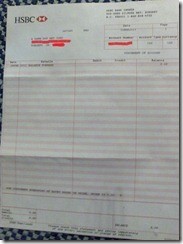
Upon returning from Cuba, I checked my email and Canada Post mail box for any correspondence from HSBC. There was nothing. No rejection notice, no acceptance notice, no nothing. I called their business banking number again. This time, I summarized what happened so far so he did not have to start interviewing me again on Internet entrepreneurship. After listening to me, he mentioned that HSBC never dealt with business bank accounts for Internet entrepreneurship before and they are unable to issue a business bank account. I should be receiving a formal rejection letter within the next few days from HSBC. This rejection letter came to me after 2 weeks, not after a few days. And the funny thing is, although they declined opening an account for me, I still have been receiving a statement every month from HSBC. Their one department keeps issuing a monthly statement not knowing that other department declined my account. I am attaching a copy of this statement on top left of this post.

Final Word

I wasted all of December trying to open a bank account with HSBC Bank Canada. When I went to RBC Royal Bank to open a business account, they managed to do that in one day. I regretted going to HSBC the first time. HSBC claims to be “The World’s Local Bank.” However, they are far from providing world-class service to be considered the world’s local bank.

How to Choose A Place to Retire

Choosing A Place To Retire

First Published Published Date : May 4, 2011 ADawnJournal.com

When you are approaching retirement age, there is a chance that you will want to move. This is often because your family has probably moved away, your kids are out and you may want to have some change of scenery. If you live where it snows, you may also want to spend the rest of your days in a nice warm location like Florida.

Of course, when you are choosing a new place, or state, to move to in your retirement, it is important you choose right. Choosing wrong could make your retirement anything but enjoyable and you could find your money slipping away because you made the wrong choice for the place you are going to spend your golden years.

To help you make the right decision, here is are some things to keep in mind for your retirement.

1.    Climate: You want to be in a place where the temperature and weather is normal so you don’t have to worry about severe storms, shovelling snow and more.

2.    Economics: You want to live in a place where the cost of living is normal, the tax burden is minor and there is not a high amount of unemployment, just in case you wanted a part-time job to supplement your income.

3.    Life Expectancy: You want to live in a state that has a high amount of people living well into their old age.

4.    Crime: You want to feel secure, so moving to a place with a high crime rate is probably not something you want to do. You want to find a place where there is little crime so you can feel safe in your golden years.

So, what are the best and worst places to retire? Well, according to TopRetirements.com, these are the choices you have in the USA:

The worst states are (2010 edition):

50. Illinois

49. California

48. New York

47. Rhode Island

46. New Jersey

45. Ohio

44. Wisconsin

43. Massachusetts

42. Connecticut

41. Nevada

The reason Illinois is the worst state is because it does not have a high amount of economic action going on and it has had to borrow money just to fund the pension obligations of the state. That is not a good sign. In addition, there is no security income or tax pension, which is something many retirees rely upon heavily.

The best states are(2010 edition):

1. Florida

2. North Carolina

3. Tennessee

4. South Carolina

5. California

6. Arizona

7. Texas

8. Colorado

9. Oregon

10. Delaware

Florida has the warmest winters in the United States, there is no income tax and there is a high amount of property tax protection, which is very important for retirees.

You will also notice that on both lists, you have California, this is because the best list was based on visits to the state retirement guide of TopRetirements.com, while the other list is based on certain criteria. The biggest plus for California though was the climate.

So, where are you going to retire to spend your golden years?