Although India Is on Track to Becoming the Fastest Growing Economy, It Might Need Another 78 Years to Surpass China

New Visit Begins $22bn New Economic Era

First Published Date: May 21, 2015

China and India may have non-agreed issues from decades of mistrust, but economic cooperation is something these two Asian giants can agree upon. India’s PM Narendra Modi’s recent visit opened up a new economic bridge paved by $22bn to begin a new era of cooperation.

As China’s economic growth starts to slow down, India is expected to overtake China with its growth rate of more than 8 percent to become the world’s fastest growing economy. And China takes notes by not missing to become a partner of the growth opportunity in India.

China has expressed interest in investing in India’s $2tn before, but the progress has been slow due to various political issues on the Indian side. However, at the end of Mr. Modi’s visit to China, both countries signed $22bn deals to boost economic ties, starting with areas such as renewable energy, ports, financing and industrial parks, and so on.

Although India is on track to becoming the fastest growing economy, it has a long way to go to become the next China. China’s GDP is about five times that of India. As a recent Wall Street Journal post points out, India would require 78 years to surpass China at its current economic rate.

Although the new India-China economic cooperation begins a new era, their non-economic rivalries remain strong with no ending in sight. Decades-long border disputes and vying for regional influence to become the regional big brother are here to stay and have no indication of resolving anytime soon.

Taipei 101 – A Landmark Skyscraper

Taipei 101

First Published Date: Sep 5, 2009


In a world obsessed with extremes, and where publicity is king, it is quite something to be able to say that you are at the further extreme of anything. To be the tallest person in the world, although it may have its inconvenient points, is certainly a claim that will entitle you to publicity. Being the world’s richest person will encourage other people to do business with you, ensuring that you simply get richer. Although it is not always universally positive to be able to claim that you are or have the best, the tallest, the richest or the most famous of anything, it does entitle you to certain perks of which recognition is arguably the most powerful. On a worldwide level, having the tallest building in the world certainly puts you front and center in any architectural for um.

As things stand, then, the Taipei 101 tower is a building with a lot to envy. At present – and until at least the 2nd of December this year – the tower remains the tallest building in the world. Standing at 509.2 meters above ground to its highest point, and 139.2 meters to its top floor, the Taipei 101 tower is taller than any other currently habitable building in the world. One tower currently outstrips it in terms of height – the Burj Dubai in the United Arab Emirates – and at present it is not habitable, and will not be until its opening date, currently slated as being in three months’ time. Since its completion in 2004, Taipei 101 has held this title, one which has grown in importance as the world of publicity has gained strength.

It is all the more impressive for the fact that Taipei is found in one of the areas of the world with the highest incidence of typhoon winds and earthquake tremors. The building simply could not have been built were it unable to withstand such conditions, and therefore great care was taken to ensure that this was included in its building plans. As a result, it is capable of withstanding winds of over 130 miles per hour and the strongest earthquakes that the tectonic plates are ever likely to throw at it. innovative engineering was required both for this level of stability and its enormous height – and for any combination of the two.

A lot of the publicity which surrounds the Taipei 101 tower is not to do with its tenants but with its fascinating idiosyncrasies which make for fascinating facts. For example, the name of the tower refers not only to the 101 floors above the ground, but also to the fact that it was built in the first year of a new Chinese century (100+1). Another reason behind this name is that 100 is viewed worldwide as a number of perfection (anything deemed to be 100% is seen as perfect) – the idea being that Taipei 101 goes one better than that. The number eight is seen as a renewal of time, as each week has seven days (the eighth marking a new week). In connection with this and the association of eight as a “lucky number”, the outside tower is made up of eight segments of eight floors. Also interesting is the external design, which features touches of specifically Chinese architecture like the traditional pagodas and ruyi figures.

To streamline and minimize blog maintenance, I will be discontinuing maintaining the realestateexpedition.com website (however, I will still hold the domain). I will gradually move all articles from this site to A Dawn Journal. This article originally published on the above website on Sep 5, 2009.

How Credit Can Be Your Friend

Credit Card Tips

First Published Date: April 18, 2009

There is no doubt that an over-reliance on credit is a bad thing. One has only to look at the mess that the world is currently in to see that the banks’ readiness to lend to people who really should not have been borrowing was unwise. Equally, some of those people doing the borrowing must have been aware that what they were doing carried a huge risk. And yet, if handled correctly, credit can be a way of doing things to your advantage in the long term.

To make credit work for you, you need to keep in mind that risk management is a vital part of the process. As far as possible you need to keep risk out of the equation altogether. You need to keep your interests, your long-term security and needs in the forefront of your mind. Although things like high-value purchases of consumer items may seem hugely tempting, they are to be ignored if there is any chance that they will infringe on your financial security.

So in reading this, you may well be questioning how credit can be your friend at all. The truth of the matter is that credit allows you to spread life’s costs. This is possible without a great deal of risk, because banks will be happy to give good lending deals to people who show the ability to manage credit. And you can do this by living on credit. Don’t worry – this is not as risky as it sounds. It simply involves using the rules to your advantage, and requires discipline (so if you are prone to getting distracted by bargains, do not proceed unless you are sure you can restrain yourself).

The first step is to open a savings account. The best one to go for is one that has either got no limit as to how much you can put in monthly or over a year, or a limit that matches or exceeds your salary. Of the options this leaves you, pick the one with the highest rate of interest. This account is where you want to put your wages each month.

Now, take out a credit card. The experiment ends here if a bank will not give you a credit card due to past borrowing nightmares – but that is probably a good thing. This credit card will be what you use to do your essential shopping. Groceries? On the card. Fuel? On the card. Bills? On the card, if possible. Is this reckless spending? No, it is not because you are going to pay the balance off, in full, before it gets the chance to accrue interest. Most cards accrue interest monthly, but it is not going to be an issue if you monitor your card balance and withdraw from the savings account to pay it off every time a balance appears.

If you do this with a modicum of discipline you will find that there is still money in the savings account at the end of the month, and it is accruing interest. Meanwhile, your credit score is increasing with every full balance payment you make to the card. Not only are you financially solvent, but you are making savings, and have the borrowing power to get the best mortgage possible should you have your eye on a house, or a loan to buy a car. And the savings? They come in very handy if you want to bring down the monthly payments on a loan.

To streamline and minimize blog maintenance, I will be discontinuing maintaining the Canadapersonalfinancewebsite.com website (however, I will still hold the domain). I will gradually move all articles from this site to A Dawn Journal. This article originally published on the above website on Apr 18, 2009.

Doing This Makes You Your Credit Card Companies’ Best Man

Say NO to Cash Advances

First Published Date: May 30, 2015

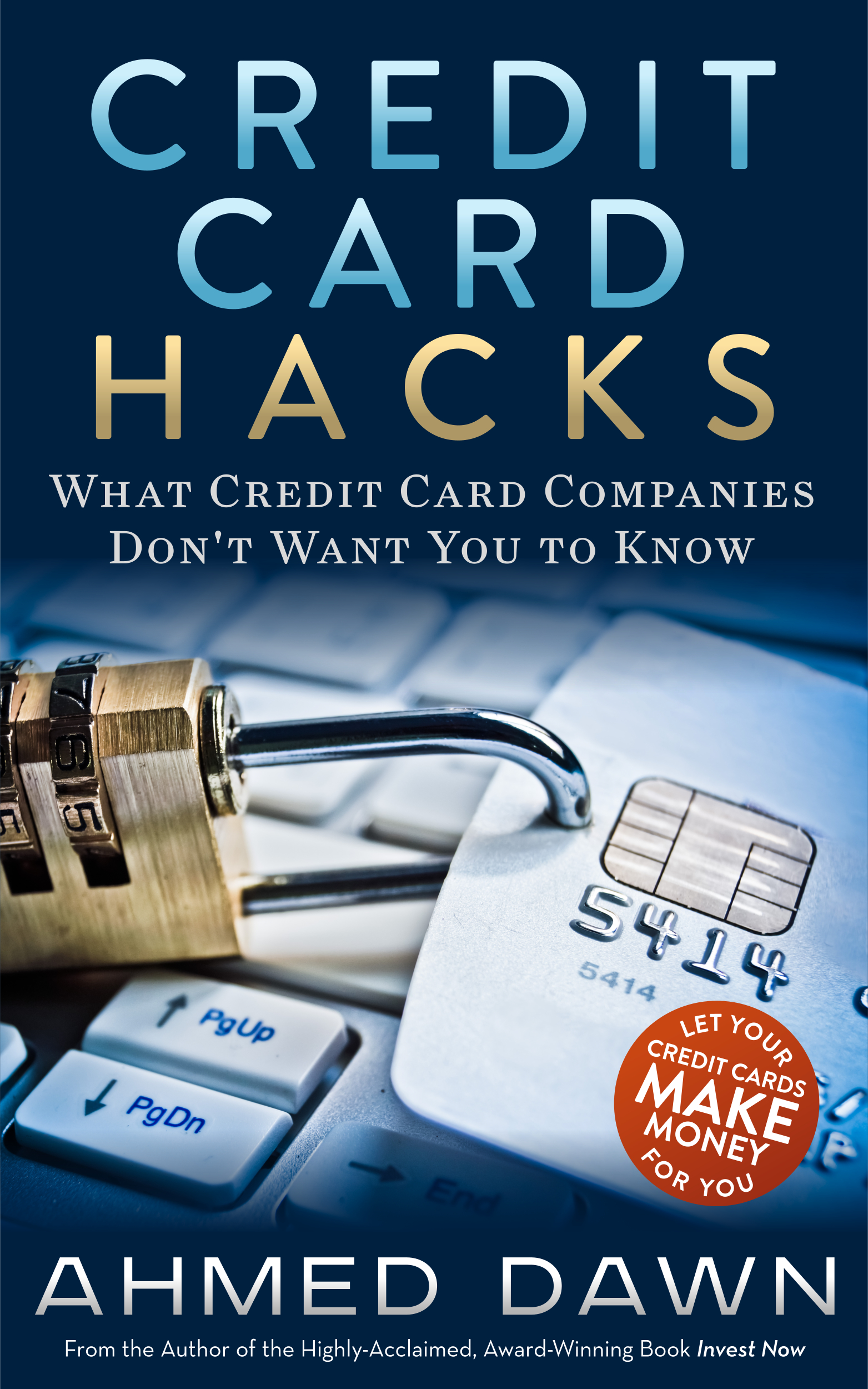
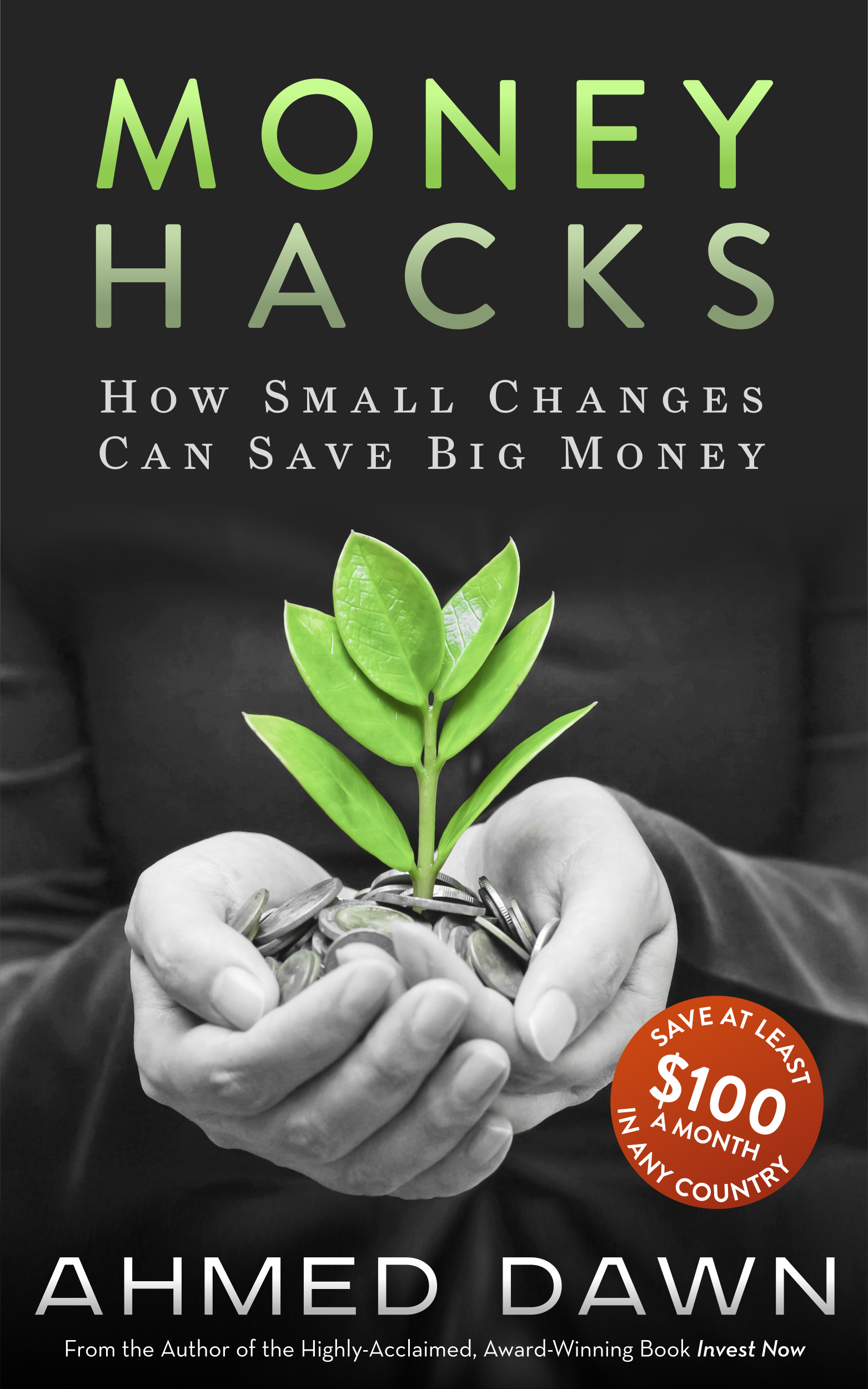
As I am writing my next book Credit Card Hacks: What Credit Card Companies Don’t Want You to Know, I would like to share some points I just finished writing about cash advances. This is a feature your credit cards offer that should be avoided at any cost and here is why.

Want to be the most popular person at your credit card companies? Taking out cash using the cash advance feature will definitely do the job. Credit card companies make the most money when you take out cash advances. The interest charge starts the moment you take out cash at 22 to 30 percent, or at even higher rates. And then in addition to that, you will be forced to pay another 1 to 3 percent cash advance fee.

And there is more. What your credit card companies don’t want you to know is that you could still be paying interest on cash advances, even if you have paid the full cash advance amount you took out, if your credit card has balances – even a single dollar. So it is possible you may be paying high interest on something you thought paid off.

So, how you can stop paying high interest charges? You have to bring down your balance to zero. But there is more to it and topics like this and much more will be revealed in my next book Credit Card Hacks: What Credit Card Companies Don’t Want You to Know. Currently I am finishing up its last two chapters and expecting to be published on the Amazon Kindle platform in the next 3 to 4 months.

Keep an eye on A Dawn Journal, as I will keep you posted with any updates as I continue working on it.

Bank of China Tower, Hong Kong

BOC Tower, Hong Kong

First Published Date: Sep 19, 2009

Much of modern architecture is about making a statement. In fact, it is probably truer to say that architecture has always in some way been about making a statement. Even the most unremarkable buildings have something to say about themselves, even if that thing is simply “I am simple and unobtrusive, it is what happens inside that is important”. Nevertheless, the increase in the amount of money spent on architecture has been enough to persuade architects that what they must provide in this day and age is a little bit of “bang for your buck”. Any major development today, you can be assured, will not be a simple straight up-and-down edifice with sober decoration. One look at the Dubai skyline will make clear the direction in which the wind of modern architecture is blowing.

As far as statements go, it is not merely the modern day buildings that seek to make themselves heard, as a look through the last few decades will tell you. One building which has been in situ for nearly twenty years in its current form, the Bank of China Tower in Hong Kong, is very much a statement building. Its bold lines are certainly impressive, and although it was conceived in the Eighties and opened in 1990 it still looks modern to most eyes. With the importance of the number eight in Chinese culture,  the plan was to open the tower on the eighth of August, 1988 (8.8.88). This did not happen, and this seems to fit the story of the tower, as it seems to deviate from the long-held beliefs about auspicious buildings and projects in Chinese culture.

For one thing, the building does not conform to the standard practices of feng shui which are broadly considered to be of major importance in China and its territories, in some places seeming almost to have a sense of open defiance against the rules. This is not quite the intention, and in fact the architect who conceived it, I.M. Pei, consulted with experts before finalising the design, removing a majority of the X-shaped structures from the final look as they are considered to bring bad luck. On the other hand, the presence of numerous sharp lines in the building is considered to be provocative. Nonetheless, the building has yet to be befallen by any major difficulties. On being built it was the tallest building in all of Asia, and the first outside the United States to break the fabled 1,000 foot mark.

One other interesting feature of the Bank of China Tower is its shape. From certain angles it bears a marked resemblance to a meat cleaver, and indeed this shape is known as a “cleaver building”. While this in itself may seem to be just a common fact, it becomes interesting when one notes that the “blade” of this cleaver points across the road at another building – the headquarters of the Hong Kong branch of HSBC, to be specific. A coincidence? Possibly, and possibly not, but interesting to ponder nonetheless.

To streamline and minimize blog maintenance, I will be discontinuing maintaining the realestateexpedition.com website (however, I will still hold the domain). I will gradually move all articles from this site to A Dawn Journal. This article originally published on the above website on Sep 13, 2009