7 Things You Need to Know Before Visiting Malaysia

Malaysia Travel Tips

Planning a trip to Malaysia? This vibrant Southeast Asian destination offers a mix of culture, nature, and cuisine. To make your journey smooth, here are seven essential travel tips every visitor should know.

1. Complete the Malaysia Digital Arrival Card (MDAC)

All foreign travelers must fill out a Malaysia Digital Arrival Card (MDAC) online within three days of their arrival. This mandatory form helps speed up immigration processing. Submit it at the MDAC Portal. Each traveler, including children, must complete a separate form.

2. Visa Requirements for Malaysia

Many nationalities enjoy visa-free entry for up to 90 days. If your country requires a visa, you can apply online for a Malaysian e-visa. Always check the latest visa rules before traveling.

3. Best Time to Visit Malaysia

Malaysia is split into two regions: Peninsular Malaysia and Malaysian Borneo (Sabah and Sarawak), separated by the South China Sea.

Peninsular (West Coast): Best from November to March

East Coast & Borneo: Best from April to September

This helps you avoid rainy monsoon seasons and enjoy better weather for sightseeing and island hopping.

4. Currency and Payments

The local currency is the Malaysian Ringgit (MYR). Credit cards are widely accepted in cities, but cash is essential for rural areas, street food stalls, and local markets.

5. Language and Communication

Malay (Bahasa Malaysia) is the official language, but English is widely spoken, especially in tourist areas, hotels, and restaurants. You’ll have no trouble communicating, but learning a few local phrases can make your experience more engaging.

6. Malaysian Food and Hygiene

Malaysia is a food paradise. Try local dishes like nasi lemak, satay, and char kway teow. Street food is generally safe—choose busy stalls with high turnover for guaranteed freshness.

7. Cultural Etiquette

Malaysia is multicultural and predominantly Muslim. It is recommended to dress modestly, especially in rural areas and religious sites. Remove your shoes before entering homes or temples and be respectful during Ramadan.

Final Thoughts

Malaysia offers a unique blend of adventure, relaxation, and cultural richness. With these tips, you’ll be well prepared to enjoy everything this beautiful country has to offer.

Your Travel eSIMs Found Routing Data Through China (Holafly)

  Your Travel eSIMs Found Routing Data Through China (Holafly)

Security Alert: Travel eSIMs Secretly Use Foreign Networks

When I came across this news, I was telling myself, “Oh no, not my eSIM!” A recent study has uncovered alarming privacy and security risks associated with travel eSIMs, revealing that many providers route user data through foreign telecommunications networks — including Chinese infrastructure — without informing customers. Conducted by researchers from Northeastern University and presented at the USENIX Security Symposium, the investigation analyzed eSIM profiles from 25 providers such as Holafly, Airalo, and eSIM Access.

The researchers found that in most cases, the public IP address assigned to a device did not match its physical location. Instead, traffic was routed through third-party countries. One notable example involved Ireland-based Holafly, whose eSIM service routed connections through China Mobile’s network. In that test case, the device received an IP address allocated to China Mobile International Limited in Hong Kong, making it appear as though the device was physically located in China. Disabling GPS on the test device further reinforced this illusion.

This unexpected routing allowed access to region-restricted content, such as ViuTV, without the use of a VPN. The study also highlighted how easy it is to become an eSIM reseller, with platforms requiring only an email and payment method. Resellers gain access to sensitive user data, including IMSI numbers and location information accurate to within 800 meters.

Imagine if you are using Holafly eSIM, someone can access your data and track you anywhere in the world as close as 800 meters in accuracy. The eSIM I usually use are Airalo and Saily. Although they are doing the same thing, but in not China. I am on some level comfortable sending my data to other countries (if I have no choice), but sending my info to CHINA is a big NO for me.

The researchers are calling for greater transparency and regulatory oversight to ensure users are informed about how their data is handled. They propose mandatory disclosure of routing practices and clearer accountability among network operators, resellers, and wholesale providers.

This study raises serious questions about the safety of using travel eSIMs and underscores the need for stronger consumer protections in the rapidly-evolving mobile connectivity landscape.

Sinking Island Country Tuvalu’s Future Floats to Australia

Tuvalu’s Climate Exodus: Australia Opens Doors to a Sinking Nation

Since I was a kid, I have dreamt of a not-so-known tiny island nation in the South Pacific. Then I found out that this country is facing extinction from climate change and will sink one day. This worried me and I’ve been keeping an eye on the news occasionally. Here I’ll talk about the latest developments, which raise hope for the residents of this nation. Thanks to Australia!

Why Tuvalu Is at Risk: The Falepili Union Agreement

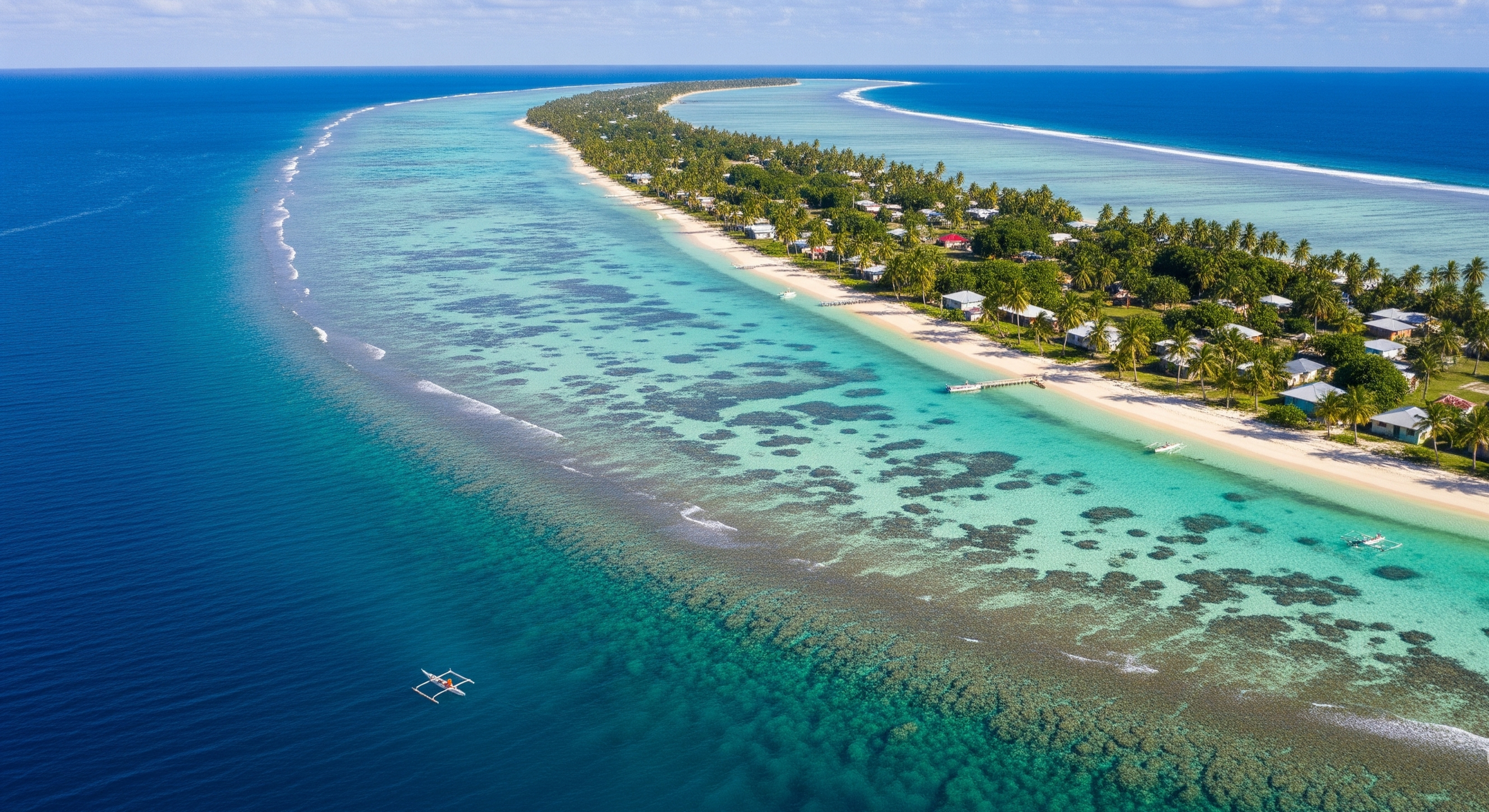
In a historic and compassionate move, Australia has agreed to accept the entire population of Tuvalu, a Pacific island nation facing existential threats from rising sea levels. Tuvalu, with an average elevation of less than two meters above sea level, is one of the most climate-vulnerable countries in the world. Scientists warn that the island could become uninhabitable within the next 80 years, with two of its nine coral atolls already nearly submerged.

The Falepili Union Agreement: What This Means for Tuvaluans

Under the Falepili Union, signed in 2024, Australia committed to offering 280 climate visas annually to Tuvaluan citizens. This agreement is the first of its kind globally, providing a dignified pathway for climate-induced migration. The program has seen overwhelming interest—over 80% of Tuvalu’s population, approximately 8,750 people, have applied for relocation.

The visa allows Tuvaluans to live, study, and work in Australia, offering not just refuge but opportunity. It also includes a legal commitment from Australia to defend Tuvalu in the event of natural disasters, health crises, or military threats. This pact ensures that Tuvalu’s sovereignty and statehood will be recognized even if its land disappears beneath the waves.

A Model for Future Climate Migration?

While hailed as a landmark in climate justice, the program also raises concerns about the long-term impact on Tuvalu’s workforce and cultural heritage. Experts warn that a mass exodus could drain the island of skilled professionals and young talent.

Nevertheless, the Falepili Union stands as a powerful example of international solidarity in the face of climate change. It offers hope not only to Tuvaluans but to other nations facing similar threats, setting a precedent for future climate migration policies.

How To Use AI To Created Perfect Malaysia Itinerary

How AI Created My Entire Malaysia Itinerary: A Travel-Planning Experience with Google Gemini

Planning a multi-city trip across Malaysia can be a challenge, but I decided to let Google Gemini take the lead—and it turned out to be one of the smartest travel decisions I’ve ever made.

I started by asking Gemini a simple question: “What are the best things to see in Kuala Lumpur and Penang?”. It responded with a curated list of top attractions, from the Petronas Towers and Batu Caves in KL to George Town’s street art and Penang Hill. But the real magic began when I started customizing the list. I added places that matched my interests and removed others that didn’t appeal to me. Gemini adapted instantly, refining the suggestions with each conversation.

Once I had my must-see spots, Gemini built a day-by-day itinerary. I asked it to break each day into morning, afternoon, and evening segments, which made the schedule feel more manageable and realistic. It even matched activities based on where I was staying, pulling location data to ensure I wasn’t crisscrossing the city unnecessarily.

One of its most helpful features was Gemini’s ability to estimate travel times and directions. From my arrival at Kuala Lumpur International Airport, it mapped out how long it would take to reach my hotel, and how to get to each attraction—whether by train, Grab, or walking.

My itinerary includes 2 days in KL, followed by a trip to Penang for 3 days, and then 3 more days back in KL before flying to Malé in the Maldives. Every leg of the journey was planned with Gemini’s help, making sure I had time to explore, relax, and travel efficiently.

I plan to share this itinerary on my YouTube channel during the trip, showing how AI can transform travel planning into a personalized, stress-free experience. If you're planning a trip and want a smart assistant that listens and adapts, Gemini is worth trying.


💡 Tips for Using AI to Plan Your Trip

  1. Start with broad questions like “What are the top things to do in [city]?”

  2. Refine results by telling the AI your interests (e.g., food, history, nature).

  3. Ask for day-by-day breakdowns and request time-of-day planning.

  4. Share your hotel location so the AI can group nearby attractions.

  5. Request travel times and directions to better manage your schedule.

  6. Use follow-up prompts to simplify or adjust the itinerary as needed.

AI won’t replace your travel instincts, but it can definitely enhance them. If you’re planning a trip, give it a try—you might be surprised how much easier it makes everything.

Ukulhas: The Local Paradise That Luxury Resorts Don’t Want You to Know About

Why Ukulhas Island Is the Best Budget-Friendly Destination in the Maldives for Snorkeling, Beaches, and Authentic Local Culture

Luxury resorts in the Maldives don’t want you to visit local islands, as you can experience the Maldives at a fraction of the cost.

Ukulhas is located in the Alif Alif Atoll (also known as North Ari Atoll) in the Maldives. It lies approximately 70 kilometers west of Malé, the capital city, and about 15 kilometers from Rasdhoo, the atoll’s capital

Ukulhas is a serene island paradise that offers a perfect blend of natural beauty, local culture, and eco-conscious tourism. Ukulhas is known for its laid-back charm, pristine beaches, and vibrant marine life — making it an ideal destination for travelers seeking both relaxation and adventure.

One of the island’s main attractions is Ukulhas Beach, a stunning stretch of powdery white sand and crystal clear waters. It’s perfect for sunbathing, swimming, and especially snorkeling, with colorful coral reefs and tropical fish just offshore.

In the Maldives, you need to dress modestly except on designated bikini beaches. Ukulhas has a bikini beach that stretches almost 0.6 miles (approximately 1 kilometer) along the western side of the island.

For diving enthusiasts, the Ukulhas Eco Dive Club offers sustainable diving experiences, including the chance to swim with manta rays, which can be seen year round — a rare treat in the Maldives.

Beyond the beach, visitors can explore local markets, enjoy fresh seafood at cozy restaurants, or learn about island life at the community center. Sunset Point is a must-visit for breathtaking views, as the sky transforms into a canvas of colors each evening.

For a well-rounded experience, a stay of 2 to 3 days is ideal. This allows enough time to unwind, explore the island, and take part in water activities without feeling rushed. Ukulhas is also a great base for island hopping to nearby gems like Rasdhoo or Mathiveri.

For more on how to travel to the Maldives, visit my YouTube Channel Maldives Travel here:

 • Maldives 🇲🇻 | Travel  

 More Ukulhas Articles on this site here:

Maldives Local Island Dhigurah On A Budget

Top 3 Local Islands To Visit In Maldives

Maldives Local Island Ukulhas On A Budget