A Brief History of India

India: A Brief History

First Published: ADawnJournal.com March 10, 2010

One of the oldest civilizations in the world is the civilization of India. Like China, it is one of the founding civilizations in human history, and it has had a profound impact on our lives for thousands of years. While it is not easy to sum up the history of a country going back thousands of years, this article will go through a brief history of this amazing land.

Pre-History of India

The first settlements in India began to appear about 9,000 years ago, and throughout the early part of the history of the country, it has been a mysterious land, but also a very spiritual one. Throughout pre-history, the country has been a strong civilization as well, even being the only civilization to beat back both the Mongols and Alexander the Great during its history.

It was during the third century BC that the country united under Asoka the Great, during a time that was called India’s Golden Age. It was during this time that India made great advances in mathematics, art, language, astronomy and religion. In fact, both Hinduism and Buddhism came from India around this time.

Europe Arrives

The country was able to keep itself an independent nation for a long period of time, but by the 16th century, the countries of the United Kingdom, the Netherlands, France and Portugal began to establish themselves around India, greatly disrupting the country. By 1856, the entire country became part of the British East India Company, essentially making it part of the British Empire. From this point on, for almost 100 years, the country would be under the direct rule of the British Empire. The country tried to fight against Britain in India’s First War of Independence, but they were not successful.

Independence

The citizens of India would continually try and push Britain out of their land for the first part of the 20th century. However, it was not until the legendary figure of Mahatma Gandhi came along and led millions of India towards independence through non-violent civil disobedience. Through this action, India gained its independence on August 15, 1947, along with the region of Pakistan. In 1950, the country became a republic and created its own constitution.

The Growing Giant

While India gained its independence, it still had problems with its neighbours. It got into a dispute with China in 1962 that resulted in the Sino-India War, and the country has gone to war with Pakistan in 1947, 1965, 1971 and 1999. However, the country is also a member of the United Nations and it is also one of the few nuclear nations in the world. In addition, the country has transformed itself through economic reforms and is now becoming a superpower along with China. Currently, the country has one of the fastest growing economies on Earth and it is expected that India will be one of the major countries of the 21st century, along the lines of how Russia and the United States dominated the 20th century.

One thing is clear, this country, which has been around in one form or another for thousands of years, shows no signs of slowing down, or going away.

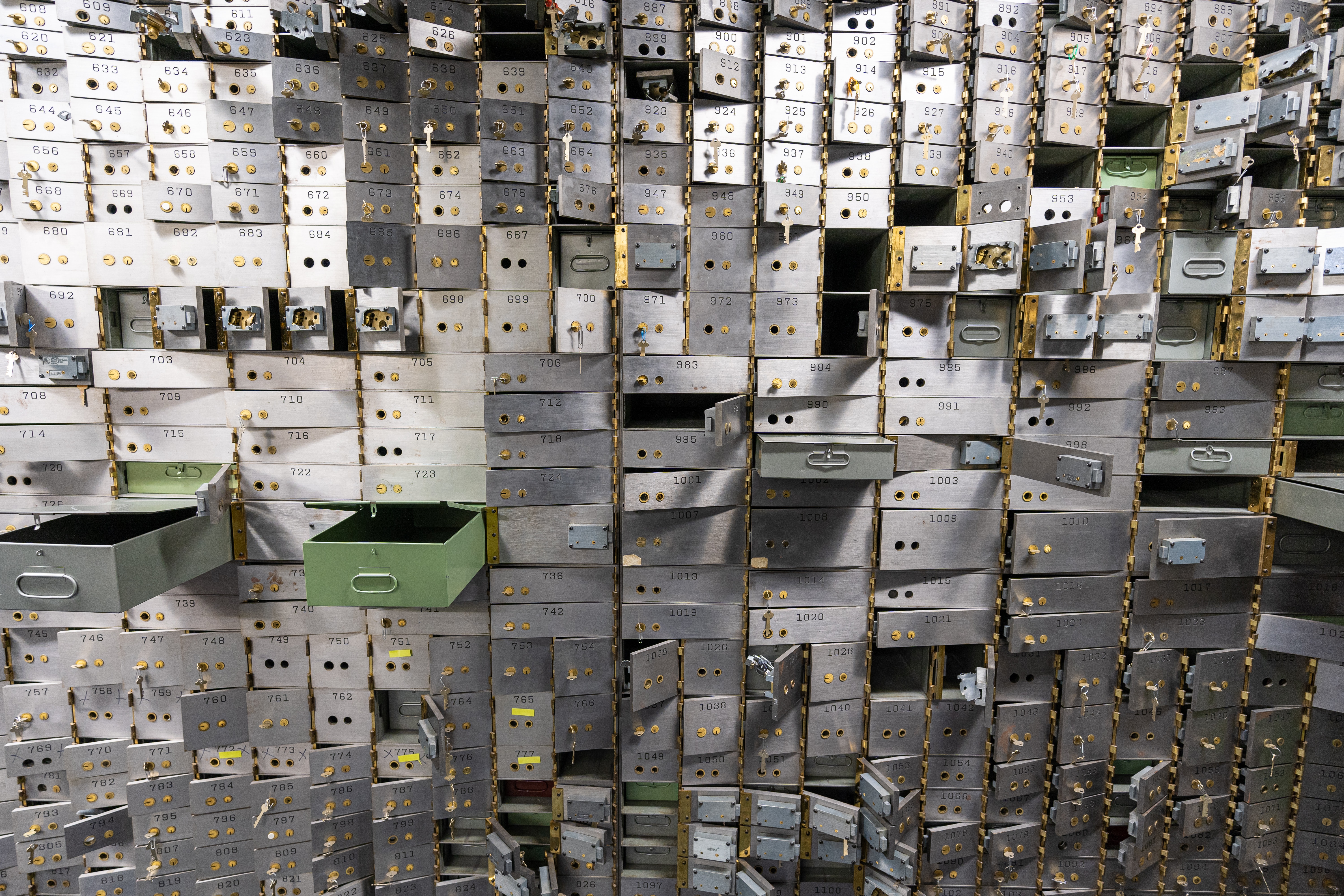
How Central Banks Control Interest Rates

Monetary Policy, Central or Reserve Bank, and Interest rates

First Published: ADawnJournal.com March 16, 2010

In Canada, there is a lot of talk about interest rates right now because of the interest rate going up in June. Currently, the interest rate is set at .25 percent, which means that when banks give out loans, they will give out a loan at an interest rate of Prime plus a certain amount of percent. This means that the prime interest rate is .25 percent, so if the bank does prime plus five percent, the interest rate they set is 5.25 percent.

Obviously, the lower the interest rate from the central bank, the less people pay for their mortgages and other credit items. In June, the Bank of Canada is going to be increasing the interest rate in an effort to slow the growth of the real estate market to prevent a bursting of the housing bubble. When the interest rate goes up, so too will the amount it costs to borrow money. For example, if the interest rate goes to 1.25 percent, then that original bank interest rate example goes from 5.25 percent to 6.25 percent. Now, one percent may not seem like much, but on a $400,000 mortgage, that one percent moves the amount of interest paid for the house from $21,000 to $25,000. That is an increase of $4,000!

How is it those central banks set these interest rates and why do they set interest rates?

Well, when a central bank wants to contract the supply of money, they can increase the interest rate. If an economy is growing too fast and in danger of collapsing, you can stop the high amount of borrowing by just raising the central interest rate of the country.

During a tough economic period, a country will then lower their interest rate in order to encourage people to use credit and buy things. For example, when the recession started in 2008, the Canada lowered its interest rate greatly in order to spur on buying. What happened when this was done is the real estate market exploded because it was cheaper than ever to borrow money for a home. With the housing market now breaking records in late-2009 and early-2010, the rest of the Canadian economy began to come out of recession before the United States was able to.

A central bank controlling interest rates and monetary policy actually goes back to 1694 when the Bank of England took on the responsibility of printing notes and backing the money with gold. This maintained the value of the coinage and print notes. As time went on, it was found that to maintain the gold standard that money was compared against, there was the need to constantly change and influence the interest rate to prevent things from going out of control.

While most people know about interest rates, many do not realize just how important the Central Bank is to their lives and the effect it has on how much they pay for their homes and other credit purchases. Our lives would be very different if not for places like the Bank of Canada and its regulation of the prime interest rate.

India China Relations Have Come a Long Way

China and India Relations

First Published: November 26, 2009 ADawnJournal.com

As time has gone on there have also been many developments in the India China economy, some of which are worth writing home about. Even though there were always fears that China was going to overrun India, it can be reported that the best thing that happened is the growth of bilateral trade between these two neighbouring economic giants. For the last few years, it has emerged that a balance of sorts is actually developing and both trade partners are happy with the progress so far.

With all these positive developments, there are still some small quarters that have the feeling that it may be too early to completely open up the Indian Market for the giant China. It happens that inmost cases, there is a competition from the two manufacturing nations that cuts across an almost similar range of products. This quarters that are skeptical about the advantage that India will be getting when it clearly emerges that import tariffs become higher locally as compared to their competitor, which to them is a real disadvantage. There has been a growing feeling that due consideration was not taken when their government signed FTAs with China. To them more needed to have been done in order to remove the current confusion that seems to exist in the current market.

Actually, ever since the two countries established diplomatic ties in the year 1950, there has been a tremendous progressive growth that has resulted in warm relationships despite the differences in their national ideological thinking. The two neighbouring nation’s leaders must have long realized the importance of cordial relationships and for that reason their bilateral trade has continued to grow unhindered over time. Any challenges that are experienced any time are easily solved in an amicable way solutions are mutually beneficial, even when it comes to sensitive and potentially explosive issues like border disputes.

India and China have for a long time had bilateral agreements on important areas such as technology and aviation, two items which are a the bedrock of modern trade tendencies and for this reason it on known that they regularly hold consultations in order to update themselves on any progress or challenges that need to be attended to for their mutual benefit. And with the direct air links they have had for a long time now, travel and cultural exchanges are things that are a common agenda among the citizenry.

Studies seem to indicate that there may be a need to put more focus on future investments or trade in sectors that have been left behind in the past. These sectors include traditional manufacturing but most important are knowledge based sectors so that India especially can reap a big bargain in some of these areas. Even though there are many products India can export to China, currently the greatest of them is iron but a lot more can still be done with stuff like chemicals, plastic, rubber and much more. But when they are put together, China and India can build a formidable force and develop areas that have great potential such as biotechnology, education, health, and tourism and information technology.

The Sky Is the limit for India China Trade Relations

China and India Trade Relations

First Published: ADawnJournal.com December 3, 2009

In the recent past India and China have continued to show a willingness to continue enhancing their relationship, and especially when there are possibilities of signing a free trade agreement. It is not too long ago that these two Asian giants agreed amongst themselves to leave no stone unturned in resisting any powers bending their elbows to force them into a deal regarding green house gas emissions. It is an open secret that with the cooperation of India and China in many areas of common interest the whole area in general is going to reap huge benefits. However, analysts believe they need to do things faster than they are happening now for their mutual benefit.

The one issue that may need to be addressed soon by those who are involved is the large gap that exists in the China India trade. Whereas the Chinese were able to push exports to India worth $31 Billion, India on the other hand managed only a paltry $9 Billion, which is close to only one third of their counterparts’ trade volume. There many Indian business people and analysts who are a little concerned and they want the issue handled not only amicably but fast also. Because there also fears in some quarters that Chinese goods could have been dumped in India, there are measures being put in place to check just that.

It may appear as if more than half of the total Indian exports to China have basically constituted of unprocessed iron ore, may be due to the fact that China has a large manufacturing base that is hungry for iron. This ends up leaving a large gap for the Indian Business people to try and put in manufactured goods that should get a good market in China as well. Some of the areas that are being considered include IT, where India is known to have a real niche and the news is that some Indian IT companies are actually setting base in China. The Chinese continue to enjoy a wide market in India for their machinery which has enjoyed good patronage over time.

There already seems to be a good wave of cooperation between manufacturing companies in both countries who discover they can be of mutual benefit to each other. Several Indian IT and pharmaceutical companies are already enjoying the benefits of cross border trade and if truth was to be told, they are seeing a good return on their investment. Some of those that have stories to write home about include companies such as Infosys and Ranbaxy among others. However they still need to pull up their socks in order to gain all the potential benefits that await them.

On the other hand there success stories from China in India and the case of Huawei Technologies comes to mind very quickly. Their investment has brought such a boost to India communication industry, especially through their fiber optic cables investment. There are of course a few teething problems that need to be addressed sooner rather than later, if this encouraging trend is going to see the light of the day and experience some exponential growth. Both governments then need to clear the path for their thriving business communities and only time will tell how far they both will go.

Things We Have Learned From The Global Financial Crisis

Lessons From The Global Financial Crisis

First Published: ADawnJournal.com December 6, 2009

The world has once again found itself in a terrible financial meltdown that has gone to affect the whole world and the consequences are only now trying to reach the ends of the planet, with each nation getting to a feel its share of the pain. This has been a long way in coming since the last such crisis which was somewhere just at the end of the Second World War. Even though there a signs of a recovery from a distance, we are yet to get out of the woods and one would say that the developing countries in particular are going to be hardest hit for reasons that they get affected by things that happen in the first world, even when they are mere spectators most of the time.

A good many people have this feeling that the current crisis was directly caused by the poor macroeconomic policies of the United States which must have led to the decline of local saving rates because of an extremely lenient money policy. This it is noted resulted in a housing boom in the US and most of the developed world and because of poor lending standards, the downfall was not too much for anyone to predict and so obviously in a little while the credit crunch was upon the Americans. It did not take long before the ramifications got to be felt in the rest of the world for the simple reason that the world is now so interconnected financially and otherwise.

It may appear that we have reached a point in time when supervision and proper regulation needs to be considered extremely carefully if we are to get out of the current crisis, leave alone avoiding a similar one any time in the future. In many countries we saw the rise of a shadow financial system for long time, which included mutual funds in the money market, private equity and hedge funds. The challenge was the use of this short term measures to fun long term investments which may not have been the wisest thing to do in a generation that is so informed like ours.

Banks will also need to get back to their standard and regulated practices, because the trend they got into of trying to compete with the smaller financial institutions which have no regulations whatsoever was a great contributor to the plague of unplanned lending worldwide. This automatically led to the over leveraging of the world’s financial system in the US in particular but also the rest of the world in varying degrees. In a little while confidence went under and it brought an abrupt stop to funding which led to the systematic collapse of structures as we know them.

We are going to need to work out fresh new forms of financial management which are going to encompass not only local financial challenges but those that will have to look at the big picture of the global financial market. The new forms of financial engineering will need to be those that are going to look at credit risk in a completely new way which is a basic requirement in any healthy financial market.