What Is A GIC (Guaranteed Investment Certificate)?

What Is A GIC (Guaranteed Investment Certificate)?

First Published: September 13, 2009 ADawnJournal.com

GICs are investment product (like mutual funds, bonds) that guarantees you to protect your principle (the amount you put in) with a guaranteed income for a particular period of time.

How Do GICs Work?

When you buy GICs, you are lending your money to the financial institution at a fixed or a variable interest rate, or based on a pre-determined formula (or arrangements) for a certain period of time. In return, at the end of the term, financial institution is giving you back the money you originally invested (called principle or capital) plus the interest you earned.

How Many Types Of GICs Are There?

Financial institutions will try to confuse you by giving many fancy names for their GICs. However, there are mainly two types of GICs. The first type pays fixed interest rate, and the second type pays variable interest rate. The second type can be linked to an index, a stock market, or a prime interest rate to pay you variable interest rate. Now let’s look at some other common terms institutions use:

Cashable GICs – You can cash it any times based on the terms provided by financial institutions. This may also be known as Redeemable GICs.

Non-Redeemable GICs – You won’t be able to redeem it until your GIC matures.

Index-Linked GICs – GICs that are linked to stock markets. This may also be known as Market-Linked GICs.

Where Can I Buy GIC?

Various financial institutions sell GICs such as banks, credit unions, discount brokerages, and other financial institutions. Also, your financial advisors are able to sell GICs through the institutions they are affiliated with.

Advantages of GICs

Here are the main advantages of GICs:

Principle Protection: Depending on what you buy, money invested in GICs can be safe and secure. At the end of the term, you will get back your capital you original invested. However, if you have security in your mind, it is recommended that you talk to a qualified financial professional.

Safe Parking: If you are not sure where to invest your money for the long term, you can park your money in short-term GICS while you can search for other options.

Higher Interest: GIC pays higher interest than traditional savings account.

CDIC Protection: Some GICs offered by CDIC insured institutions are protected for up to $100,000. Talk to your financial institutions to investigate this further.

Easy and Simple: GICs are easy to understand and simple to manage. You don’t need to have an MBA to invest your money in GICS.

Disadvantages of GICs

Here are the main disadvantages of GICs:

Liquidity: GICs aren’t very liquid (easy to withdraw) when you need your money
right away. A high interest savings account offers better liquidity than
GICs in most cases. With a GIC, your money is tied up for a specific period of time, i.e.,
one to three years.

Interest Income: If held in a non-registered account, interest earned on a GIC is
is taxed at a higher rate, for example, taxed at your full marginal tax rate.

Don’t Forget Inflation: Let’s say your GIC is giving you 2% interest. And consider that the annual inflation rate is 3%. If you keep $100 in your GIC for one year, you should have $102 in your hands after one year, right? Well, yes, technically, but that $102 is less than you started with. Due to inflation, you need $103 to buy same goods you would have bought with $100 a year ago. So actually, you lost money-$1, to be exact. Yes, real rates of return GICs can be negative or lower than what you actually see.

Final Word

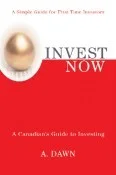
I am not a fan of GICs. In Invest Now: A Canadian’s Guide to Investing I have discussed how to invest without being a financial guru in non-GIC products such as mutual funds. If the idea of losing money makes you lose sleep and you absolutely can’t take the slightest risks, may be GICS are an option for you. Talk to a qualified financial professional – before making any decisions.

The Day I Knew Invest Now Changed Someone’s Life

Invest Now: A Canadian’s Guide to Investing

When I was writing Invest Now, I was often occupied with the idea  that the objective of this book would be to change someone’s life. I was not too worried about selling lots of copies, or making lots of money, or even becoming a famous author. I was worried about only one thing. My target was something very simple and straight forward - to change a one person’s life. To help someone with what I have learned all these years, and to enlighten someone’s life with all of the knowledge and hard work I put into my first book. If I accomplish this, I would consider Invest Now a successful venture, and I would consider myself content with the feeling of joy and accomplishment.

And then came the day I had been waiting for. This is what I have wanted to happen since Invest Now was published. On the weekend of July 12, 2008, I was attending a community-based book fair and cultural festival. This event was taking place at the Church of St Columba & All Hallows, 2723 St. Clair Avenue East, Toronto. On Sunday, July 13, some visitors were browsing Invest Now. Some of them were just passing by after having a quick glance at my stall. All of a sudden, a guy rushed to my stall out of nowhere. His first question was, “Are you the author of Invest Now”? I replied, “Yes.” Then what he told me went beyond my imagination. I was totally astonished – but my heart was filled with indescribable joy and a sense of accomplishment. I am now going to share with you what that gentleman told me.

He works as a financial advisor. He came across Invest Now at a local bookstore. At first, he bought one copy for himself out of curiosity. And then, he fell in love with Invest Now instantly. He was having a hard time explaining the world of investments to his clients. Once he found Invest Now, he started giving a copy to his clients. So far, he has distributed 7 or 8 copies, but it did not stop there - he started recommending Invest Now to other advisors at his firm. He also wrote a few articles in the local newspaper, and he recommended Invest Now in those articles. Finally he said, “Thank you, thank you so much for writing a book like this, and helping lots of people to understand such a complex matter in easy way. It saved me so much time and work – before I would spend days explaining investments to my clients; now I give them this book and ask them to read it first before I recommend anything else. You made my life so easy – I appreciate your hard work and thank you for helping so many people.”

It definitely feels good knowing Invest Now has served its purpose, and changed someone’s life. I am sure I will come across many more stories like this in the years to come. However, this is not where everything ends. This is just the beginning. With my website “A Dawn Journal”, and with more books to be published in the future – I will be able to change many others’ lives. I will be able to help a lot more people; that’s what makes me write more. I needed a confidence boost, and this reader just gave me that. What I heard from him was exactly what I needed to be confident in continuing my journey into the future.

Discipline Is Still Needed For Financial Success

Discipline and Money Management 

Many things have changed, but the basics of making money remain the same. Discipline is a skill you will need to create wealth and become successful financially. Winning the lottery or being born as a billionaire Saudi princess will not happen to most of the general population. And it even does not come to a percentage - when you look at people who are rich that way. So hoping for an unrealistic way to become wealthy will not do any good and that sort of thought should be avoided in the first place.

It is not hard to achieve your financial dreams. You only need to know a few simple, basic rules. And following those rules with discipline will make you accomplish your goals. Many personal finance websites are packed with these basics to explore for free. You only need the willingness to learn and apply towards reaching your financial goals - and you need discipline to accomplish that along the way.

If you are reading this article right now, it is highly likely that you already have a decent paying job or entrepreneurship. If you don’t, you will soon have it because you are a smart and educated person, and that’s what lead you to this website in the first place. Discipline can make the difference between two identical same level money earning individuals reaching financial goals and never reaching financial goals.

Let’s look at two imaginary individuals A and B. Both have good paying jobs. Both live in the same city. A spends all his money eating out at restaurants, taking expensive vacations on credit cards, buying the latest electronic gadgets, and living in expensive houses he can’t afford. He has lots of credit card balances and never disciplines himself to set aside money for the future. His logic is that life is too short not to enjoy - and he wont be able to enjoy these once he is old. So let’s enjoy as much possible right now and forget about the future.

Author/Copyright: Ahmed Dawn www.adawnjournal.com

B takes a different approach to life. He thinks life is too short to work for someone else - and he does not want to spend all his life working for a corporation only to pay off his credit card bills and things he would not have enjoyed in the first place. He aims to end working for someone else and wants to live on his own terms as early as possible - while he is still young. He disciplines himself saving and investing every penny he can get and so far he is doing pretty good. He was inspired after reading a few articles and books by financial author A. Dawn and reading more financial books and articles to enhance his personal finance knowledge since then. His favourite one is this: Ten Timeless Personal Finance Tip.

The obvious difference between A and B is that A will still have to work to pay of his credit cards bill when he will be required to get hip replacement surgery. A failed to realise that to enjoy his life now, he chose to work all his life to pay off his bills. He will never be free from his debts and will die one day working and worrying paying off his bills. B will accumulate enough savings early enough to retire and enjoy his life without working for someone else and without worrying about paying off his debts. He only needed the willingness to learn and the discipline to apply what he learned.

It is still not too late or early, regardless how old you are, to decide whether you would like to be A or B. I have chosen to be B and I have many tools to offer to help you reach your goals for free. Feel free to browse all my websites listed on the right panel of this page. And don’t forget - discipline cannot be replaced by anything else and has no substitute.

Mortgage Risk – What You Should Be Aware Of

Mortgage Risk Management

When taking out a mortgage it is important to be aware of the way that it will affect your future right from the start, in order to avoid messy situations later on. A mortgage is one of the most binding commitments you can make financially, as it ties you to a debt that will be with you for the foreseeable future, and maintaining payments to it is a non-negotiable part of your daily life for the period of the loan. Getting a mortgage that will suit your personal situation is essential because if you fail to make payments you risk losing your home and putting yourself in a situation where it will be impossible to get credit for the next several years.

It is genuinely of the utmost importance that you are aware from day one that these risks are real and serious. Although there are drawbacks to poor credit conduct on any kind of borrowing, the drawbacks on unsecured lending are considerably less. If you fail to meet the payments on a credit card then the card will be blocked and you will not be able to use it. This is not an ideal situation, but as long as you can make reduced payments for a specified period you will at least be able to maintain your way of life to a certain extent. The risks that come with a mortgage are proportionately increased by the fact that you have secured the loan against a property where you are living, and failure to meet those payments will see you evicted from your home if you cannot come to some kind of negotiated settlement.

In order to manage this risk, it is important to consider right from the start that a situation may arise where your income from work will be reduced. Do you have other sources of income that will allow you to at least maintain your mortgage payments? Will a claim on the insurance enable you to keep the account ticking over until your situation improves? Are you going to be eligible to claim on the insurance at all – this is dependent on what your current health and work situations are – or will you be turned down and need to rely on another source of income?

There are many questions that you need to ask yourself, and getting satisfactory answers in your mind for each of them is an absolute essential if you are going to successfully manage a mortgage account. If you are confident of living up to whatever is required of you, then you can be happy in the knowledge that one day, the house that currently belongs partly to the bank will be yours 100%. A mortgage is something that requires a lot of maturity and financial common sense to give you the best possible chance of owning your property and maybe one day realizing a profit on it. You don’t want to be paying off debt after you retire, so keep all of your most important questions in mind when looking for the right mortgage for you.