Why Go For Outsourcing?

Outsourcing Can Benefit Your business

Outsourcing has grown in popularity in the last couple of years. For a long time, it was something that was the sole preserve of companies who had specific funds for paying outside contractors to do things that were outside their skill sets – for example if a company specialized in one field, such as sales and marketing, they would outsource things such as cleaning and IT solutions. However, among other things, the Internet has now made it more possible than ever to run a business from your home as an individual. In addition, with all business people aware of the old maxim, “time is money”, there are more and more things that the individual has found can be best addressed by outsourcing.

Outsourcing itself covers a very broad range of services that are best divided into two sections: Business and Non-Business needs. The difference between the two sections is more or less self-explanatory. Suffice it to say that Business needs are things connected specifically with the service that you, the business owner, requires in order to keep the business running – these include such things as web design, accounts and sourcing required items and services. Non-Business needs are more connected with personal or household tasks that take time that could be used to deliver what is required from you by your customers. This includes things such as cleaning and other essential chores.

There are very few tasks that cannot be outsourced in this day and age. As a business owner, it is for you to decide whether outsourcing is something that you wish to practice. In order to make this decision it is worth auditing what your daily routine involves, where you can make changes and where you wish to make them. If you feel that you are best served by having all your time free to concentrate on delivering what is required of your business, the chances are that you would be best outsourcing as much as you feel comfortable with. You probably do not much enjoy cleaning and tidying, for example. And depending on your arrangements you can end up spending a couple of hours a week at the task, which in turn can lead to lost opportunities to build and serve a customer base. Therefore, you should then ask yourself whether that task is a productive use of your time. If the answer is “no”, then you can look to outsource your cleaning to a specialist.

Business needs are, if anything, more crucial. If your specialist area is – taking an example – accountancy, then there is every chance that you are not the world’s best web designer. Nevertheless, an attractive, easily navigable website with user-friendly interface is more or less essential for an individual businessperson. In this case, handing over the task of designing a website makes all the sense in the world. It won’t come cheap if you are using a top designer, but if you cost the process based on how much business a good website will send your way (generally a very large amount), then it can pay for itself several times over.


What Happens to Your Aeroplan Miles?

Air Canada Buys Aeroplan

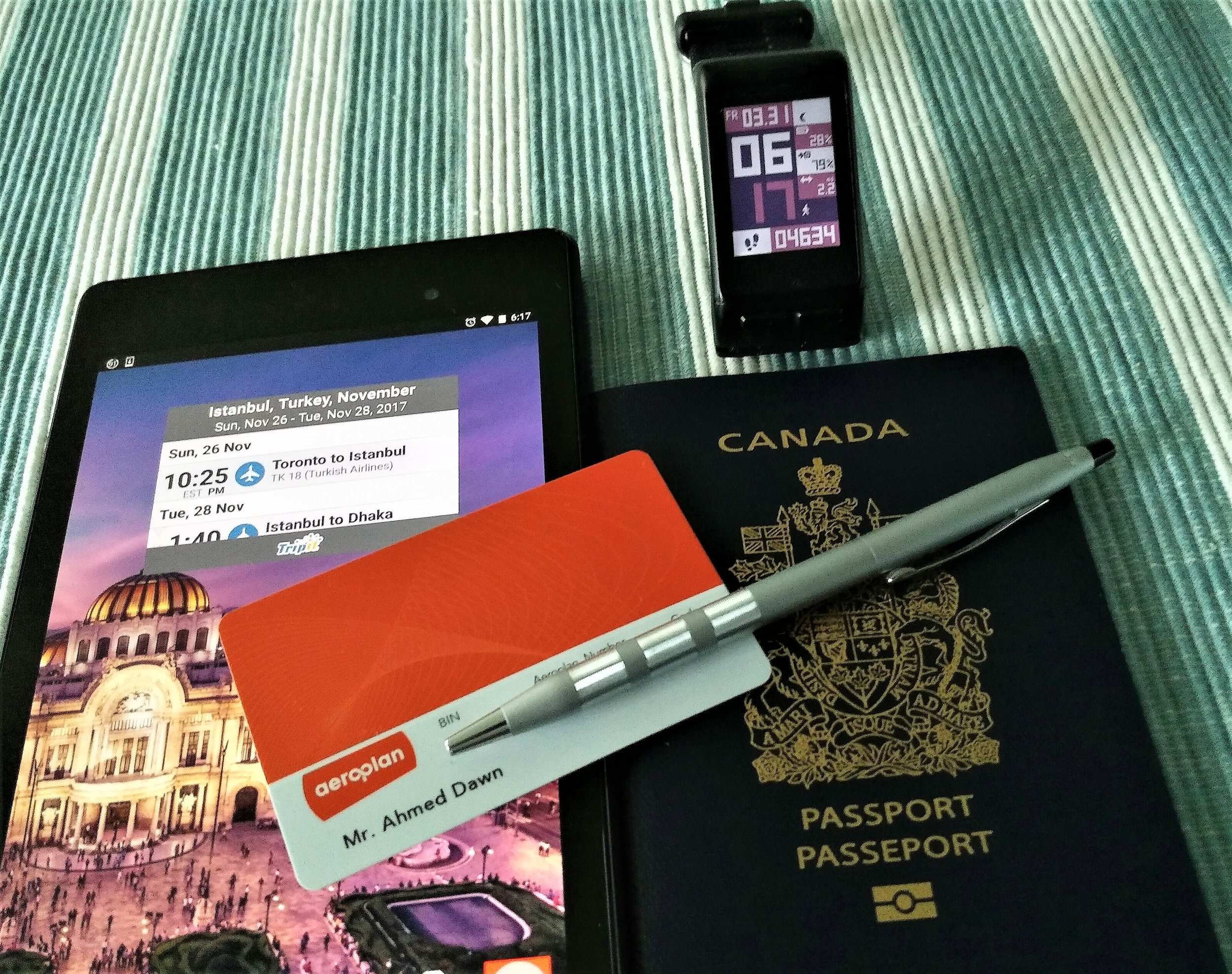
Air Canada created Aeroplan in 1984 to reward Air Canada and its alliance members. Then in 2008 Air Canada sold Aeroplan, but still maintained its partnership. Last year, Air Canada declared its intention to abandon Aeroplan in 2020 to create its own frequent flyer program and then this year (2018), Air Canada - along with its partners such as TD, CIBC, and VISA - have bought back Aeroplan for $450 million with its 1.9 billion miles liability.

If you are an Aeroplan member and not sure what to do with your miles after all these developments, I will shed some light today in simple terms so you can get the most out of your Aeroplan miles.

Aeroplan provides the best value when you redeem them for business class flights. However, make sure you don’t pay fuel and other surcharges levied by some airlines including Air Canada. Watch this video to learn more about it: How Not to Get Dinged by Air Canada on Aeroplan Rewards

So if you have a trip coming up before 2020, redeeming Aeroplan for business class will provide the most value. Although, Air Canada mentioned Aeroplan will be transferable to the new Air Canada loyalty program, I doubt that you will get better value than redeeming your miles now for business class flights.

However, if you are not taking a trip, don’t rush to redeem your miles. Rush decisions often make poorer judgements and lower redemption values.

In terms of Aeroplan credit cards, no one knows at this point whether these cards will continue as is or will have decreased rewards and benefits. As far as you are concerned, you can keep using these cards to earn miles. I don’t see any need to cancel and change these Aeroplan cobranded credit cards yet.

I do see more credit cards with hefty sign-up bonuses and a variety of benefits & rewards coming up in the future, once Air Canada is set to go with its new frequent flyer loyalty program in 2020 and beyond.  

There is a possibility that Air Canada will devalue Aeroplan at the time of the transfer or after that. This is because of the humongous amounts Air Canada and its partners are paying to absorb Aeroplan will have to come from somewhere and devaluing seems to be the easiest way to make that happen.

So, to summarize everything in brief:

- If you need to redeem Aeroplan, redeeming for business class flight will provide the best value and I doubt you will getter better value than now even after the transfer to the new program.

- Keep using your Aeroplan credit cards as usual.

- Keep an eye out for more credit cards with mega bonuses and possibly better reward structure and benefits in the future.

If you are interested to learn more about Aeroplan, watch my Aeroplan videos here:

Aeroplan 101 - Tips, Tricks, & the Basics

Speaking The Language When You Travel Can Help

Not Everyone Speaks English

Going abroad for a holiday is something that everybody should do at least once in their life, finances and technicalities permitting. Of course, there is no use trying to convince someone who is a global travel skeptic that they should broaden their horizons. But for anyone else particularly anyone who is wavering over the idea, the attractions of going somewhere completely different must be underlined. They say that travel broadens the mind. They also say that it is better to travel hopefully than to arrive. Only the first of these is really true. If you are traveling, the very best thing about it is experiencing life as it is lived in a different culture.

Foreign travel affords the traveler a lot of different experiences. The very fabric of life in a foreign country is different. From standard considerations like food and climate, to more esoteric matters like architecture and entertainment, a foreign holiday can really open your eyes. But for a holiday like this to have the desired effect it is important that you participate in the experience as fully as you can. It is a truism that you can only take from an experience as much as you put into it. There are cases where this is untrue. Yet, there is a lot of truth in it. You need to be prepared for anything on a foreign holiday. As much as anything else, this means that you need to learn the language.

Now, just in case anyone is panicking, this does not mean that you need to be fluent in Russian if you are planning a short break in Moscow. Fluency in a language is something that can only be achieved by years of study and ideally a large amount of time spent “living” in the language concerned. That means working, shopping and socialising in the language. But there is really no reason not to at least make a concerted effort to learn a few phrases which you will inevitably need on your travels. You don’t need to be able to discuss the political complexities of the city and country where you are holidaying, but being able to order breakfast or book a taxi cab will be useful.

It is a very common opinion that there is little point trying to speak the language with natives, because “everyone speaks English anyway”. There are several reasons why this is a lie, and a potentially damaging one. First of all, not everyone speaks English. In point of fact, particularly in countries with an established and internationally recognized language of their own, a lot of people don’t need to learn English and therefore don’t bother. Secondly, even though some people may speak excellent English, expecting them to change to suit you is a bit presumptuous – like saying “Why bother giving this person my contact details? They can look them up anyway!”

It is more polite to at least attempt to speak the language when you are abroad. If you make the effort, your holiday will be much the better for it as the locals will receive you much more warmly due to you making the effort.

To streamline and minimize blog maintenance, I will be discontinuing maintaining the Travelnowsimply.com website (however, I will still hold the domain). I will gradually move all articles from this site to Ahmed Dawn Dot Com site. This article originally published on the above website on May 29, 2009.

Summary Block
This block has no content yet. Items you add to the page connected to this block will display here.

Why Go Into Real Estate?

Why Should You Consider Getting Into Real Estate?

The world of real estate is one that is filled with challenges, and is never as straightforward as one would like it to be – as some think it may be from the outside, indeed. There is certainly no reason to suggest, though, that one should give up on the idea just because of the difficulties, it is these difficulties that make real estate what it is – an arena in which the strong survive and are rewarded handsomely for so doing. What is the story? Why should you consider getting into real estate?

1. The money. Let’s not pull any punches, very few people who get involved in the business of real estate go into it without money as their primary motivation. The most recognized way in which people make money from real estate is to buy a property when it is cheap, and potentially not very nice to live in, then spend some money bringing it into shape so that it can be sold on at a profit. The equation is fairly straightforward. You start with a modest outlay on a modest property. You want to maximize what you can bring in for it while not spending too much. Clever property developers will know how to improve a property while getting the best value.

2. Working for yourself. Sometimes there will be a lot of money in a job where you are answerable to other people. Sure, you enjoy the money, but when you are continually having to devote your time and skills to serving the need and request of someone else it can be tiring and unrewarding (except on the financial front, of course). Being your own boss means that you get to make the decisions and as well as being able to benefit financially you will also have the chance to make your personal philosophy into something concrete. This is something that is enriching in more than just the obvious way.

3. Standing in the community. This is something that tends to go hand in hand with financial success, of course. The two things are different, though. You can become a respected member of the community without a lot of money, and you can certainly make a lot of money without becoming a respected member of the community. But working in the real estate business can offer you the chance to really make ties that will stand you in good stead. Good property options will make a community far more profitable, and by contributing to that you may find that you are sought out by people with sway.

4. The journey is a blast. Often when someone buys a house, they do it up, sell it on and go back to work with a tidy profit in their bank account. This isn’t wrong. But if you realize  a knack for developing properties, you can continue reinvesting and keep making more money. When you are successful in real estate, it often means the big dream coming true – being able to retire early in order to enjoy your spoils at leisure.

To streamline and minimize blog maintenance, I will be discontinuing maintaining the realestateexpedition.com website (however, I will still hold the domain). I will gradually move all articles from this site to Ahmed Dawn Dot Com. This article originally published on the above website on May 1, 2009.

Jobs That Will Be Obsolete In The Future

Will Your Job Survive In The Future?

First Published: Nov 26, 2013 EntrepreneurJourney.com

A report recently published by the Canadian employment website Workopolis looks at some jobs
that will not exist in ten years. Technological advancement and widespread availability of the  
Internet will make these jobs a thing of the past in the future as people will not be needing
anyone to provide these services anymore.

Here are the ten jobs that will vanish:

- Social media expert

- Taxi dispatcher

- Toll both operator

- Retail cashier

- Word processor or typist

- Switchboard operator

- Photo finisher

- Video store clerk

- Print journalist

Source: Workopolis

Also, according to Workopolis, here are the top five fast growing and fast decline jobs:

Fast Growing Jobs

- Financial advisor

- Financial service representative

- Field sales representative

- Sales associate

- Social worker

Fast Declining Jobs

- People greeter

- Photo lab associate

- Head cashier

- Data entry clerk

- Courier

Source: Workopolis

The study by Workopolis mentions that as people will rely more on smartphone apps to call taxi, 
taxi dispatcher jobs will be no longer required at some point. However, people still like to interact, 
buy, or get help from real persons and jobs like financial advisors/representatives, sales
associates, and social workers will continue to be in demand.