Personal Finance Author Ahmed Dawn Picks Best Personal Finance Books

Top Personal Finance and Money Books

First Published: November 11, 2009 ADawnJournal.com

If you are a novice in the personal finance world and would like to broaden your money management knowledge, a good start would be to kick off your reading with a few timeless personal finance books. But how should you pick the first few books to read considering there are thousands of books written and available on the topic of personal finance?

Today, to make your life little simpler, I will give you a list of my top picks – 5 simple and easy-to-comprehend financial books to kick off your financial journey. One point to emphasize – don’t stop reading after finishing these 5 books. Your financial well-being depends largely on your financial knowledge. Always continue reading more financial books and literature to enhance your personal finance knowledge. Read, learn, and follow your financial roadmap to become successful financially. A Dawn Journal will provide you with great and reliable information to help you go through your financial journey.

Basic personal Finance Books

1. Your Money or Your Life by Dominguez and Robin

A very different type of personal finance book. It will give you a new perspective on life, work, and money. By working for someone else, we are trading our precious time for money. You could spend this time with your family or doing something you enjoy, rather than working for someone else and making them rich. That’s why working for someone else is making a dying – it’s not making a living. The authors show in this book how you can gradually switch from making a dying to making a living. I encourage you to read my full review here: Your Money or Your Life – A. Dawn Journal Book Review

2. The Millionaire Next Door by Thomas Stanley & William Danko

This book reveals how ordinary people can achieve extraordinary financial success by living below their means and practicing discipline. True millionaires don’t spend, dress, or act like millionaires and they have not inherited wealth or won lotteries. You can be a millionaire too by making smart money decisions and following proven steps other millionaires take mentioned in this book.

3. The Automatic Millionaire by David Bach

There is no shortcut becoming a millionaire. All you need is to use common sense to cut unnecessary expenses, pay yourself first, and make your financial life automated. Bach shows how you can put your financial life on autopilot and reach your goals without spending hefty time on money management. Bach is the guy who coined the term “The Latte Factor®”. What is The Latte Factor®? It just simply means that you cut on unnecessary small spending everyday and save or invest them to reach your financial goals.

4. Getting Loaded: Get Ready, Get Set, Get Rich by Peter Bielagus

Is it possible to become financially successful just by saving a couple of dollars a day? Peter Bielagus shows how to do it in this simple yet insightful book, step-by-step. The author discusses all you need to know about money and how you can use time on your side to build a strong financial backbone. This book is specially recommended for young graduates who are just entering the workforce and to anyone else who wants to be financially strong without having lots of money.

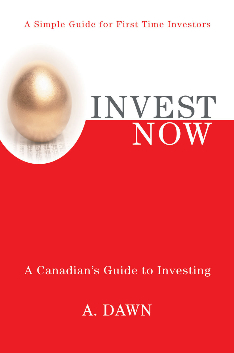
5. Invest Now by A. Dawn

This is a beginner’s guide to show you step-by-step how you can start investing for the first time with very little money. Although Invest Now is written for Canadians, the procedures mentioned would work in any industrialized country. Invest Now is written in very simple and easy language – avoiding all financial jargon. A must-read for those who want to know how financial markets and products work.

Saying No Is Actually A Positive Thing

How To Say No

To streamline and minimize blog maintenance, I will be discontinuing maintaining the Simplepersonaldevelopment.com website (however, I will still hold the domain). I will gradually move all articles from this site to Ahmed Dawn Dot Com. This article originally published on the above website on Jan 1, 2012


Although we may associate “No” with a negative assertion, it can be actually a very positive thing you can do – depending on what type of “No” it is. Today, I will discuss some simple ways to say “no” to take charge of your life and time.

 Why Say No 

- There are only so many hours in a day. Saying “no” to unproductive and time wasting things will   
make you a lot more productive. 
- Saying “no” to a new commitment which you won’t be able to handle will give your existing projects 
more time to finish with a quality outcome. 
- When we are stressed, depressed, and burned out from our modern day rigorous time consuming and high-paced activities, saying “no” will free up time to relax and wind down.    
- Saying “no” is respecting your time and respecting yourself. It will eliminate tasks that you don’t   
enjoy and will free up time to pursue your goals and dreams.

Simple Ways to Say No 

Say No With A Smile – Saying “no” is a lot simpler when you add a genuine smile to it and avoid a serious face. Also, the person you are saying “no” to will take it a lot easier way if you say “no” in a smiling face.

Add A Brief Explanation – If you add a short explanation to the reason behind your saying “no,” the other person will understand it and will not get emotional or reactive. However, stop giving out an essay. Explaining too much will make it worse and the other person will think that there is something to it.

Don’t Lie – Avoid making up reasons that aren’t true for excuses. Most likely, the other person will be able to guess that it’s a lie from your body posture and voice tone.

Delay Your Response – If you feel that saying “no” will be difficult and likely to cause an emotional outburst from the other person, instead of saying “no” right away, take some time and reply back at a later time. This works because if you say “no” at a later time, the other person will not be on a full alert to hear “no” (than when she proposed) and it will have less impact than the first time.

Offer An Alternative Solution – There will be times when you just simply can’t avoid it in a full scale. Offer something different and acceptable, yet keeping it within your means, so it does not cause you too much time and stress like the initial request.

Saying “no” at the right time will save you a lot of time later. As you get better with saying “no,” you will be able to manage, simplify, and reduce stress a lot better than before.

What Moves Mortgage Rates?

Mortgage Rates – What Drives Them?

One of the most frequently used words in the mortgage business is “rates”. Actually, to be entirely fair, it is one of the most frequently used words in the mortgage advertisement business – in no small part because the word “interest” is known to terrify a large number of people, even those who do not know why it does. Interest rates are one of the financial indicators that draw quick and decisive reactions from financial experts presenting specialised programs about money which always seem to be on when you are stuck in front of the television. It may be hard to pay attention, but it is worth it – you could just save yourself a lot of money.

When interest rates are high, it is a sign that the economy is in one of its periodic “boom” phases, and the government and banks are placing more interest on transactions essentially in order to discourage excessive and overly-optimistic consumer behaviour. Unsurprisingly, then, when interest rates are low it tends to be a sign of just the opposite. The economy is in poor shape, the banks are reluctant to lend and businesses are struggling to keep their heads above water.

While these periods are traditionally poor for business and considered to be bad financial times, they can be advantageous periods for people with borrowing power, who will find that the lower interest rates increase the range of properties which they can buy. Governments encourage people to spend in these times as they feel it stimulates the economy, but only those customers who have built up good credit scores over the years need apply – bad credit ratings mean limited access to credit, and financial recession means the same. Limiting access to credit this much more or less guarantees that only those with the top credit ratings are entitled to expect a mortgage.

This balancing act by the banks is one of the more interesting elements of the lending business. On the one hand they have deals with low interest rates, which any borrower would covet at any time. On the other hand, they are unwilling to give mortgage deals to any customer who does not have a positive credit rating. This is a situation which, if allowed to persist, would mean a lot fewer homeowners in any society, and would have grave implications for the economy. The typical upshot of this is that governments will step in to inject some capital into the banks and persuade them to lend to consumers. Compared with times gone past when banks were occasionally too ready to lend even to high-risk customers, this situation is one that offers different challenges.

One situation that has arisen in the past, and which banks are keen to prevent from happening again, is the sub-prime mortgage crisis. In that crisis, people who had little or no credit rating were given mortgages anyway, with high interest rates to reflect their high level of risk. Unsurprisingly this led to a lot of people defaulting on their mortgages, and partially triggered the worst financial crisis this world has seen in over sixty years – a crisis we are still dealing with, so it remains to be seen what lessons have been learned.

5 Money Tips for Financial Success

Five Personal Finance Tips You Need to Know Right Now 

In order to become financially successful, you don’t need to spend year after year pursuing an MBA. Doing simple things consistently and religiously year after year can lead to the path of financial success. Today, I will describe 5 such things. 

Spend Less Than You Earn
 – Stick to spending less than your income, and financial success will come to you. This is the most important financial tip ever. If you can’t do this, doing everything else will be meaningless. 

Pay Yourself First
 – Depending on your ability, save 5 – 15 percent of your gross income into an investment account, mutual funds, registered account, etc. Stick to this plan as long as you can afford to.

Build An Emergency Fund – Set aside six months’ (or more) worth of living expenses in a savings account or in an investment that is comparatively safe and can be withdrawn in a short notice without paying any penalty. 
Set Goals - Know exactly when you would like to accomplish various goals throughout your life such as buying a house, paying off mortgage, retiring in the future, and so on. Take necessary steps to realise these goals. 

Review Progress
 – Review your progress at least once a year. If you are not on the right track towards achieving your goals, change and readjust your financial roadmap. Consult a fee-based financial professional if necessary. If you don’t have the knowledge to invest by yourself, seek professional help. I recommend fee-only financial professionals.

Auckland Harbour Cruise | Auckland Travel Blog

New Zealand Travel Blog: Part 13

After getting my Auckland Harbour cruise ticket, I was supposed to board the cruise ship via the Pier 4 dock, but there was a little bit of a wait to let the passengers out from the cruise before.

The cruise ship was a medium-sized boat divided into upper and lower decks. Most people seemed to choose the upper deck to have a better view. When we were leaving the harbour, I saw a really big cruise ship.  Surprisingly enough, this was the Celebrity Solstice, one of the top 20 largest cruise ships. I saw lots of passengers from Celebrity Solstice waving at us, but they were on decks so high they looked like little dots.

Once our 1.5-hour tour started, our boat cruised through Waitemata Harbour. The tour guide was showing and describing all the places of interest along the coastline. We headed towards Rangitoto Island.

Rangitoto Island is a volcanic island that was formed by eruptions 600 years ago. Today, Rangitoto Island is a nature reserve and popular day-trip destination. We did not actually get off the boat at Rangitoto Island; our boat just went close and stopped for a few minutes to have better view.

Some other points of interest were Devonport's historic naval base, Bean Rock Lighthouse, Hauraki Gulf, and Auckland Harbour Bridge. Tea, coffee, and some light snacks were provided, but there were a lot more options if someone wanted to pay for more.

The views of Auckland harbour and the coastal areas surrounding the harbour were breathtaking. After 10 minutes of passing Auckland’s waterfront and harbour area, natural splendor takes over. I noticed very few residential units along the coastline, unlike Sydney where the coastline is full of residential houses and apartments.

Once the boat tour was over, my last item on the itinerary was the Sky Tower visit. 

New Zealand Travel Blog: Part 1

New Zealand Travel Blog: Part 2

New Zealand Travel Blog: Part 3

New Zealand Travel Blog: Part 4

New Zealand Travel Blog: Part 5

New Zealand Travel Blog: Part 6

New Zealand Travel Blog: Part 7

New Zealand Travel Blog: Part 8

New Zealand Travel Blog: Part 9

New Zealand Travel Blog: Part 10

New Zealand Travel Blog: Part 11

New Zealand Travel Blog: Part 12