Monetary Policy and Fiscal Policy

What is the difference between monetary and fiscal policy?

First Published: ADawnJournal.com April 29, 2010

Two of the most important parts of any country’s economics are their monetary and fiscal policies. Many people assume that these two policies are one and the same, but this is not the case. These policies are two different entities that affect a country’s economics in different ways.


Monetary Policy

The monetary policy of a country is the process by which a government or central bank supply money to the populace, thereby affecting the availability of money as well as the cost of money and the interest rate associated with it. This is done to reach a certain set of objectives to help the economy grow, as well as remain stable in difficult financial times. Economists will also refer to monetary policy as being the expansionary or contractionary policy of the country. When it is referred to as the expansionary policy, is when the total money supply of the economy is increasing, while contractionary policy is the opposite, where money is decreasing. These two policies within the monetary policy are also used at different times. When there is a recession, interest rates are lowered to combat unemployment through the expansionary policy. However, if the economy is suffering from high inflation, then interest rates are raised through a contractionary policy.

Interest rates are highly important to the monetary policy of the country and there is a distinct relationship between monetary policy and interest rates. Through the monetary policy, the interest rates of the country are tied in with how much money is supplied and how much is being borrowed. Through this relationship, it is possible to influence the inflation, economic growth, exchange rates and even unemployment of the country.

Nearly all industrialized and developed nations operate their monetary policy through specially created institutions. Examples of these institutions include the European Central Bank for the EU, the Reserve Bank of India, The Federal Reserve System of the United States, the Bank of Canada, the Bank of Japan, the Reserve Bank of Australia and the Bank of England. These institutions are called central banks and they have the distinct task of ensuring the financial system of the country is operating properly.

The most often used tool of monetary policy is open market operations. With this the government can manage the money supply of the country by buying and selling treasury bills, foreign currencies and company bonds. Other tools used by central banks to manage monetary policy include discount window lending, fractional deposit lending, moral suasion and open mouth operations.

Without central banks and a monetary policy, the economy of a country would be highly unpredictable. There would be no way to manage money and recessions could easily turn into depressions and inflation could run out of control. Examples of countries with poor monetary policies include Zimbabwe, which has seen its inflation rate reach unprecedented levels. Whenever a country hits a rough patch, or needs to do some work to keep its economy moving forward, the citizens should be happy they have a good monetary policy in place.

Fiscal Policy

Fiscal policy is not monetary policy, and it is important to make this distinction. A fiscal policy is the use of government expenses and revenue collection in order to influence the economy. This differs from monetary policy, which is used to stabilize an economy through interest rates and money supply.

Fiscal policy uses expenditures of the government and taxes in order to influence the economy. Through the changing of the level of taxation, it is possible for the government to improve the demand and level of economic activity, while also allocating resources and ensuring that income is distributed properly. As a result, the fiscal policy of a country can refer to the effect of the outcome of a budget on the activity of the economy. With fiscal policy, there are three different methods that can be used; neutral, expansionary and contractionary.

With a neutral stance, the budget is balanced, where the spending of the government is equal to the tax revenue that comes in. Therefore, the government gets all the money it needs from taxes and the budget outcome has no effect on the economy activity level of the country.

With an expansionary stance, government spending is greater than the tax revenue coming in. This is done by either lowering the taxes of the country, or by increasing the expenditures of the country while leaving taxation the same. This creates a budget deficit in most cases.

With a contractionary fiscal policy, taxation is greater than government spending. This is done through increasing taxation and leaving spending the same, or by reducing spending. This leads to a surplus for the government in most cases.

There are several ways that a fiscal policy will be funded, not including the largest way which is through taxation. These methods include:

1.   Seigniorage, which is printing money.

2.   Borrowing money from the population.

3.   Using fiscal reserves.

4.   Selling assets like land.

When a deficit needs to be funded through fiscal policy, it is usually done through the issuing of bonds, bills and securities. Since these pay interest, the government is able to collect money on them for a fixed period of time. However, when the government is borrowing money and cannot afford the fiscal payments, it will go into default on its foreign loans.

A fiscal surplus can be saved for future use, in which case it is usually invested in currency or other financial investments until it is needed. When there is an economic slump and taxation as well as income falls, these reserves can then be used to continue funding expenditures at the same rate as before, without having to worry about taking on more debt.

The fiscal policy is very important and has been used several times in the past to help countries get out of recessions, while also helping countries continue operating at pre-recession expenditure levels. Fiscal policies, combined with monetary policies, keep a country’s economy moving forward and benefit everyone in the long run.
India in The 21st Century

India and The 21st Century

First Published: ADawnJournal.com May 1, 2010

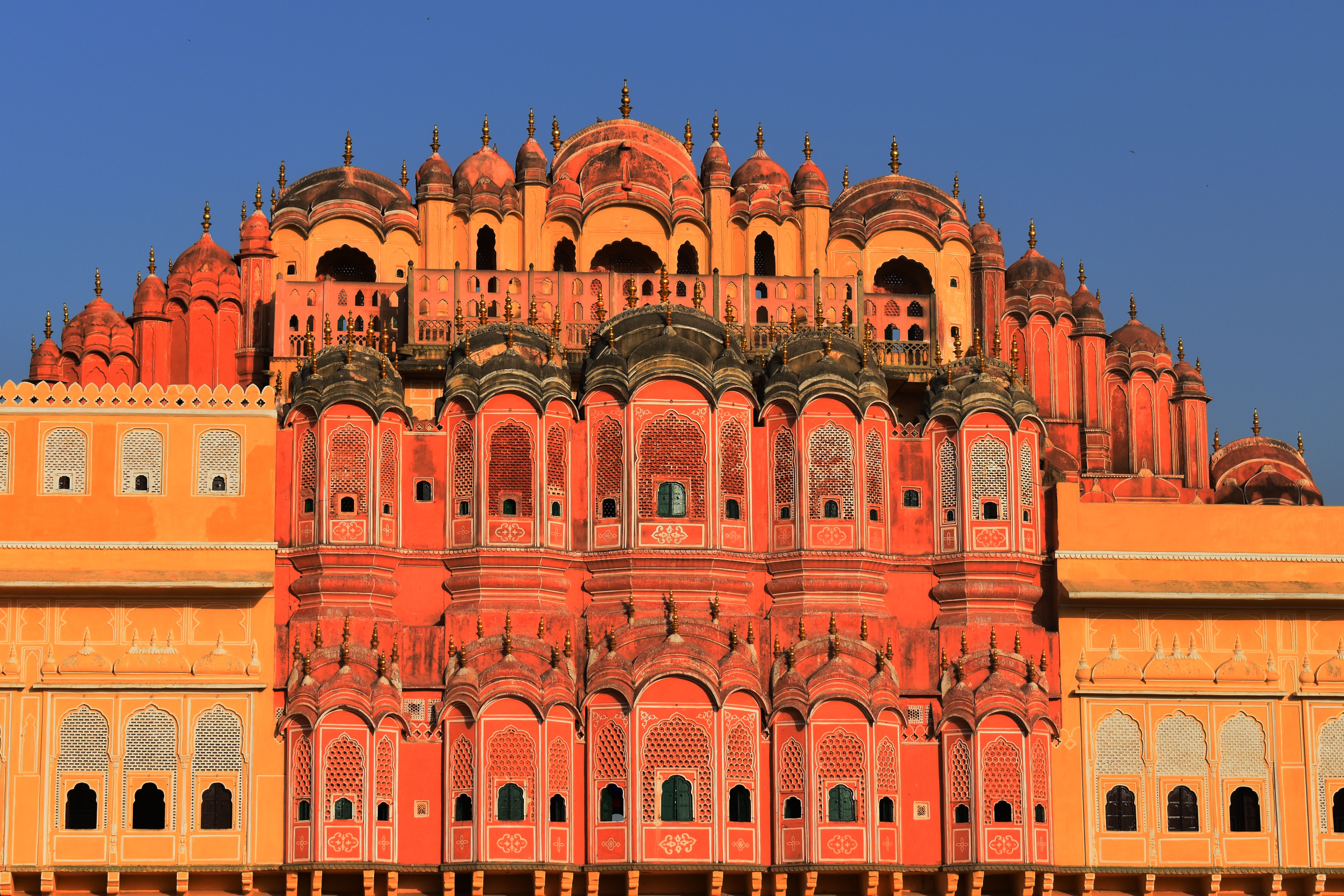
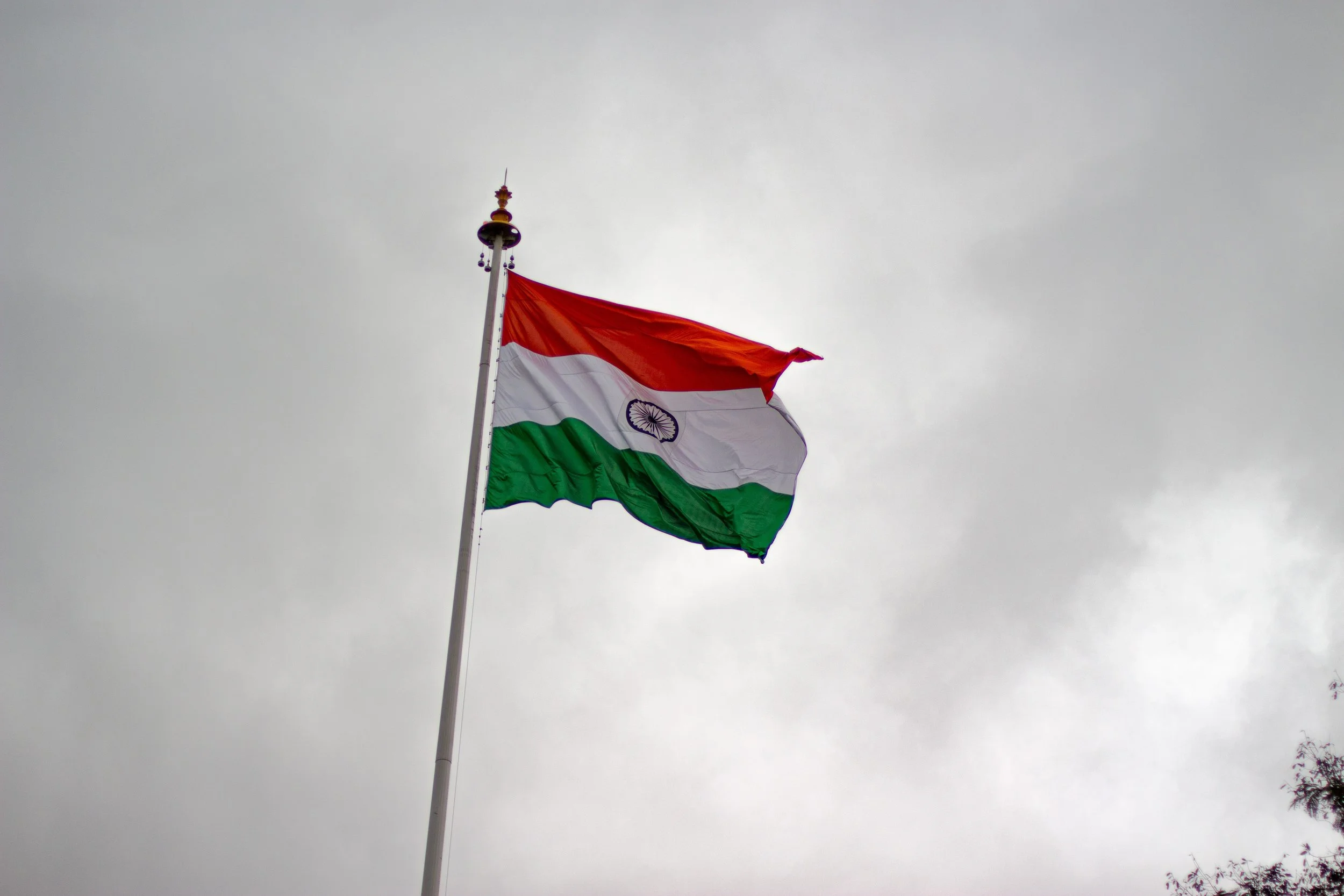
India is one of the oldest civilizations on Earth. Going back 5,000 years, there has been organized civilizations living on the Indian subcontinent. Through all this time, India has had an immense impact on our civilization. It was in India where Buddhism first came into being, as did the Hindu religion. In addition, India was as far as Alexander the Great reached before turning back his army and India gave us two of the most important people of the 20th century; Mahatma Gandhi and Mother Teresa. What does the 21st century hold for this amazing country? Well, if many experts can be believed, the 21st century may be the century where India becomes a superpower.

Many publications and academic papers cite India as being a potential great power in the 21st century but there are many challenges facing the country. Many consider India to be the underdog in becoming a superpower because of these challenges. First of all, most consider China an emerging superpower, but China is several decades ahead of India in several regards and the average Chinese individual has a better life than the average Indian individual. Other problems that relate to India include immense rural poverty, slums that are often full of disease, corruption and the huge maternal mortality rates that exist within the India subcontinent.

Another problem with India attaining the superpower label in the 21st century is that there are a lot of Indians leaving the country, in massive numbers, which is something that China is also suffering from.

This doesn’t mean that the country is not making headway. For one thing, the caste system which has existed for centuries is being dismantled to allow more upward momentum within the country, allowing more to live the lives they have always dreamed of. In addition, the country, unlike China, is completely democratic and is the world’s largest democracy.

Will India become a superpower on the scale of China, Russia, the European Union or the United States in the 21st century? Well, most likely it will not occur within the first 50 years of the century. As the century draws to a close, there is a chance that the country may be able to move more towards becoming a superpower. This does not mean that India will not be important. It will be highly influential in the 21st century and will probably find its way into the upper echelon of countries at the United Nations. The country also has a very successful professional class of people and more and more people are coming out of poverty within the country. The relationship of India with Pakistan is also a problem as both countries are nuclear states and there may be the demand by many other countries that for the country to join the superpowers of the world, some sort of peaceful resolution over the Kashmir region between India and Pakistan must be reached.

India is going to be a powerful country, without a doubt, in the 21st century. Will it be a superpower? Not for many years to come.

Is A Dawn Journal The Best Personal Finance Blog?

Is A Dawn Journal The Top Personal Finance Blog?

First Published: ADawnJournal.com May 4, 2010

Is it possible to rank a personal finance blog or website “The Best” based on its traffic or content? I don’t know how many personal finance blogs exist today on the Internet; however, I do know that there are roughly 130 million blogs live these days and this number will only grow in the future. Among the total number of blogs, even if only a few percentages are personal finance blogs, that makes the total number of financial blogs a significant big number. And claiming one particular blog, such as A Dawn Journal to be “The Best Personal Finance Blog or Website” or “The Top Personal Finance Blog or website” would be preposterous. However, I would not hesitate to claim A Dawn Journal to be a very “different kind of personal finance blog or website” and I can claim that with confidence.

Here are some facts that make ADJ fairly distinguishable from its peers, different from any other financial blogs. Let’s go over some of these facts:

o You will come across many personal finance blogs these days; however, you will hardly come across situations in which the authors of these blogs have both education and work- related financial background. I come from both an educational and work-related strong financial background. My extensive education, training and experience have enabled me to develop the knowledge and skills required to write this and many other blogs.

o Most other financial sites have something in common – they are for professional investors; hardly will you find a personal finance blog which is easy to absorb and written in clear and simple English for regular and simple readers who are trying to enhance personal finance knowledge to build a secure financial future – just like you.

o Repetition of subjects is what you will find in many other personal finance blogs. How many times you can read articles in same subjects over and over? Do you really want to hold an MBA on TFSA account, discount brokerage ratings, ins and outs of smith maneuvering, how to do wash trading in your brokerage account and so on?

o I try to balance articles on ADJ on a variety of topics ranging across a wide array of subjects. You will come across articles from different viewpoints and every walk of life. The reason I do this? I would like to keep you informed and entertained without boring you and keeping things simple.

o I am one of the few financial bloggers who is also a Financial Author, an Internet Entrepreneur, and a full time Analyst at a Canadian Wealth Management Corp. trying to achieve my goal of living a Dot Com Lifestyle. My interest varies on a broad range of topics from International Real Estate to Green Living. I own lots of domains and many websites. At the end of this post, I will give you a list of my sites for which I write and update manually by myself.

After considering all the facts I presented above, it is up to you to see A Dawn Journal as the best or top personal finance blog or website, a different financial blog, or the worst personal finance blog ever. Regardless of what you think of ADJ, I appreciate your time for reading A Dawn Journal and hope to see you again.

Australia Travel Blog: Sydney City Tour Harbour Cruise

Sydney Travel Blog: Part 7 – Sydney Harbour Lunch Cruise

Australia Travel Blog: Sydney City Tour | Bondi Beach

2-Day Combo: Sydney City Tour + Sydney Harbour Lunch Cruise and Blue Mountains Day Trip

We lost 2 tour mates on our way to Sydney Harbour Cruise; the couple failed to show up to catch the bus at the designated time. The tour operator called them and looked for them for a couple of minutes and then started the bus, leaving them behind.

Our next stop and last tour for day 1 is the Sydney Harbour Cruise. The cruise will be two hours with lunch provided.

The Cruise boat left from the marina in downtown Sydney. I found the boat in very good condition and it had 3 levels. The middle level was where all the tables were arranged for the lunch and that’s where I settled in. I got acquainted with some other travelers, so we all sat together.

The specious catamaran had lots of sitting space on the deck, but due to sun and humidity I stayed inside. I went up on deck a few times to get pictures and videos.

The boat passed some of Sydney Harbour’s top landmarks such as the Sydney Harbour Bridge, the Sydney Opera House, Fort Denison, Shark Island, and Sydney Harbour’s coastal residential areas.

About 15-20 minutes after leaving the downtown harbour area, I noticed lots of nice and upscale condos and houses nested along the coastline of Sydney. These homeowners have access to the ocean within a few steps from their home and a nice ocean view. There are a lot of foreign buyers, especially Chinese investors, snapping up real estate in Sydney, driving up the prices. I remembered not seeing residential housing in Auckland Harbour area.

Lunch was buffet style. There were plenty of items to choose from, including seafood. I chose rice, beef, mashed potatoes, broccoli, green beans, and salad. I ended my lunch with fruit salad and tiramisu.

What Is The International Monetary Fund (IMF)

The International Monetary Fund (IMF)

First Published: ADawnJournal.com May 8, 2010

Whether you know it or not, there is an organization that has a huge impact on your life and while you probably have heard of it, you may not truly realize all that the International Monetary Fund (IMF) does for you. The IMF is an international organization that looks over the global financial system by applying the policies of macroeconomics to the countries that are members of the Fund. This includes overseeing the exchange rates of countries, as well as the balance of payments within these countries.

The IMF was formed with the objective of stabilizing international exchange rate, while also helping countries develop financially through liberalized economic policies as well as providing loans, aid and restructuring finances. In addition, the IMF offers leveraged loans to poorer countries in order to help them out.

Headquartered out of Washington D.C., the IMF was formed in July of 1944 by the 45 original members during the United Nations Monetary and Financial Conference at the Mount Washington Hotel in New Hampshire. Everything was officially organized on December 27, 1945 when the first 29 countries signed the Articles of Agreement. During the Second World War, the world’s finances were in a chaotic state and it was the purpose of the IMF to help aid in the reconstruction of the international payment system of the world, as well as stabilize the exchange rates that were fluctuating widely at the time. At the time, countries would contribute into a pool that they could temporarily borrow from.

The IMF currently has 186 countries in its membership which work together to create global monetary cooperation, secure financial stability, facilitate international trade, promote high employment and sustainable economic growth, while reducing poverty, in the words of the IMF itself.

All UN member states, with the exception of Taiwan, North Korea, Cuba, Andorra, Monaco, Liechtenstein, Tuvalu and Nauru, are members of the IMF.

All of these member states are represented by a 24-member Executive Board. There are five Executive Directors, which are appointed by the five members that have the largest quotas. The rest are made of Executive Directors that have been elected by the remaining members. All the members of the IMF then appoint a Governor to the IMF Board of Governors.

The influence of the IMF has increased greatly over the global economy as the numbers of members have increased over the years. Many cite the IMF as a contributing factor to the political independence of many developing countries, as well as helping usher in the end of the Cold War with the collapse of the Soviet Union.

Of course, things have not always been rosy for the IMF. In 2008, when the financial crisis was just beginning, the IMF decided to sell some of its gold reserves. In addition, the IMF has decided to implement a new framework for the organization to help deal with a $400 million budget deficit. By 2011, it is estimated that there will be roughly $100 million in spending cuts and the removal of 380 staff positions in order to help save money.

This was not the end to the changes implemented within the IMF. At the 2009 G-20 London Summit, the IMF decided it would need more financial resources to meet the needs of its member countries as a result of the huge financial toll the global financial crisis was taking. To help, the G-20 leaders, who represent the 20 largest economies on Earth, pledged to increase the supplemental cash to the IMF from $50 billion to $500 billion, while allocating an additional $250 billion to member countries.

Through thick and thin, boom and bust, financial turmoil and recessions, the IMF has been a constant that, in various ways, is trying to make the world a better place. The lack of wars between its member countries on the whole seems to show that it has been a success at this.

IMF Website Link: The International Monetary Fund (IMF)