How Many Credit Cards Do You Need?

How Many Credit Cards You Should Have

First Published Date: August 16, 2011

When I was a student, getting my first credit card with a $500 credit limit gave me the feeling of conquering a country – it was a feeling nothing like I had experienced before. And then I got addicted to applying and getting more credit cards. I wanted to have them back then just because they looked cool and I wanted to have a collection of all sorts of cards. However, things are different now. There is no need to acquire cards one after another just to make your wallet fat. Today, I am going to talk about how many credit cards you should have and if there is any perfect number you need to stick with.

Let’s look at how having more than one credit card affects you in terms of your FICO® score. Your debit-to-credit ratio is your combined credit card balance divided by your combined credit limit. Credit-to-debit ration represents 30 percent of your credit score. If you carry a balance on your credit card, the more credit cards you will have, the better (lower) your debit-to-credit ratio percentage will be. For example, if you have one credit card with a credit limit of $1000 and you spend the full $1000, your debit-to-credit ratio will be 100 percent. However, if you have 4 credit cards with $1000 credit limit each, spending the same $1000 will make your debit-to-credit ratio only 25 percent. So having more credit cards does help in your FICO® score; however, you should not worry too much about this 30 percent of your score as there is 70 percent remaining to improve your score. And besides, if you have difficulty controlling your spending, more credit cards translate into more spending.

Now, how many credit cards do I think you should have? There is no ideal answer because it all depends on your personal situation. However, from my point of view you should have at least three (VISA, MasterCard, and American Express) major brands. One of the main benefits of having all is that not every place/merchant accepts all cards and having each of them will come in handy, especially when you travel. Another benefit of having more than one card is you can use them for different purposes.

As I mentioned earlier, if you have a spending problem, strictly stick to one credit card and only use it for emergencies. And then when you think you are responsible enough to handle more credit cards, you can look into getting more based on your needs.

Canadian Gold ETFs

Gold ETFs Canada

First Published Date: August 24, 2011 ADawnJournal.com

As global stock markets stumble and take a deep plunge, investors across the globe take shelter in one specific metal – gold. Gold has had an immense impact on human civilization. It caused the fall of nations, pushed the Age of Discovery, made some people rich and others poor. It is something that we all cherish and we all want more of it. In search for more gold, what can be better than gold ETFs? Today, I am going to discuss some gold ETFs I like. ETFs trade on stock exchanges just like stocks and you can buy them through your discount brokerage account or through a licensed financial advisor. For more information on ETFs, please visit A Dawn Journal ETF Section.

Central Gold Trust ETF (TSX: GTU.U) – Established in 2003, this is a pure gold trust holding gold bullion stored in the treasury vault facilities of a bank in Canada. As of the end of December 2010, GTU assets consisted of 604,676 ounces of gold bullion, 6,156 ounces of gold certificate totalling 610,832 ounces.

iShares S&P TSX Global Gold Index Fund ETF (TSX: XGD, MER: 0.57% ) – This ETF tracks the performance of the S&P/TSX Global Gold Index – which tracks the world’s leading gold companies. iShares ETFs are managed by BlackRock Asset Management Canada Limited.

Claymore Gold Bullion ETF (TSX: CGL, MER: 0.54%) – This ETF physical gold and tries to replicate the performance of gold bullion price.

iShares COMOX Gold Trust ETF (TSX: IGT, MER: 0.40% ) – This is a U.S. gold ETF that trades on the TSX. It owns physical gold and trades in Canadian dollars.

Horizon COMOX Gold ETF (TSX: HUG, MER: 0.65%) – This ETF tries to track the performance of the COMEX gold futures. BetaPro Management Inc. is the portfolio manager.

BMO Junior Gold Index ETF (TSX: ZJG, MER: 0.55%) – If you like junior gold companies, this may be for you. This ETF tracks the performance of the Dow Jones North American Select Junior Gold Index.

Disclosure – This article is for information purposes only and No information is intended as investment, tax, accounting or legal advice, or as an offer to sell or buy or solicitation of an offer to sell or buy, or as an endorsement, recommendation or sponsorship of any company, security, ETF, or fund. The author assumes no liability for any inaccurate, delayed or incomplete information, nor for any actions taken in reliance thereon. You bear responsibility for your own investment research and decisions, and should seek the advice of a qualified financial professional before making any investment decision. I own some of the ETFs mentioned here.

Some Facts About Chile’s Economy

Economy of Chile

First Published Date: September 7, 2011

Chile, a country in South America, is considered the economic miracle of Latin America. In only two decades, between 1988 to 2008, its economy doubled and then tripled, which means its economic growth increased 600 percent. According to the 2011 Index of Economic Freedom, Chile has the 11th freest economy on earth and Chile has the highest degree of economic freedom in the Central and South America region.

It took Chile almost three decades of endeavour to reach today’s position. Chile has a market oriented economy characterized by high volumes of foreign trade, sound economic policy, and reputed financial system. It’s no wonder that Chile enjoys the highest sovereign bond rating in South America. Chile was the first South American country to join the Organization for Economic Cooperation and Development (OECD) in 2010. In 2006, Chile became the highest nominal GDP per capita country in Latin America.

Chile was one of the few nations that handled the 2009 global economic downturn well and also the financial havoc caused by the 2010 earthquake. Its economic growth was 1.5 percent in 2009 cent and 5.2 percent in 2010. By law, the Chilean government is required to a fiscal surplus of 0.5 percent of its GDP. This used to be 1 percent before 2008 and was waived for 2009.

Chile’s independent Central Bank targets to keeps its inflation within 3 percent. However, inflation reached closer to 8 percent in 2007 and 9.9 percent in 2008. But inflation decreased to 2 to 2.7 percent in 2009 and 2010 – keeping it in line with Central Bank’s target range. Unemployment rate in Chile was 8 percent in 2010. Percentage of population below the poverty level stands around 14 percent. It was 46 percent in 1987 and 18 percent in 2005. Chile’s public debt to GDP percentage is 6.2 percent, which is lower than most countries. For example, United State’s public debt to GDP percentage is 99.32 percent.

Exports account for one third of Chile’s GDP and minerals account for half of the value of exports. Chile is the world’s largest producer of copper, with recorded copper reserves for 200 years and Chile’s copper alone provides one-third of its government’s revenue. Government owned CODELCO is the world’s largest copper producing company. However, Chile has beefed up its non-traditional exports as well, such as wood and forestry products, paper and pulp, wine, seafood, fish, fresh and processed fruits and vegetables. China, Japan, United States, Brazil, and the Netherlands are Chile’s largest export market.

Chile, while greatly improving its economy, still has some work to do. The country still has a great deal of poverty and a significant poverty gap, alone with environmental problems. The dependence on copper, weak employee skills and insufficient training, inadequate regulation, limited credit access, and limited product and technology infrastructure are some of the issues Chile will have to deal with as the country continues to move into the future.

Asus Eee Pad Transformer Tablet Review

Asus Tablet Review

First Published Date: September 14, 2011

I spent roughly two months researching all new tablets and checking out some of them physically at stores.  It’s very hard to decide on a tablet these days as manufacturers are flooding the market with new models every few months.  During my research, I ruled out the iPad due to its high cost and restrictive hardware/software.  I also ruled out the BlackBerry Playbook and the HP Touchpad due to their inferior operating systems.  I decided that I’d be buying an Android tablet, and I narrowed down the list to three finalists with 10 inch screens that would fit my needs and lifestyle:
– Samsung Galaxy Tab
– Toshiba Tablet
– Asus Eee Pad Transformer

I was already leaning towards one of these, but I decided to ask my nephew Shim to do another round of research and pick the best of the three. And guess what? We both came up with the same pick: the Asus Eee Pad Transformer 10.1.

Why Not Toshiba Tablet and Samsung Galaxy?

Here are the reasons why I did not pick the above mentioned two tabs:
– Samsung Galaxy does not offer any ports like MicroSD, SD, USB, or HDMI.
– The Galaxy’s back is too smooth and starts slipping out of your hand if you hold onto it for a while.
– Toshiba’s front camera sticks out (as it is shiny and not blended  
  into its own color) and looks ugly.
– Toshiba tablet is heavier, bulkier, and ugly looking. If I want a tablet, I want it to be a slim and good looking.
– The option to add a keyboard doc and transform Asus Eee Pad Transformer to a laptop was my main plus point to go for Asus.

Hardware Pluses for Asus Eee Pad

-Beautiful, clear screen
-Easy to grip
-HDMI port
-Extra Storage (MicroSD)

Software Pluses

- Android’s Widgets are a huge plus, and iPad lacks them
-Flash video, which the iPad also lacks.

Hardware Minuses

-No USB Port on the pad itself (its on the dock)
-Screen gets fingerprints very easily (worse than the iPad)

Software Minuses

-Honeycomb still needs some fine tuning, browser sometimes crashed when playing video
-No built-in task killer, software must be downloaded to enable this
-Android Market doesn’t have as many free apps as Apple’s app store

What I Like Most About Asus Tablet

Its price and the option to use it as both a tablet and a laptop.

What I Don’t Like About Asus Tablet

Its power supply cord is too small. 

As I write this review, stores in Canada are getting ready to launch Sony’s new Tablet. In 2-3 years, expect to see even more great tablets on the market.  The fierce competition will drive prices down and make them much more affordable.

Beware of The FBI Nigerian Letter Scam

FBI Nigerian Letter Fraud

First Published Date: September 22, 2011 ADawnJournal.com

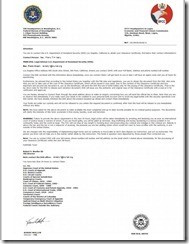
Scammers, or con artists, are in relentless pursuit of innovative products to lure their prey. A few days ago, I received a so-called “FBI Warning Letter” asking me to obtain a “Clearance Certificate” within 24 hours. Otherwise, I was told, the international court of justice will issue a warrant and charge me with terrorism, drug trafficking, or money laundering. To avoid this, I need to contact a Rev. Frank Tim Kelly at this email address: revkelly1@blumail.org. The cost to obtain the clearance certificate is $350. The letter was made to look like it was coming jointly from the FBI and EFCC (The Economic and Financial Crimes Commission).

I have attached this letter on the top left for your review. A lot of us can easily tell that this is a scam. However, I am sure a small percentage of the population will fall for this and will lose money. As we get to know the common techniques scammers use, they become more innovative and come up with new scams. You need to be vigilant and use your common sense. Also, keep yourself updated with the latest news and publications on fraud and scams. I am going to list some resources for you. Save this article and visit these resources mentioned below at your convenience.

If you ever believe you have been a victim of identity theft, here is what you can do:

– Call your local RCMP detachment or your Police Department

– Report your situation online through Reporting Economic Crime Online

– Visit PhoneBusters, send an email to info@phonebusters.com, or call 1-888-495-8501

– Visit FBI’s Be Crime Smart Section. Lots of useful info.