Educational Entrepreneurship

Has Your Education Paid Off?

Many people who have spent a large amount of time (and money) getting their education are finding that it has not paid off as they would have wished. People with college degrees are, finding with greater frequency that there are not as many companies sitting and waiting for someone with their skills as they hoped or were led to believe.

Often academic achievement – a worthwhile goal in its own right – is found to be of less value when looking for the perfect job than we have been led to believe. In addition, it is at times like this that people with a high level of education canfind themselves wondering why they bothered. For many reasons, this is a great shame. Not least of these reasons is the fact that it can easily trickle down to younger people that education is worthless. It is not.

If you have spent all that time and money getting an education only to find out that it has not gained you the perfect job, there are ways that you can put it to work for you. Maybe a big company does not want to take the chance on you because they simply do not have the vacancies, or it may be that, impressive though your achievement undoubtedly is, it just does not fit into an existing gap in the skills set of the companies in question.

The solution to this problem may lie in taking the bull by the horns and creating your own income stream. The most immediately obvious way to do this is to take a direct approach. The educated can become the educator. Tutoring is something that is used far more than most people realize. Despite what you are finding, the value of education is still held by many to be as high as it ever was. Parents who are despairing over their child’s academic performance are increasingly prepared – even in a shaky economy – to give their children the extra advantage when it comes to schoolwork by employing a personal tutor. And knowledge has a high premium. Many jobs in the private sector simply do not pay as highly as working for yourself, selling something more important than any perishable goods.

Even if your education is not in a field that is so easily transferable – for example, parents will often want to employ a math tutor or a language expert, but are less likely to call for a textile major – you do have a level of knowledge in your chosen field that most people simply cannot call upon. So if a company finds itself in need of someone who can – for example – make a necessary component for an item they are selling, but have no-one in their work force who has that skill, they will often be prepared to pay an outside contractor to show them how. Outsourcing is becoming more and more of a key issue in business. Having an expertise in a certain area can really pay off. It is about seeing how you can make it pay off for you, and if you can do that then you can show the world – and yourself – why you bothered getting that education.

First Published: Feb 28, 2009 on EntrepreneurJourney.com
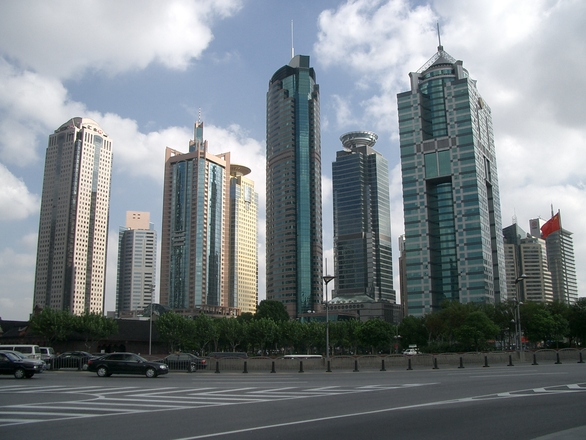
China’s Plunging Foreign Reserves

Yuan Continues to Outflow

Chinese currency remains worrisome to the global economy as Yuan continues to outflow causing declining foreign exchange reserve. As the Yuan is losing value, Chinese consumers are rushing to exchange them for U.S. dollars to preserve their value.

As there is a limit of exchanging Chinese currency annually to $50,000, consumers are trying to get around this rule by buying other tangible assets such as real estate, fine art, expensive wine, and so on. Another popular method to get around this rule is to use the quota of other people who have room and sometimes paying to use their quota.

The Chinese government is intervening in the market to stop rapid depreciation of Yuan by selling dollars and buying Chinese currency. However, this intervention is causing the plunging of the foreign exchange reserve. Chinese authorities are assuring everyone that there is nothing to worry about and these fluctuations are normal economic conditions.

January data shows that the foreign reserve declined by $12.3 billion to $2.9 trillion. Also, debt is rising rapidly and growth in GDP is slowing down. And there are more things to worry about as President Trump made it a priority to balance the trade deficit with China. China has been running trade surplus with the rest of the world persistently for the last decade. The USA had a trade deficit of $347 billion in 2016.

A declining Yuan, slowing GDP, and rising debt will likely contribute to bigger surplus as exports to China will suffer the most from all these.

Will Toronto Skyscrapers Fall?

Toronto Skyscrapers Aren't Falling In Prices

It should not take us by surprise that World Class City Toronto, one of the best liveable cities on earth, is the leader in constructing the most skyscrapers. However, the Canadian government implements tighter mortgage rules to cool down the Canadian housing market and there have been many talks about the oversupply due to disproportionate over-building of downtown Toronto condos. According to most of the analysts, sky-high prices for downtown condos are bound to fall due to less demand as supplies are exuberant and buyers are reluctant to enter the market because of the eminent housing market crash due to tighter mortgage rules. But is this the case?

Yes, there are some depressing numbers when you look at the last quarter of 2012. There were 3800 condominiums sold in downtown Toronto. This is a 23 percent decline over the last quarter of 2011. In terms of new condo sales, the number looks even worse. New condo sales were down 47 percent in downtown Toronto. However, defying these falling numbers, the total new condos under construction hits a record high of 56,900 in 2012 and new condo constructions starts a record all time high 24,390.

Now let's look at some positive numbers. During the first 2 weeks of February, there were 2800 sales in the greater Toronto area. This was down roughly 8 percent more than last year, but the number of new listings was lower too. Average home price was $509,000, which represents a 4 percent increase than last year. Average home price was $775,000 in downtown Toronto and one third of the homes were sold above the asking price.

There have been some bidding wars in downtown Toronto where supplies were low. With so much market crash speculation, downtown Toronto districts were able to keep prices fairly stable and a price increase was even noticed. For example, Toronto downtown's biggest condo district, C01, dropped only 1.66 percent in January than one year before and district C08 actually showed a 4 percent increase in prices.

So, will skyscrapers fall in Toronto in prices? It does not look like that way based on recent market activities. As Toronto downtown has enjoyed double-digit job growth from 2006 - 2011, more professionals are making skyscrapers their homes, pushing the demand high for condos. IMF recently predicted that Canadian residential real estate market is 10 percent overvalued. However, 10 percent overvalued homes, among other factors, may not be enough to make Toronto skyscrapers fall in prices.

First Published: March 12, 2013 on RealEstateExpedition.com