Auckland Sky Tower | Auckland Travel Blog

New Zealand Travel Blog: Part 14

After the boat cruise tour, I was waiting in the area where someone from our tour company would pick me up. I didn’t have to wait long; I found the guide right after exiting the boat. The tour van took me and some other people on the same tour to the Sky Tower entrance, which was just a few minutes drive.

The tour guide gave us tickets and left us in front of the tower. We were to visit the Sky Tower and return to our hotels on our own. It made sense because I didn’t have to rush and could take my time to see everything. My hotel was just a few blocks from the tower.

The iconic Auckland Sky Tower is 328 meters (1076 ft) high and the tallest freestanding structure in the southern hemisphere. The Sky Tower is the 25th tallest tower in the world and defines Auckland’s skyline because of its height and shape.

The views were breathtaking. Having water surrounding Auckland made everything even more scenic. It offers unobstructed views of Auckland, volcanoes, and the water bodies surrounding the harbours. 

There are restaurants (some of which are revolving), cafes, ice cream shops, gift shops, casinos, and many other establishments located in the tower. However, I was busy only concentrating on the views from various angles and taking lots of videos and pictures.

The observation deck and general areas didn’t feel overcrowded at that time – which was a blessing for me. I asked a few other people to take my picture when I wanted to be in the pictures. Lots of friendly tourists were glad to help.

After finishing the Sky Tower, I walked to my hotel. My flight to Sydney would be the next day, but in the evening. So I didn’t have to rush and even would have time to walk downtown tomorrow.

New Zealand Travel Blog: Part 1

New Zealand Travel Blog: Part 2

New Zealand Travel Blog: Part 3

New Zealand Travel Blog: Part 4

New Zealand Travel Blog: Part 5

New Zealand Travel Blog: Part 6

New Zealand Travel Blog: Part 7

New Zealand Travel Blog: Part 8

New Zealand Travel Blog: Part 9

New Zealand Travel Blog: Part 10

New Zealand Travel Blog: Part 11

New Zealand Travel Blog: Part 12

New Zealand Travel Blog: Part 13

How to Make Instant Noodles A Healthy Food

Instant Noodles Are Very Unhealthy 

Instant doodles, instant ramen, cup noodles – these are all very unhealthy foods. Manufacturers deep fry them in bad oil (like palm oil) and that’s where all the bad fats (trans fat, saturated fat) come from. Then, these noodles have to be wax coated (the same material they use in Styrofoam containers) so they don’t stick to each other when cooking. And don’t forget about the seasoning or small flavour packets that come with instant noodles. These powders are full of bad stuff such as salt, MSG, fat, and who knows what else!

However, after packing instant noodles with all these bad things, I realise that you may need to eat it once in a while – and that’s OK as long as you are not eating instant noodles frequently. Even if you eat instant noodles once in a while, you can do a few simple things to make it a healthy meal better than just eating only noodles.

Steps to Make a Healthy Bowl of Instant Noodles 

1. Gather some vegetables and cut them in small pieces. 
2. Here are some veggie suggestions. Pick all or some from these based on what you like: Broccoli, Celery, green beans, carrots, tomatoes, little bit of garlic, and any other vegetables you may like. 
3. Boil the required amount of water and add a teaspoon of olive oil. 
4. Throw in your vegetables. 
5. Boil for 3 to 5 minutes. 
6. Throw in noodles. 
7. Cut down on seasoning or flavour packets by adding only half amount. 
8. Boil for 3 to 5 minutes. 
9. You are done.

When it comes to eating, you have the option to make it a healthy one or a junk one. Be careful and selective on what you eat and live a happier and a longer life.

How To Use Canada Revenue Agency Website

Canada Revenue Agency Website

First Published: Nov 9, 2009 ADawnJournal.com

Canada Revenue Agency (CRA) Website provides tax related information, publications, guides, forms, and other services that educate general public and promote compliance with Canada’s Tax system. CRA website has a vast amount of information, and it can be overwhelming. Here is a video clip showing how to easily navigate throughout CRA website and find tax information you need quickly and efficiently.

What Is Minimalism?

The Roadmap to Becoming Minimalist 

The word minimalism can have a wide range of meanings. The word originally derived from an art and design background – simply meaning a trend in art and design in its most basic and simple form. However, these days the word minimalism is widely associated with personal development, giving it a new perspective in terms of simply living with less. Today, I am going to touch base on minimalism from my own perspective.

Different people can define minimalism from different angles. What is a minimalistic lifestyle for me may be living with too much stuff for someone else, and vice versa. The way I look at a minimalistic lifestyle is – living a simple life with only the things that are absolutely necessary to survive.

To become a minimalist and live a simple life, there are steps to be taken, and these steps may not be as simple and easy as it sounds. We are programmed by our society to believe and act certain ways from our childhood. You need to break out of the cycle. Some people will never be able to find peace and solitude in living with less stuff and living a simple life. For those who can do it, it’s a rewarding life beyond imagination; it’s a worry-free life free from clutter, possessions, and stress.    

I am going to mention some steps you need to take, and some work you need to do on your way to becoming a minimalist:

- Buy less 
- Consume less 
- Get rid of the unnecessary 
- Slow down 
- Live a simple life 
- Create more 
- Unclutter your life 
- Unclutter your mind 
- Unclutter your home 
- Let it go 
- Help others 
- Educate yourself 
- Breath 
- Appreciate your moments on earth

These are some of the elements that you will travel with on your journey towards becoming a minimalist. However, there are endless ideas and possibilities you will come up with once you start going through the minimalism door on your own. And that’s the most rewarding and fun part of it – finding out what more you can do make your life simple and with less stuff. I cordially invite you to build your roadmap and start your journey right now on your way to becoming a minimalist.

Summary Block
This block has no content yet. Items you add to the page connected to this block will display here.

Personal Finance Author Ahmed Dawn Picks Best Personal Finance Books

Top Personal Finance and Money Books

First Published: November 11, 2009 ADawnJournal.com

If you are a novice in the personal finance world and would like to broaden your money management knowledge, a good start would be to kick off your reading with a few timeless personal finance books. But how should you pick the first few books to read considering there are thousands of books written and available on the topic of personal finance?

Today, to make your life little simpler, I will give you a list of my top picks – 5 simple and easy-to-comprehend financial books to kick off your financial journey. One point to emphasize – don’t stop reading after finishing these 5 books. Your financial well-being depends largely on your financial knowledge. Always continue reading more financial books and literature to enhance your personal finance knowledge. Read, learn, and follow your financial roadmap to become successful financially. A Dawn Journal will provide you with great and reliable information to help you go through your financial journey.

Basic personal Finance Books

1. Your Money or Your Life by Dominguez and Robin

A very different type of personal finance book. It will give you a new perspective on life, work, and money. By working for someone else, we are trading our precious time for money. You could spend this time with your family or doing something you enjoy, rather than working for someone else and making them rich. That’s why working for someone else is making a dying – it’s not making a living. The authors show in this book how you can gradually switch from making a dying to making a living. I encourage you to read my full review here: Your Money or Your Life – A. Dawn Journal Book Review

2. The Millionaire Next Door by Thomas Stanley & William Danko

This book reveals how ordinary people can achieve extraordinary financial success by living below their means and practicing discipline. True millionaires don’t spend, dress, or act like millionaires and they have not inherited wealth or won lotteries. You can be a millionaire too by making smart money decisions and following proven steps other millionaires take mentioned in this book.

3. The Automatic Millionaire by David Bach

There is no shortcut becoming a millionaire. All you need is to use common sense to cut unnecessary expenses, pay yourself first, and make your financial life automated. Bach shows how you can put your financial life on autopilot and reach your goals without spending hefty time on money management. Bach is the guy who coined the term “The Latte Factor®”. What is The Latte Factor®? It just simply means that you cut on unnecessary small spending everyday and save or invest them to reach your financial goals.

4. Getting Loaded: Get Ready, Get Set, Get Rich by Peter Bielagus

Is it possible to become financially successful just by saving a couple of dollars a day? Peter Bielagus shows how to do it in this simple yet insightful book, step-by-step. The author discusses all you need to know about money and how you can use time on your side to build a strong financial backbone. This book is specially recommended for young graduates who are just entering the workforce and to anyone else who wants to be financially strong without having lots of money.

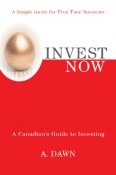
5. Invest Now by A. Dawn

This is a beginner’s guide to show you step-by-step how you can start investing for the first time with very little money. Although Invest Now is written for Canadians, the procedures mentioned would work in any industrialized country. Invest Now is written in very simple and easy language – avoiding all financial jargon. A must-read for those who want to know how financial markets and products work.