Mutual Funds 101: Part 3 – Last Part
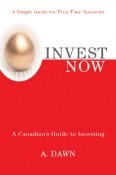
The following is an Excerpt from my first book Invest Now. Invest Now is jam-packed with timely information and timeless advice for the beginning Canadian investor. Invest Now covers a broad range of topics including Internet Scams. To purchase a copy, visit Chapters Indigo or click here to buy online – Invest Now: A Canadian’s Guide to Investing
What Are Fees and Expenses?
Mutual funds would be an unbeatable investment vehicle if there were no fees. But without charging fees, fund companies would not be able to give you all these options. Many financial gurus and critics would tell you to avoid mutual funds because of these fees and expenses, but I beg to differ. I think it’s better to pay fees than to lose all your money. When you buy stocks, you pay to do that-and then pay again to sell. In mutual funds, things are different. You pay your fund company every day for as long as you hold the fund. So if you calculate the cost of a thousand dollars’ worth of investments in both stocks and mutual funds for ten years, your cost for mutual funds will definitely be higher.
Let’s look at these examples:
$1000 in mutual funds:
A 3% MER would cost $1000 × 3%, which equals $30 a year.
The 10-year cost is $30 × 10, which equals $300.
$1000 in stocks:
Standard trading fees to buy = $29
Standard trading fees to sell = $29
Total cost in 10 years = $58
Buying stocks looks good in the above example—if your stocks make money. Compared to losing your money in stocks, you would not mind paying fees to buy mutual funds instead. I invest in both mutual funds and stocks. In last 10+ years, a couple of my stocks have evaporated almost overnight. I lost money in mutual funds too, but the margins were very slim. I have never lost my whole investment in mutual funds. If you know any investors, ask them how many times they lost money in stocks and how many times they lost money in mutual funds. You will get the obvious answers. Try it!
Beware of and Avoid Mutual Fund Fees and Expenses
It is time to explain the fees and expenses associated with mutual funds. An educated investor, who knows how these costs and expenses occur, should be able to reduce overall costs significantly, thus achieving higher return.
MER
This is the major cost of holding a mutual fund. MER stands for management expense ratio. The MER measures a fund’s total expenses for a financial year. A MER calculates a fund’s expenses by the fund’s average assets. The MER is expressed as a percentage of the fund’s total net assets. If you break down the MER, you will get
MER = (M + ER) × GST
The M stands for “management fees.” The M is the big chunk of the MER. This is where fund companies make money. Management fees cover compensations to dealers, sales and marketing costs, corporate expenses, portfolio-management cost, investment research cost and so on.
The ER stands for “expense ratio.” Expense ratios include administrative costs, such as regulatory costs (provincial and federal), client services and administrative costs, custodian fees, fund-reporting costs (annual report, prospectus and so on), audit and legal costs, technology costs and so on.
GST: Yes, you pay tax again when you invest your already-taxed dollars.
The MER can be found in a fund’s prospectus and on the Internet. Also, you can call your fund company to obtain the MER. It is important that your funds do not have a skyrocketing MER. Always pick a fund with a reasonable MER—not more than 2.5%. You can actually shop around for a certain type of fund and pick one with a lower MER. I will discuss index funds shortly, which have a low MER compared to regular mutual funds.
The MER Mystery
New investors will be puzzled when they do not see costs, mainly MERs, coming out of their investments up front. It’s not on your statement, not on your receipts, not on your confirmation slips … not anywhere. Does that mean that fund companies are not charging you MER fees? Are they giving you everything for free?
No, not at all. You see, fund companies came up with this brilliant way to charge you invisibly every day. The MER comes off a fund’s NAV (or net asset value—the fund’s price per unit) every day, so you don’t see it. That’s why it is important to hold a fund with a reasonable MER: in the long run, you don’t want to evaporate your money by paying a high MER. Usually, Canadian funds have a lower MER than specialty funds (which we will discuss later), and specialty funds have a higher MER than foreign funds.
Huge MER gaps can exist. A Canadian equity fund at one fund company can have a 2% MER, and the same type of Canadian equity fund at another fund company can have a 3% MER. A higher MER does not necessarily mean a higher rate of return.
Let me give you a simple example of how you pay MERs invisibly. Suppose your fund’s actual unit price is $10.05 for any given day before adding any expenses or MERs. Now your fund company will add their daily cost to $10.05 and will charge you $10.30 (assuming cost for one day is $0.25). You will never see the actual value $10.05 anywhere. Investors will see $10.30, and this is what the fund company will publish on their Web site or in the newspaper as the NAV for that day. I wish fund companies would disclose MERs visibly, but it does not look like that will happen any time soon. That’s why you absolutely must do your homework before you invest anywhere.
Loads
Mutual funds come in a confusing variety of packages: front-end load, back-end load, low load, or even no-load. Let’s clarify these.
Front-end load: When you buy this load, you pay your dealer’s commission up front. Commissions can run from 0% to 5%. If you are buying $1000 worth of funds with a 5% commission, your dealer is receiving $50, and only $950 is getting invested. With this option, you don’t pay any charges or fees when you redeem your funds. Always buy front-end funds at 0% commission, so you invest the full amount. This option is also known as initial service charge, or ISC.
Back-end load: When you buy this load, you are agreeing to stick to your fund for a few years (usually seven), and if you withdraw before passing those years, you will get hit by redemption fees. Redemption fees decline every year until they no longer exist at all. If you have always wondered why your broker or dealer always wants you to hook up with back-end funds, it’s because these funds give them a flat up-front commission (usually 5%) from the fund company. Who eventually pays this commission? It’s you. Buying back-end means you have to stick to the fund for many years, or pay redemption fees, just to compensate your fund company for that commission. Your goal is to stay away from back-end load. Back-end load is also known as rear-end load, deferred sales charge (DSC) and so on.
Low-load: This one is a kind of back-end load with reduced commitment lengths (usually three years) and reduced redemption fees as well. Also stay away from this load.
No-load: This is just a 0% version of a front-end load. But make sure the MER is not higher than other loads, in which case this is a good option.
Trailer Fees
Fund companies pay your broker or dealer trailer fees as long as you hold the fund. Trailer fees are already in the MER. Trailer fees are service commission fees, meaning your dealer or broker should keep funds on track, answer your questions, service your accounts and so on. Generally, front-end funds pay 1%, and back-end funds pay 0.5% trailer fees.
Turnover Ratio
The turnover ratio tells you how actively your fund manager is trading. Lots of trading can be expensive. The higher the turnover ratio, the more expensive the fund is. For an open account, a high turnover ratio can translate into high tax bills. You should be able to find this information in your mutual-fund prospectus.
The Prospectus: Your Mutual-Fund Bible
I have described some of the fees and expenses involved with buying a mutual fund. There might be more fees and expenses, along with other risks. A successful investor is an educated investor who researches fees, expenses, and risks. Remember, an emotional decision will not make you a successful investor. Plenty of tools out there can help you with your research, and this book will show you those tools.
The prospectus is a powerful tool that will help you a lot with your research. A prospectus is a selling document published by fund companies. By law, this has to be distributed to you as an investor. This document, which looks like a magazine, must explain a fund’s objectives, holdings, performance, risks, fees, expenses and so on. In plain words, it must provide full and true disclosure of all the important stuff you need to know to make an informed and educated decision. You can obtain this document by calling your fund company, or you can download a copy on your fund company’s Web site for free.
Always read the prospectus carefully and thoroughly. Dissect all the information it provides and then reread key information, such as risks and costs.
Miscellaneous
– Pick funds with a reasonable MER. Be extra-cautious not to pick a fund with more than a 2.5% MER. The same types of funds can have different MERs at different fund companies. If my fund company charges me a higher MER for the same kind of fund, there had better be some explanations justifying that higher MER.
– The MER is shown annually and calculated daily. The NAV you are paying for each unit already includes the MER; you do not pay the MER separately.
– The NAV, or net asset value, is what you pay for your funds. In mutual funds, you buy one unit or one share, just like one stock or one bond. The NAV equals the fund’s assets minus the fund’s liabilities. Fund companies price their funds every business day after markets close. The NAV is what you see in the newspaper or on Web sites in the Fund Prices section.
– Fund companies pay your broker, dealer, or discount brokerage trailer fees as long as you hold your funds.
The Trailer Chart
Load Type Fund Companies Pay
Front-load Up to 1% annually
Back-load Up to 0.5% annually
Low-load Pays same as back-load at
first, but later changes to front-load
· At www.sedar.com, you can find documents submitted by public companies and mutual-fund companies. You will be able to access mutual fund prospectuses, annual reports, financial statements and so on. This is a good place to start your research. Check this site whenever you need to look for a document and you don’t want to wait for the paper version to arrive in the mail.